
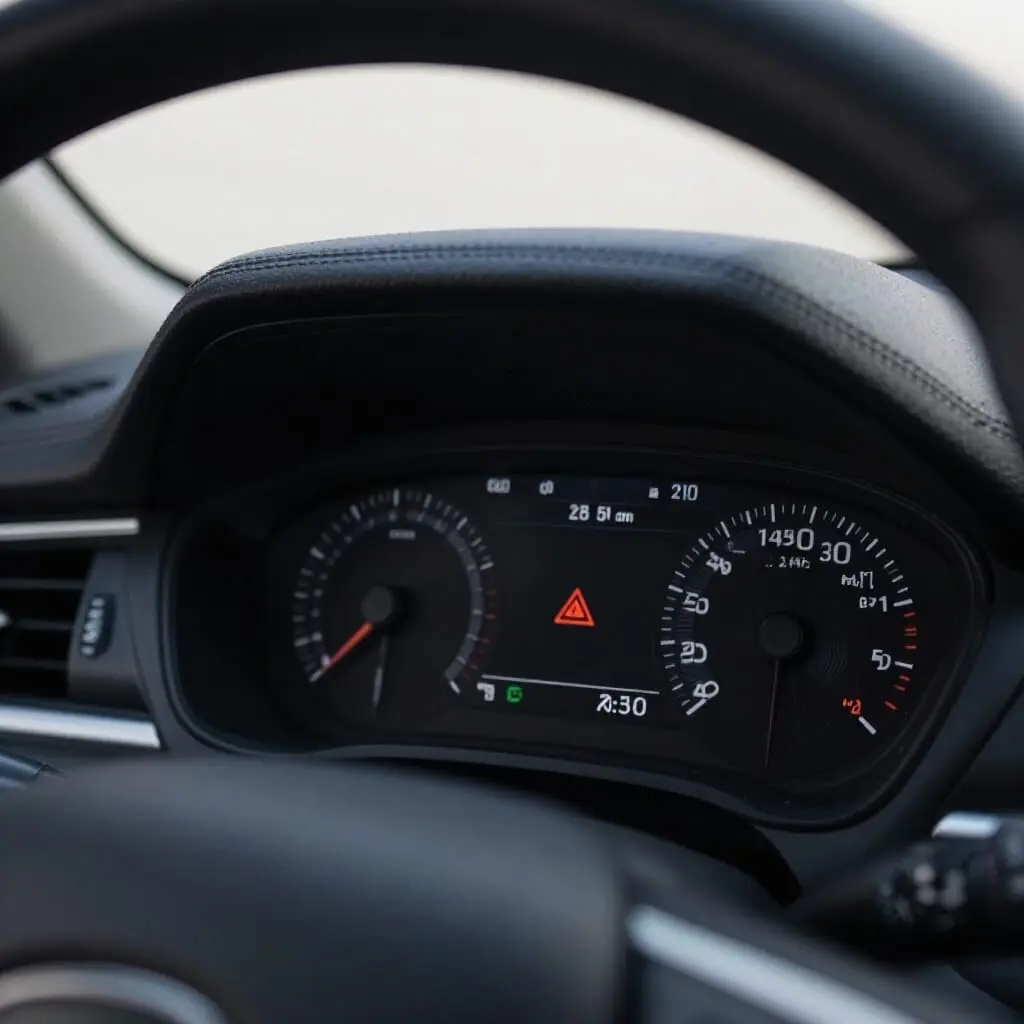
Tire Pressure Warning Light On: What to Do Immediately?
- The orange TPMS light indicates that one or more tires are underinflated or have a pressure anomaly.
- First action: Check the pressure of all four tires while they are cold as soon as possible, at a gas station or using a pressure gauge.
- A steady light requires simple inflation, while a flashing light indicates a TPMS sensor failure.
- Driving long-term with underinflated tires increases wear, fuel consumption, and the risk of a blowout.
- After inflating, the light usually turns off on its own after a few miles or may require a manual reset.
When the tire pressure warning light appears on your dashboard—often an orange icon in the shape of a horseshoe with an exclamation point—it means the TPMS (Tire Pressure Monitoring System) has detected abnormal pressure in one or more tires. In the vast majority of cases, the cause is simple: a tire is underinflated due to cold weather, a micro-leak, or a slow puncture. The right reaction: slow down, avoid sudden maneuvers, and stop as soon as possible to check the pressure of all four tires while they are cold. This guide details the possible causes, immediate steps to take, and the checks you should perform to drive safely.
Understanding the Tire Pressure Warning Light
The tire pressure light is part of the TPMS, which has been mandatory on all new vehicles sold in the European Union since November 2014. Two types of technology exist: direct sensors, located inside each wheel to actually measure air pressure and temperature, and indirect systems, which infer a pressure loss by comparing wheel rotation speeds via the ABS sensor. An underinflated tire actually rotates slightly faster because its diameter is reduced.
Displays vary by manufacturer, but the symbol remains standardized: a steady orange light indicates insufficient pressure detected in at least one tire, while a light that flashes for about a minute before staying steady usually signals a malfunction within the TPMS system itself, rather than a real pressure problem. This distinction is essential because it completely changes your next steps: in one case, you inflate the tires; in the other, you need a sensor diagnosis.
Some newer vehicles even display the affected wheel and the specific pressure value directly on the multi-function display, making it much easier to identify the faulty tire without having to check every single one at the gas station.
Immediate Actions to Take
As soon as the tire alert light comes on while driving, you should adjust your driving style before even stopping: reduce your speed, avoid hard braking and sharp turns, and avoid getting on the highway if a detour is possible. A severely underinflated tire can overheat abnormally and deform, increasing the risk of a blowout at high speeds.
As soon as it is safe to stop, perform a visual inspection of all four tires: look for embedded objects (nails, screws), visible deformation, a sidewall bulge, or a noticeable flat spot. If a tire is visibly flat or very soft, do not continue driving on it, as you risk irreparable damage to the tire’s carcass.
The next step is to head to the nearest available gas station to check and adjust the pressure of all four tires, including the spare tire if your vehicle has a conventional one. Pressure should always be checked when the tires are cold—meaning before you have driven more than a few miles—as heat can cause higher, inaccurate readings. The manufacturer’s recommended pressure values can be found on a sticker located on the driver’s side door jamb or inside the fuel flap, and they vary depending on the vehicle’s load.
Identifying the Cause: Slow Puncture, Cold Weather, or Sensor Issues
Several distinct causes can trigger the tire alert light, and they each require a different response. The most frequent and benign cause is the natural drop in pressure related to temperature changes: a tire loses an average of 0.1 to 0.2 bar per month simply through air diffusion through the rubber, and this loss accelerates significantly when temperatures drop—a common phenomenon in autumn and winter.
A slow puncture is the second most common cause: a nail or screw embedded in the tread allows air to escape gradually over several days, which explains why a warning light might reappear regularly even after inflation. A defective or poorly seated valve can produce the same effect.
Finally, the light may stem from an anomaly within the system itself: a depleted TPMS sensor (their batteries typically last 5 to 10 years), a sensor damaged during tire mounting, or a system error after a tire rotation without a proper reset. In this case, the actual tire pressure may be perfectly fine even though the light stays on, requiring an electronic diagnosis from a professional rather than simple inflation.
Resetting the Light After Correction
Once the pressure has been correctly adjusted on all four tires, the light usually turns off on its own after a few minutes of driving, giving the sensors time to transmit the new values to the computer. On some models, you may need to drive at a speed above 30 km/h (approx. 20 mph) for a few miles for the system to validate the correction.
If the light persists despite the pressure being checked and correct, a manual reset is often necessary. The procedure varies by manufacturer: some offer a dedicated “TPMS Reset” button, usually located under the steering wheel or in the glove box, while others require using the central multi-function display menu. Your vehicle’s owner’s manual will detail the exact steps, as improper handling can desynchronize the sensors rather than resolving the problem.
Ignoring a light that remains on after verification is never a good idea: it could be masking a real pressure issue on a tire that is difficult to inspect visually, or a sensor that has failed completely and is no longer providing reliable information.
When to Consult a Professional
Some situations go beyond simple inflation and warrant a visit to a mechanic or tire specialist. If the light consistently comes back on a few days after a full inflation, a slow puncture or a faulty valve is likely, requiring the tire to be removed for inspection—potentially using a soapy water bath to locate the leak.
A light that flashes rather than staying steady, or one that comes on alongside a system error message, signals an electronic TPMS malfunction: a sensor out of service, a dead battery, or a faulty receiver module. Replacing a sensor generally costs between $45 and $100 per unit, including labor, and replacement is often recommended during a tire change if the sensor battery is nearing the end of its life.
Finally, any visible deformation on a tire sidewall (a bulge), irregular wear, or a tire that deflates within a few hours without an apparent cause should lead to an immediate professional inspection. Driving with a structurally damaged tire, even if properly inflated, exposes you to the risk of a sudden blowout, which is particularly dangerous at high speeds on the highway.
The Risks of Ignoring the Pressure Light
A chronically underinflated tire suffers from abnormal wear concentrated on the tire shoulders, which significantly reduces its useful lifespan and may necessitate early replacement. The contact patch with the ground also deforms, degrading traction during braking and cornering, which is especially critical on wet roads.
Under-inflation also increases rolling resistance, which translates into measurable increases in fuel consumption over time. From a pure safety standpoint, an underinflated tire generates more heat at high speeds: the carcass flexes more than intended with every rotation, generating internal heat that can weaken the structure and, in extreme cases, cause a blowout—especially during long, fast trips on the highway. This is precisely why TPMS became mandatory on new vehicles in Europe.
Why does the tire pressure light turn orange?
The orange color indicates an intermediate alert: a tire is underinflated, but the situation is generally not immediately dangerous. However, you should still check and correct the pressure quickly to avoid premature wear or a worsening problem.
Can the tire alert light turn on due to the cold alone?
Yes, a drop in outdoor temperature naturally causes tire pressure to fall, by approximately 0.1 bar for every 10°C (18°F) drop. This phenomenon is often enough to trigger the light without an actual leak being present.
How long can I drive with the light on?
It is possible to reach a gas station at a moderate speed to check the pressure, but you should not extend a long trip or get on the highway before you have checked and corrected the pressure in all four tires.
How can I tell which tire is affected by the pressure alert?
On newer vehicles, the multi-function display directly shows the affected wheel and its pressure. On older models, you must manually check all four tires with a pressure gauge to identify the underinflated one.
Should I change the TPMS sensor if the light stays on after inflating?
Not necessarily. You should first attempt a manual system reset. If the light persists despite confirmed correct pressure, a professional diagnosis will determine if the sensor is actually faulty.
Is the tire pressure monitoring system mandatory on all cars?
The TPMS system is mandatory on all new passenger vehicles registered in the European Union since November 2014. Older models may not have it.
Sources
- Allopneus – Tire Pressure Warning Light
- Feu Vert – Causes and Repair
- Autobilan – Causes and Solutions
- Carverif – TPMS Check and Reset

À découvrir
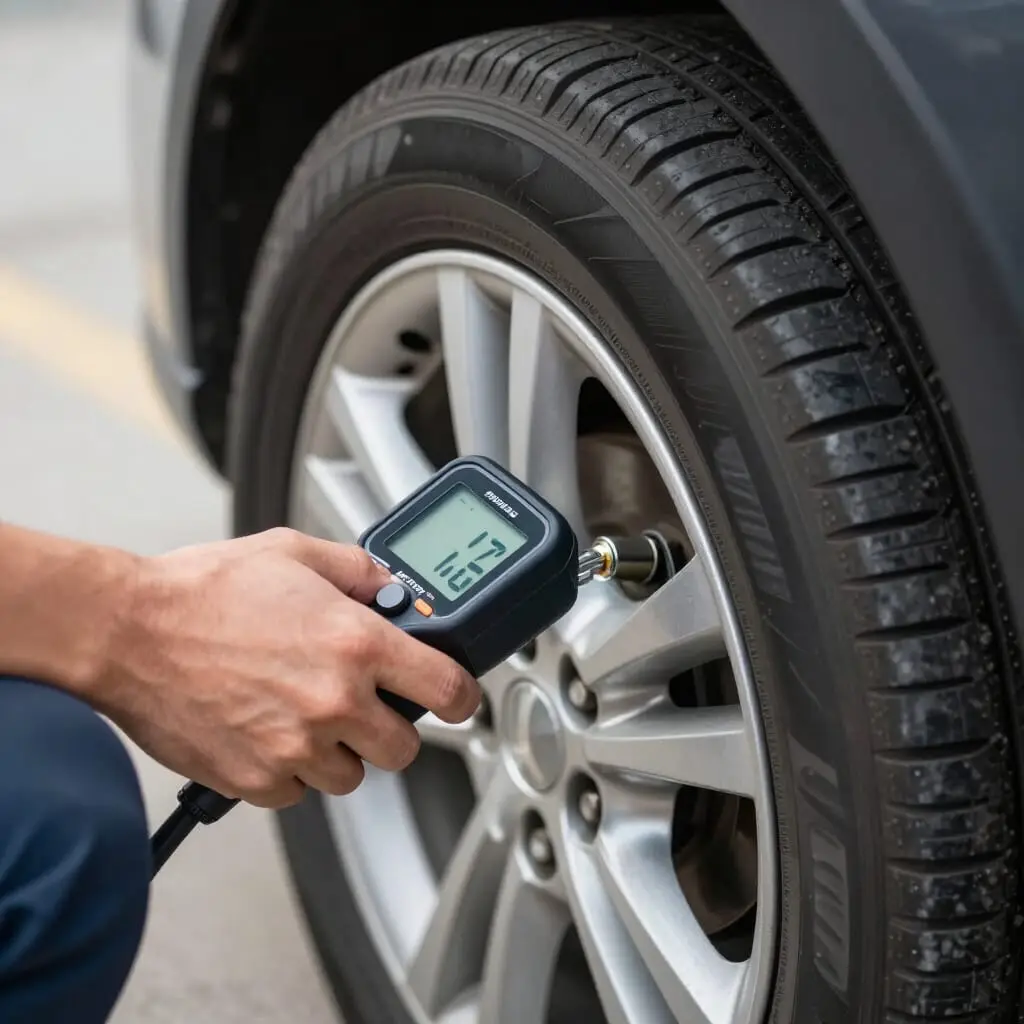
How to Check Tire Pressure? A Complete Guide
Learn how to check your tire pressure easily with our complete guide. Expert tips for optimal safety and tire longevity.
Car Battery Maintenance: The Complete Guide
November 9, 2026
How to Choose the Right Tire Size | Complete Guide
November 5, 2026