
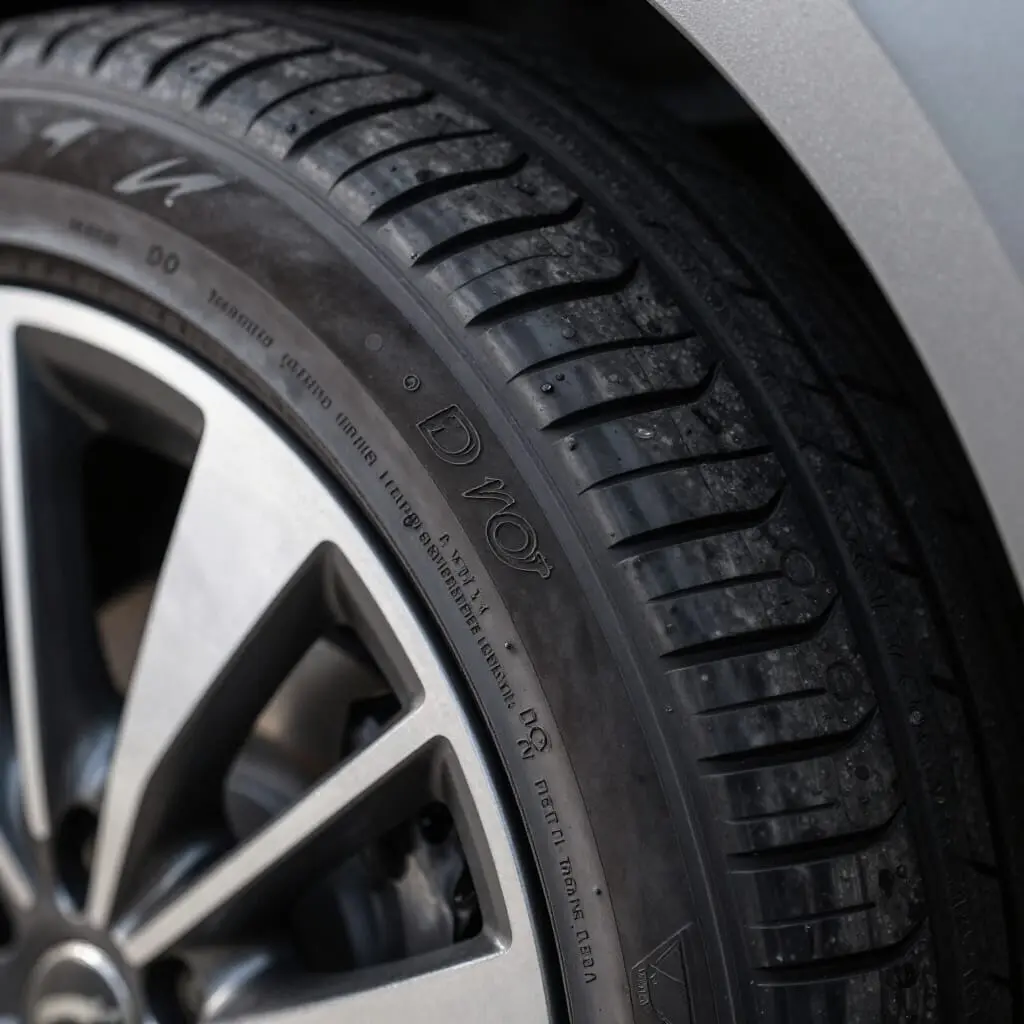
What Does the DOT Code on a Tire Mean? A Complete Guide
- DOT stands for U.S. Department of Transportation, the American agency that established this compliance marking.
- The full code can include up to 13 characters: plant, size, manufacturer, followed by the week and year of manufacture.
- The last 4 digits provide the exact date: the first two represent the week, and the last two represent the year.
- A 3-digit DOT date code means the tire was manufactured before the year 2000.
- A tire with an unreadable date or one that is too old (more than 5–10 years) should be inspected or replaced as a precaution.
The DOT is the code molded into the sidewall of every road-legal tire, whether for a car or a motorcycle. It is not just a simple serial number; it is proof of compliance with U.S. safety standards and serves as a complete ID card for the tire—including the manufacturer, factory, size, and, most importantly, the manufacturing date. Knowing how to read it allows you to verify the actual age of a tire before buying used, check the freshness of new stock that has been sitting for several seasons, or simply understand why this acronym appears on tires sold in Europe even though it originates in the United States.
DOT: A US Acronym That Became a Global Standard
The acronym DOT stands for the U.S. Department of Transportation. Since the 1970s, this administration has required tire manufacturers to use mandatory markings to certify that products meet U.S. federal safety standards (including strength, dimensions, load capacity, and speed rating).
In practice, every manufacturer must have its production lines certified and then apply this code to all tires leaving that specific factory, whether they are intended for the American market or exported worldwide. This is why you will find a DOT code on tires sold in France, Belgium, or Switzerland: major manufacturers (Michelin, Continental, Bridgestone, Pirelli…) often produce for multiple markets from the same plants, and the DOT marking coexists with the European ECE marking used in the European Union.
The tire DOT is therefore not just an American administrative formality; it has effectively become a universal traceability benchmark used by tire professionals everywhere, including for motorcycle tires, which carry the same type of code as car tires.
How to Break Down the DOT Code Step by Step
The full DOT code always follows the same structure, with a length varying from eight to thirteen characters depending on the age and the manufacturer. It begins with the letters “DOT” itself, followed by four distinct groups of information.
The first group, consisting of two characters, identifies the manufacturing plant: every production site in the world has its own alphanumeric code assigned by the U.S. administration. The second group, often two to three characters, provides the tire size according to the manufacturer’s internal coding. The third group, generally composed of three or four characters, corresponds to the manufacturer’s plant code—a type of internal signature that varies from brand to brand and is not always easy to interpret without manufacturer documentation.
The final group is the most useful for drivers and riders: these are the last four digits that indicate the manufacturing date. The first two digits indicate the production week of the year (from 01 to 52), and the last two indicate the year itself. For example, a DOT ending in “2324” means the tire was manufactured in the 23rd week of 2024, which would be early June 2024.
The Special Case of 3-Digit DOT Codes or Missing Dates
Before the year 2000, the DOT code format was different: the manufacturing date was indicated by only three digits, with the first two for the week and the last for the year—without an indicator triangle or a margin of reliability. Therefore, a tire displaying a three-digit DOT date code was produced before 2000. In the vast majority of cases, this means it should no longer be mounted on a vehicle, as the rubber compound has long since exceeded its useful lifespan.
You may also encounter a tire with no visible DOT date, often because the specific sidewall being viewed does not contain the full code. On some tires, only half of the complete DOT (including the date) is molded on one sidewall, while the other half appears on the opposite side. In such cases, you must lift the tire or look at the other side of the wheel to find the final four-digit group. If no date appears on either sidewall after checking, it could indicate a counterfeit or non-compliant tire, which warrants extra caution, especially when buying used tires or those sold at abnormally low prices.
Why the DOT Date is Essential for Safety
Contrary to popular belief, tire wear is not measured solely by miles driven or tread depth; time also plays a major role. The rubber compound gradually hardens due to oxidation, UV exposure, and temperature fluctuations, even if the tire remains in storage and is never driven. This hardening reduces grip, particularly on wet roads, and increases the risk of cracks that are invisible to the naked eye.
This is why many professionals and manufacturers recommend closely monitoring any tire older than 5 years and considering systematic replacement after 10 years, even if it visually appears to be in good condition. The DOT code is the only reliable way to know this age with certainty, unlike a simple visual estimate which can be misleading.
This vigilance applies to both car and motorcycle tires. Motorcycle tires are often subject to more intense mechanical stresses (pronounced camber angles, heavy braking), making aging rubber even riskier. Before buying a used two-wheeler, checking the DOT of the tires is a critical inspection point, just as important as checking the chain or the brake pads.
Checking the DOT When Buying: Best Practices
Whether shopping at a physical retailer or online, checking the DOT code before purchasing new tires helps you avoid getting stock that has been sitting for too long. There is no legal rule imposing an age limit on sales, but a tire in stock for more than three years justifies a negotiation or, at the very least, a request for a newer model.
For used tires, the process is even more important: cross-referencing the DOT with the visual condition of the rubber (cracks, hardness to the touch, dull appearance) provides a much more reliable picture than tread depth alone. A tire showing 6 mm of tread but manufactured eight years ago remains a high-risk tire.
Finally, for a single set of new tires, it is advisable to ensure that all four tires have similar manufacturing dates, ideally within a few weeks of each other. A significant discrepancy between the front and rear, or between the two tires on the same axle, may indicate a mix of different batches or old stock being cleared out during a single sale.
Where can I find the DOT code on a tire?
The DOT code is molded into the rubber of the sidewall, usually on the inside of the wheel once it is mounted. You may sometimes need to turn the tire or lean down to read it, as manufacturers often place this technical information on the less visible side.
How do I read the last 4 digits of the DOT?
The first two digits indicate the week of manufacture (01 to 52), and the last two indicate the year. A DOT ending in “0523” therefore means it was manufactured in week 5 of 2023.
Do motorcycle DOT codes work the same way?
Yes, motorcycle DOT codes follow the exact same structure as car tires: plant, size, manufacturer code, followed by the four-digit week and year of manufacture.
What should I do if the tire DOT only has 3 digits?
A 3-digit date code means the tire dates back to before 2000. It is strongly recommended not to use it, as the rubber has exceeded any reasonable lifespan for safe road use.
Can I drive with a tire that has no visible DOT on one sidewall?
Yes, check the other sidewall: sometimes the full date is only molded on one side of the tire. If no date appears on either side, caution dictates having the tire inspected by a professional.
Does the DOT replace the European ECE marking?
No, the two often coexist on the same tire. The DOT certifies compliance with U.S. standards, while the ECE certifies compliance with European standards; the two markings have different regulatory origins.
Sources
- What does the tire DOT code mean? – 123pneus
- Tire DOT: knowing the year of manufacture – Autodoc
- DOT Tire: how to read and understand it – ad.fr
- DOT Marking – Check your tire age – Nokian Tyres
- How to read your tire’s DOT code – Continental Tires
- DOT Tire: knowing the year of manufacture – CentralePneus

À découvrir

Flat Tire Guide: What to Do for Cars, Bikes & Motorcycles
Learn how to handle a flat tire: expert tips for cars, bikes, and motorcycles. Repair methods, costs, insurance, and emergency solutions explained.

How to Choose Tires? Complete Guide by Usage
November 4, 2026
How to Choose the Right Tire Size | Complete Guide
November 5, 2026