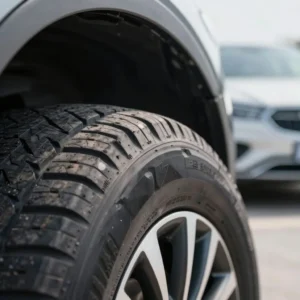

How to Choose Tires? The Complete Guide by Usage and Season
- Mandatory European tire labeling rates each tire on 3 criteria: wet grip, rolling resistance, and noise.
- The choice between summer, winter, or all-season tires depends primarily on your region’s average temperature, not just the presence of snow.
- For both cars and motorcycles, adhering to the original load and speed indices is a legal requirement, not an option.
- For road or gravel bikes, tire width influences comfort and grip just as much as weight or brand.
- A poor tire choice degrades braking distance, increases fuel consumption, and leads to premature wear well before the tire’s theoretical end of life.
Choosing tires boils down to answering three questions in order: what vehicle, what usage, and what season. For a car driven year-round in a region with mild winters, all-season tires are often sufficient; for performance driving or highly variable climates, the summer/winter split remains more effective. For motorcycles, scooters, road bikes, or gravel bikes, the logic changes: frame or rim dimensions, rubber compound, and tread pattern take priority. This guide details the concrete criteria—labeling, load indices, seasonality, and width—to help you choose correctly, regardless of the vehicle.
Understanding Tire Labeling Before You Buy
Before comparing brands or prices, you need to know how to read the label attached to every tire sold in stores. This European labeling, mandatory since 2012 and updated in 2021, rates the tire on three independent criteria: rolling resistance (which affects fuel consumption, rated A to E), wet grip (braking performance, also rated A to E), and external rolling noise, expressed in decibels and pass levels.
A tire rated ‘A’ for wet grip can reduce braking distance by several meters compared to an ‘E’ rated tire—a difference that becomes critical during an emergency stop in the rain. Conversely, prioritizing only rolling resistance to save fuel can come at the expense of handling, especially on heavy or fully loaded vehicles.
However, this label says nothing about tire durability or performance in specific winter conditions (snow, ice), which is why it should be combined with independent tests from specialized reviews and advice from a tire professional before purchasing. Nevertheless, it remains the only standardized comparison tool available in stores, making it an essential starting point regardless of your budget.
Summer, Winter, or All-Season: How to Decide
The question “should I choose summer or all-season tires” comes up very often, and the answer depends more on local climate than on total mileage. A summer tire features a harder rubber compound optimized for temperatures above 7°C (45°F): better cornering grip and slower wear on dry or hot roads, but a significant loss of traction as soon as the thermometer drops below that threshold, as the rubber hardens and loses flexibility.
In contrast, a winter tire uses a softer compound at low temperatures and features more sipes (small slits) that grip better on snow, ice, and cold surfaces. They are recommended, and even mandatory in certain mountainous regions during winter months, as soon as weather conditions regularly deteriorate.
An all-season tire is a technical compromise: it eliminates the need to swap tire sets twice a year, which appeals to urban drivers with low mileage or those living in mild regions without frequent snow. Its main drawback is that it cannot match the performance of a summer tire on hot, dry roads, nor the performance of a winter tire on packed snow or ice. For mixed use with occasional, rare snow, it is a pragmatic choice; for regular mountain driving or sporty riding, seasonal specialization remains the better option.
Choosing Car Tires Based on Real-World Usage
Beyond the season, choosing car tires requires respecting precise technical constraints indicated on the sidewall of the original tire: size (width, aspect ratio, diameter), load index, and speed rating. Mounting a tire with a lower load index than that recommended by the manufacturer is an offense and poses a real risk of blowout when carrying heavy loads (luggage, multiple passengers).
Your driving style then guides the choice between premium, mid-range, and budget lines. A driver who spends most of their time on the highway will prioritize a tire with low rolling resistance and good acoustic comfort; an urban driver with many short trips and frequent parallel parking will value resistance to lateral impacts (curbs, potholes).
Budget also plays a role, but a premium tire that is cheaper to buy than another isn’t always the most economical in the long run: wear, rolling resistance, and handling in degraded conditions directly influence the real cost per mile. Comparing 2-3 references in the same size, while cross-referencing labeling and professional advice, remains the most reliable method before committing to a purchase.
Choosing Motorcycle or Scooter Tires
Choosing a motorcycle tire follows a different logic than a car tire because the tire directly influences the two-wheeler’s balance in corners via its profile and carcass. There are three main categories: sport/road tires for dynamic road use, touring tires for versatile and comfortable use, and dual-sport (trail) tires for mixed road/off-road use.
The choice of a scooter tire meets even different needs: primarily urban use, characterized by frequent low-speed maneuvers, short braking distances, and repeated acceleration at traffic lights. Priority is often given to wet grip and wear resistance on irregular urban asphalt, rather than the lean angle performance sought on a sportbike.
As with cars, respecting the original dimensions and load/speed indices indicated in the owner’s manual is imperative: an unsuitable tire alters the motorcycle’s dynamic behavior, particularly during braking and leaning, creating a higher risk of losing control due to the reduced contact patch with the ground.
Choosing Road, Gravel, or MTB Tires
On a bike, choosing tires involves a trade-off between width, pressure, and terrain type. For a road bike, the recent trend has moved toward more generous widths (25 to 28 mm, or even 30 mm) than before, as they offer more comfort and sometimes lower rolling resistance than very thin tires—contrary to the misconception that a narrow tire is always faster.
For a gravel bike, the width typically increases to between 35 and 45 mm, with tread patterns varying based on the proportion of trail to road in your usual rides: a nearly slick profile suits mostly road use, while a more knobby profile provides security on loose or muddy terrain.
For an MTB (Mountain Bike), the choice depends heavily on the discipline (cross-country, enduro, downhill): higher, more widely spaced knobs favor grip in muddy or technical terrain, while a tighter profile rolls better on dry, hard-packed ground. Brands like Specialized for road or gravel tires influence the grip/rolling/weight compromise, but remain secondary to the choice of width and tread pattern suited to the rider’s actual usage.
Common Mistakes to Avoid When Choosing
The first mistake is choosing based solely on price without looking at the labeling or the exact dimensions recommended by the manufacturer: a cheaper tire that is poorly suited to the vehicle’s load or speed will wear out faster and can pose a safety risk. The second mistake, which is very common, is keeping summer tires all year round in a region with harsh winters, thinking that cautious driving compensates for the loss of grip caused by the cold-hardened rubber.
A third mistake concerns mixing different tires on the same axle or between the front and rear, a practice that unbalances handling and is only permitted in specific, regulated cases. Finally, neglecting regular tire pressure—regardless of the vehicle—drastically reduces tire lifespan and partially negates the benefits of even a high-end model: an under-inflated premium tire can perform worse than a properly inflated mid-range tire.
Should I choose summer or all-season tires for urban use?
For urban use in a mild winter with little snow, an all-season tire is a practical compromise that avoids biannual changes. In case of harsh winters or frequent trips to mountainous areas, the summer/winter combination remains more effective.
How do I choose the right tire width for a road bike?
Widths between 25 and 28 mm currently offer the best comfort/rolling resistance compromise for most road cyclists, compared to the 23 mm standard used previously. The final choice also depends on rim width and available frame clearance.
What load index should I choose for a car or motorcycle tire?
The load index must be equal to or higher than the one recommended by the manufacturer, as indicated in the vehicle manual or on the sticker inside the door. Mounting a lower index is an offense and a safety risk.
How do I choose a gravel tire based on terrain?
On roads and smooth paths, a nearly slick profile in 35-38 mm is sufficient; on loose or muddy terrain, a more knobby profile in 40-45 mm ensures grip. Pressure must be adjusted accordingly to avoid pinch flats.
Is tire labeling reliable for comparing multiple models?
Yes, for comparing wet grip, rolling resistance, and noise, as it is a standardized measurement. It does not provide information on durability or specific winter performance, which should be verified through complementary independent tests.
Can you mount different tires on the front and rear?
This is only permitted in specific cases regulated by law, such as temporary mixed configurations for winter and summer tires. Mixing brands or profiles without a technical reason unbalances handling.
Sources

À découvrir

Tire Pressure Guide: How Much to Inflate?
Find the ideal tire pressure for your vehicle. Tips for cars, bikes, MTBs, and trailers. Learn how to check your pressure while cold.

How to Choose the Right Tire Size | Complete Guide
November 5, 2026
Flat Tire Guide: What to Do for Cars, Bikes & Motorcycles
November 3, 2026