
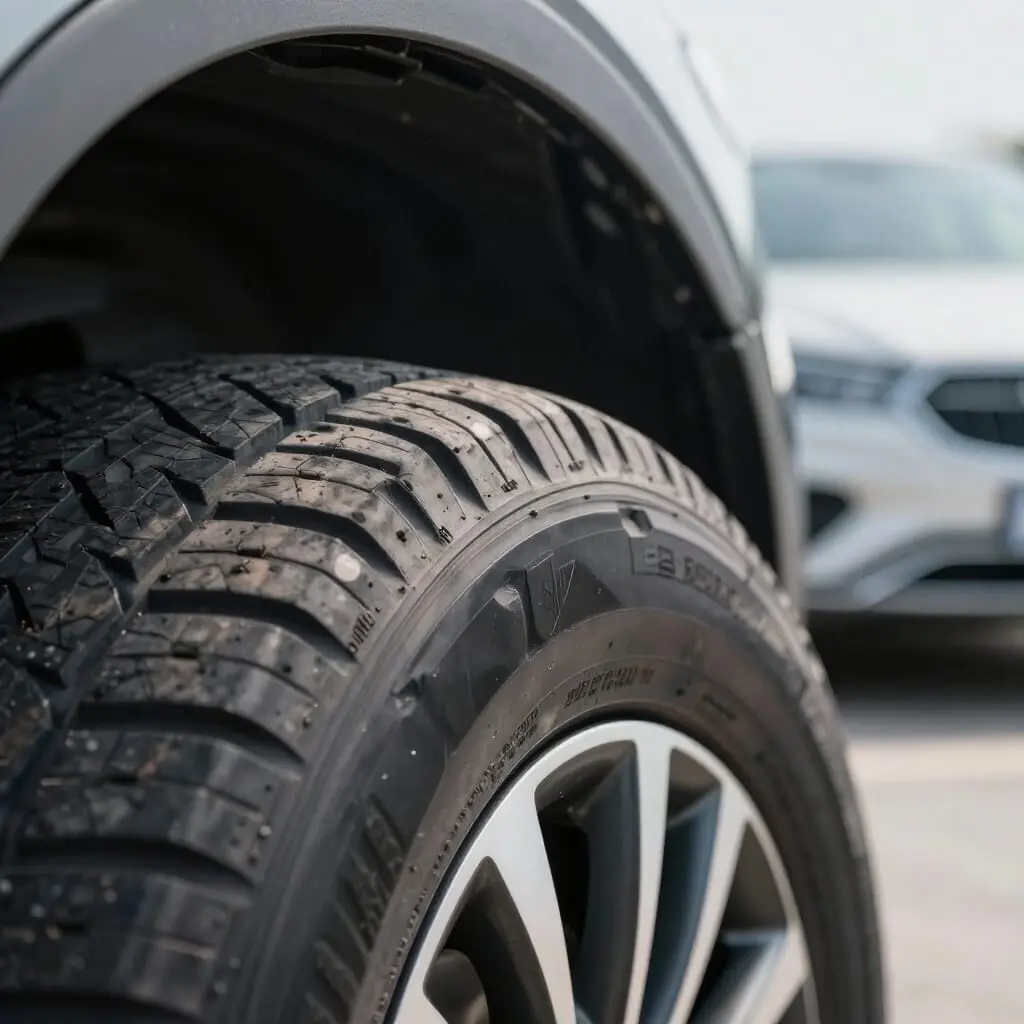
When to Change Your Tires? The Complete 2026 Guide
- The legal minimum tread depth is 1.6 mm, which can be checked using a coin.
- Tires should also be replaced based on age (beyond 8 to 10 years), even if they haven’t reached the wear limit.
- Summer and winter tires have different thresholds: 4 mm is already considered critical for a winter tire.
- Bulges, cracks, or irregular wear require immediate replacement, regardless of mileage.
- Changing tires at home or at an auto service center costs on average between €60 and €150 per tire, including installation.
You must change your tires as soon as their tread depth drops below 1.6 mm (the legal minimum), but also when they are over 8 to 10 years old, show a bulge or crack, or no longer provide sufficient grip in rain or snow. This legal threshold is actually just a minimum safety floor: most professionals recommend planning for replacement at 3 mm to maintain a safety margin, especially on wet roads. The right time also depends on the vehicle (car, motorcycle, bicycle, motorhome), the season, and the total mileage. This guide details all the signs to watch for and the key figures to ensure you aren’t driving on dangerous tires.
Tread Wear: The First Sign to Watch
Tread depth is the most reliable indicator of when to change your car tires. The legal minimum is 1.6 mm across the entire tread surface, which you can check by inserting a coin into the grooves: if the edge of the coin disappears into the tread, the tire is still legal; otherwise, it must be replaced.
However, waiting for the legal limit is risky. Below 3 mm, braking distances on wet surfaces increase significantly. Independent tests show that a tire worn down to 1.6 mm can require several extra meters of braking compared to a new tire when traveling at 130 km/h (80 mph) in the rain. This is why many professionals, including Michelin, recommend considering a change as soon as the wear indicator (the small bar built into the grooves) reaches the surface of the rubber, usually around 3 mm.
Wear is not always even: irregular wear (on one edge, in patches, or unevenly) often signals issues with wheel alignment, tire pressure, or suspension. This requires an inspection even if the average depth seems correct elsewhere on the tire.
Tire Age: Even Without Visible Wear
A tire ages chemically even if it isn’t driven much or sits in a garage. Over time, the rubber hardens and loses elasticity, reducing grip regardless of tread depth. Most manufacturers, such as Michelin and Continental, recommend a systematic professional inspection after 6 years of age and almost certain replacement after 10 years, even if the tire looks visually fine.
The manufacturing date is indicated on the tire sidewall as a 4-digit DOT code: the first two digits indicate the week, and the last two indicate the year. For example, “2321” means it was manufactured in the 23rd week of 2021. This information is particularly useful for vehicles that are rarely used, such as motorhomes stored during winter, or trailers: the mileage may be low, but the age continues to climb.
On a motorhome, this criterion is often more important than mileage: the vehicle’s weight puts significant stress on tires that may be aging slowly due to low usage. This makes it vital to check the manufacturing date before every long trip, even on a low-mileage vehicle.
Summer, Winter, and All-Season: Different Thresholds
The critical wear threshold is not the same for all tire types. A summer tire may still offer decent grip down to 1.6 mm on dry roads, but a winter tire loses much of its effectiveness in snow once it reaches 4 mm of depth, as its sipes (small grooves) need more material to evacuate water and bite into the snow. This is why it is advisable to change winter tires before they hit this limit, even if they still meet the general legal standard.
For all-season tires—an increasingly popular choice for drivers who don’t want to swap sets twice a year—vigilance is required year-round. They wear down continuously without a winter rest period, which can accelerate their overall aging compared to alternating summer and winter sets.
Regarding when to switch between summer and winter tires, the transition traditionally happens around an average temperature of 7°C (45°F): below this, summer tire rubber hardens and loses grip; above this, winter tires wear out faster on hot, dry roads.
Mileage: A Guideline, Not an Absolute Rule
The question “when to change tires based on km” is common, but there is no universal number. Tire lifespan depends on driving style, vehicle type, maintained pressure, and road quality. In typical usage, a set of tires usually lasts between 20,000 and 50,000 km (approx. 12,000 to 31,000 miles), with front tires typically wearing out faster on front-wheel-drive cars.
Aggressive driving, frequent acceleration and braking, or under-inflated tires will significantly reduce this lifespan. Conversely, rigorous maintenance (tire rotation, monthly pressure checks, and verified alignment) can help you reach the higher end of that range. Michelin tires, often cited for their longevity, are no exception: mileage remains secondary to the actual physical condition and the age of the tire.
Mileage should be used as a warning signal to schedule an inspection, not as a fixed expiration date.
Warning Signs You Should Never Ignore
Some signals require immediate replacement, regardless of the tire’s wear or age.
- Bulges or bubbles on the sidewall: a sign of internal structural damage, posing a risk of a blowout.
- Cracks on the sidewall or between treads: often caused by aging rubber or prolonged sun exposure.
- Abnormal vibrations in the steering wheel: which may indicate an imbalance or internal deformation.
- Irregular or patchy wear: a sign of an underlying mechanical problem.
- Repeated pressure loss without an identified cause: a possible sign of a crack or a seal defect.
As soon as any of these signs appear, you should have the vehicle inspected immediately, even if the tire appears to have plenty of tread left.
Motorcycles, Bicycles, and Scooters: Specific Benchmarks
On a motorcycle, particularly a 125cc, wear patterns differ from cars: the rear tire, which handles more acceleration, usually wears two to three times faster than the front. While the legal limit remains 1.6 mm, cornering grip decreases much sooner, meaning replacement is recommended as soon as the central wear indicator becomes visible, typically around 2-3 mm remaining.
For a bicycle, including road bikes, there is no legal threshold, but the signs are visual: worn-down treads, exposed casing (threads), deep cuts, or a loss of the tire’s round shape. A road bike tire typically lasts between 3,000 and 5,000 km depending on usage and maintained pressure.
On an electric scooter, tire changes often happen sooner than expected due to the weight being concentrated on a small contact patch. Frequent punctures, tread wear, or loss of grip on wet surfaces are the primary signs to monitor.
Where and How Much Does It Cost to Change Tires?
Tire replacement can be done at auto service centers, through an independent mechanic, or at home via mobile fitting services, which are becoming increasingly popular in major cities. Mobile tire fitting is attractive for its convenience, with a technician traveling to you to perform the installation on-site, often at the same price as a workshop.
Regarding budget, the price of a tire change varies significantly depending on the vehicle and the tire brand: generally, expect to pay between €60 and €150 per tire, including installation, balancing, and valves, for a city car or compact. Premium brands like Michelin will fall at the higher end of this range. For cheaper tire changes, many retailers regularly offer promotions when buying 2 or 4 tires, which is often more cost-effective than replacing them one by one.
When should I legally change my car tires?
The law requires replacement as soon as the tread depth reaches 1.6 mm across the entire tread surface, which can be verified with a coin.
When should I switch between summer and winter tires?
The transition generally happens around an average temperature of 7°C (45°F): below this for winter tires, and above this for summer tires.
When should I change 125cc motorcycle tires?
As soon as the central wear indicator becomes visible, usually around 2-3 mm remaining, keeping in mind that the rear tire wears faster than the front.
When should I change road bike tires?
As soon as the casing threads appear, when there are deep cuts, or after 3,000 to 5,000 km depending on usage and pressure.
How much does mobile tire fitting cost?
Prices are similar to those at auto service centers, generally between €60 and €150 per tire including installation, depending on the vehicle and chosen brand.
Should I change a tire even if it isn’t worn out?
Yes, if it is over 8 to 10 years old or if it shows bulges, cracks, or irregular wear, replacement is necessary regardless of the remaining mileage.
Sources
- When to change your tires – Practical Tips
- How to change car tires – Allopneus
- When to change your tires – Pneus Online

À découvrir

How to Choose the Right Tire Size | Complete Guide
Learn how to choose the right tire size: reading codes, load indices, and speed ratings. A complete guide with practical tips for cars and bikes.
How to Tell if Tires Are Worn? 2026 Safety Guide
November 2, 2026
Flat Tire Guide: What to Do for Cars, Bikes & Motorcycles
November 3, 2026