How to Properly Clean Your Car? The Complete 2026 Guide
- Proper car cleaning always follows the same order: wheels, then bodywork, then interior—never the other way around.
- Dish soap strips wax and can dull paint with repeated use: black soap or diluted car shampoo are better alternatives.
- Using a two-bucket system prevents micro-scratches caused by grit being redeposited on the sponge.
- You can effectively maintain the interior without a vacuum cleaner by using brushes, microfiber cloths, and baking soda.
- Pressure washers like Kärcher speed up the job on very dirty cars but require the right distance and pressure to avoid damaging seals and paint.
Washing a car often feels like a wasted Sunday with disappointing results: limescale streaks on the windshield, swirl marks on black paint, or a dashboard that remains dull despite your efforts. The right method changes everything. The order of operations is just as important as the products used: starting from the bottom (wheels, side skirts) and working up to the roof prevents redepositing dirt onto areas you’ve already cleaned. This guide details how to clean your car’s exterior and interior at home, with or without a pressure washer, and with or without a vacuum, for a streak-free finish even on very dirty vehicles.
Preparing for the wash: equipment and order of operations
Before grabbing the sponge, a little organization goes a long way. Efficient car cleaning follows a simple logic: from the dirtiest parts to the cleanest, and only from top to bottom during the final rinse.
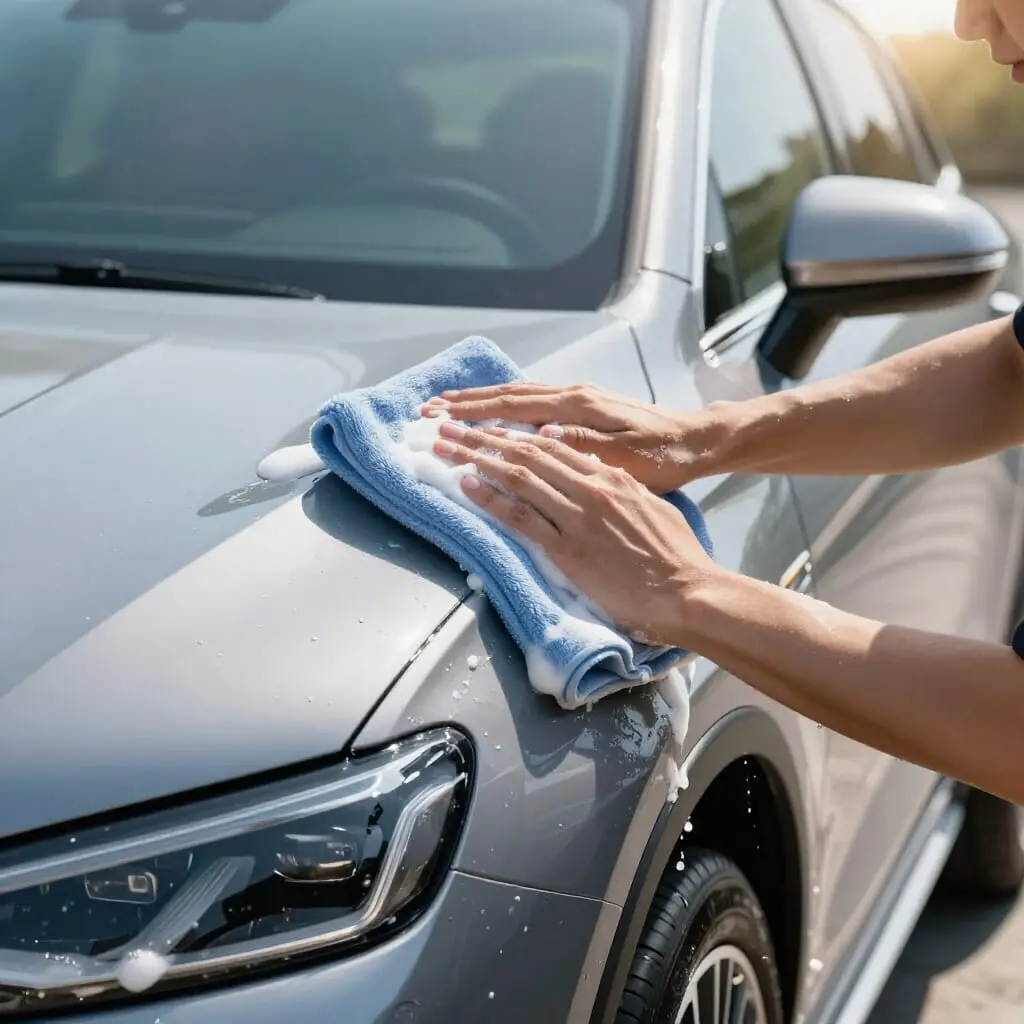
Essential equipment for home car washing includes two buckets (one for soap, one for rinsing the sponge), a dedicated wheel brush, microfiber mitts or a chamois sponge, and several clean microfiber cloths for drying. The “two-bucket method” drastically reduces micro-scratches: after each pass over the bodywork, the sponge is rinsed in the clean water bucket before being dipped back into the soap, preventing grit from being rubbed directly into the paint.
Professional detailers recommend this order: wheels and wheel arches first, as they hold the most abrasive brake dust; then side skirts and bumpers, which are most exposed to road grime; then the bodywork from bottom to top; and finally the windows and mirrors. Working on the wheels last would inevitably contaminate your freshly washed bodywork with metallic brake residue.
Timing matters too: avoid washing in direct sunlight, which causes soap to dry before rinsing, leaving stubborn white streaks. A cloudy morning or washing in the shade consistently yields better results, especially on dark-colored cars where drying marks are most visible.
Cleaning the exterior: car shampoo, black soap, or dish soap?
Choosing the right product is often a point of debate when cleaning a car’s exterior. Three options constantly come up: dedicated car shampoo, black soap, and dish soap.
Dedicated car shampoo is the gold standard: formulated with a neutral pH, it cleans without stripping the wax or protective clear coat. Diluted according to the manufacturer’s instructions (often one capful for 5 to 10 liters of water), it creates enough foam to lubricate the contact between the sponge and the paint, reducing the risk of scratches.
Black soap is popular for its natural and economical qualities. Diluted in lukewarm water, it effectively degreases road grime and insects stuck to the front bumper. It’s fine for occasional cleaning, but its more alkaline pH can, over time, dry out rubber seals and slightly dull untreated exterior plastics.
Dish soap is the least recommended solution by detailing professionals, and for good reason: designed to dissolve food grease, it also attacks the car’s protective waxes. Using it once to remove a stubborn stain isn’t a major issue, but regular washing with dish soap will eventually dull the shine and accelerate paint oxidation over several months.
For a streak-free finish, drying is just as important as washing: using a chamois or an absorbent microfiber cloth immediately after rinsing prevents the limescale spots that form when water dries naturally in the air.
Cleaning a very dirty car or using a pressure washer
To clean a very dirty car—after construction work, a long country drive, or several weeks without maintenance—a simple sponge wash often isn’t enough. A pressure washer significantly speeds up the removal of caked-on mud and dust.
Using a pressure washer requires caution. The nozzle should stay at least 30 cm (12 inches) away from the bodywork, at a 45-degree angle rather than perpendicular, to avoid damaging the paint or forcing water under door and trunk seals. Sensitive areas like stickers, rubber seals, headlights, and parking sensors should be treated with reduced pressure or avoided with a direct jet.
A three-step method yields the best results on heavily soiled bodywork: a first high-pressure rinse to knock off the bulk of the mud, then a classic shampoo wash using the two-bucket technique, and finally a second pass with the pressure washer to remove foam and any remaining residue. Self-service high-pressure wash stations, often equipped with an “active foam” mode that sprays foaming shampoo before rinsing, effectively replicate this sequence.
For particularly stubborn stains—tar, tree sap, bird droppings—applying a targeted pre-treatment with a specific degreaser before using the pressure washer prevents the need to linger with the jet, which would prematurely wear down the protective wax film.
Cleaning the interior, with or without a vacuum cleaner
Cleaning a car’s interior requires a different approach: less water, more targeted brushing, and products suitable for textiles and plastics.
The first step is to completely empty the cabin and trunk to access all corners, under the seats, and inside the storage compartments. A standard vacuum cleaner or a car wash vacuum is sufficient for fabric seats, mats, and carpets. However, it is entirely possible to clean a car without a vacuum: a soft synthetic brush combined with a damp cloth can dislodge dust and crumbs from seats and carpets by scrubbing in one direction and then wiping. For hard-to-reach areas (air vents, door seals), a fine-bristled brush or a cotton swab does the job of a small nozzle vacuum.
For the dashboard and plastics, a microfiber cloth slightly dampened with soapy water is sufficient for most stains; avoid silicone-based products which leave a shiny finish that attracts dust more quickly. Baking soda, mixed with a little water into a light paste, effectively degreases the steering wheel, gear shifter, and high-touch areas without damaging the surfaces.
Interior windows deserve a dedicated product rather than a standard scented glass cleaner, which often leaves a greasy film under certain lighting angles—a mixture of equal parts water and white vinegar, applied with a dry microfiber cloth in crosswise motions, provides a streak-free result. For persistent odors, leaving an open bowl of baking soda in the cabin overnight absorbs much of the tobacco or moisture smell before the actual textile cleaning begins.
Frequency and maintenance to keep a car clean longer
A complete car wash is only useful if it’s part of a regular routine; otherwise, dirt builds up and makes every subsequent session harder. An exterior wash every two to three weeks for urban use—and more frequently in winter due to road salt accelerating corrosion on side skirts—helps limit the accumulation of abrasive particles on the paint.
Applying a protective wax after washing, two to three times a year, greatly facilitates future washes: it creates a smooth surface that allows dust and water to slide off more easily, reducing the amount of scrubbing needed. Inside, a quick vacuum or weekly brushing prevents dust from embedding into textile fibers, a phenomenon that becomes much harder to treat after several weeks.
Floor mats deserve special attention in winter and rainy weather: taking them out for a separate wash with a hose or brush prevents transferring mud to the rest of the cabin during cleaning. Finally, addressing a fresh stain immediately—spilled coffee, mud, or tree sap on the bodywork—often makes the difference between a two-minute clean and a prolonged scrubbing session several days later.
Can you clean your car with dish soap without risk?
Using it once to degrease a stain isn’t a major problem, but regular washing with dish soap strips protective wax and dulls paint over time. A pH-neutral car shampoo is much better for routine washing.
How far should the pressure washer be from the bodywork?
It is recommended to keep the nozzle at least 30 cm (12 inches) from the surface, at an angled rather than perpendicular position, to avoid damaging the paint or forcing water under seals.
How to clean the interior of a car without a vacuum cleaner?
A soft synthetic brush combined with a damp cloth can dislodge dust and crumbs from seats and carpets. A fine brush or cotton swab is sufficient for tight spots like air vents.
Is black soap suitable for washing a car?
Yes, for occasional cleaning, especially for road grime or stuck insects. However, its alkaline pH can dry out rubber seals if used too frequently.
How to avoid water spots after washing?
Dry the bodywork immediately with a chamois or microfiber cloth after rinsing, rather than letting it air dry, to prevent limescale spots, especially in sunny weather.
How often should I wash my car?
Every two to three weeks for urban driving, increasing frequency in winter due to road salt which promotes corrosion on side skirts.
Sources
- Clean your car like a pro – XPAuto
- 10 natural methods to clean your car – RecettesPratiques
- 5 tips for cleaning your car’s exterior – Nousmotards

À découvrir
How to Check Tire Pressure? A Complete Guide
Learn how to check your tire pressure easily with our complete guide. Expert tips for optimal safety and tire longevity.
How to Check Car Fluid Levels | Complete Guide
November 7, 2026
Car Summer Protection Guide: Tires and Heat Management
November 13, 2026