Understanding Tire Dimensions: Car, Bike, Motorcycle & More
- Tire markings always follow the same logic: width / aspect ratio (as a % of width) / structure type / rim diameter in inches.
- On a typical car tire like a 195/65 R15, every number has a specific role, including the load and speed ratings that follow.
- Bicycle tires use two different systems (inches and ETRTO standards), which is a major source of confusion for cyclists.
- Different generations of models like the Clio, Twingo, or Scenic may have several original sizes depending on the trim level and rim size.
- Motorcycles, ATVs, tractors, and agricultural tires add their own nuances to the same basic system.
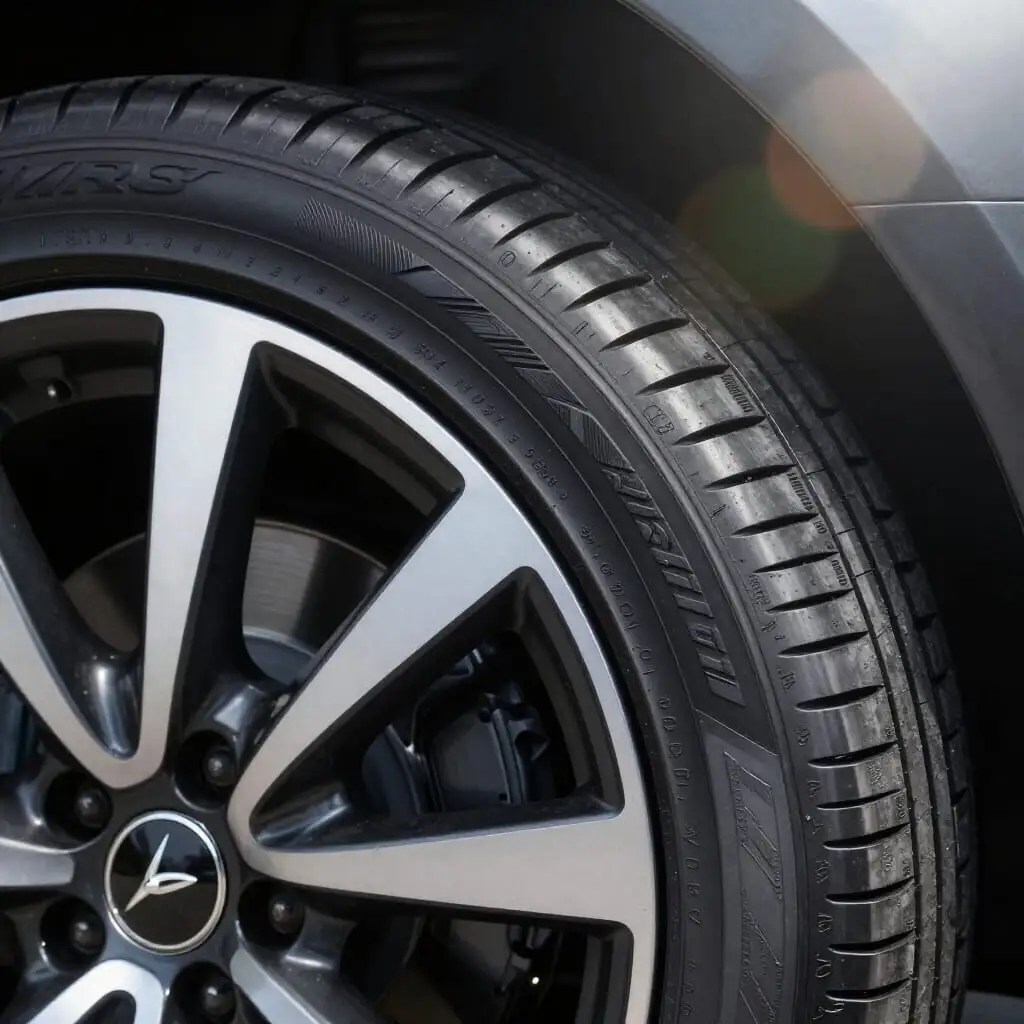
A tire size is a sequence of numbers and letters engraved on the sidewall—such as 205/55 R16 91V—that precisely describes the width, aspect ratio, construction type, compatible rim diameter, as well as the maximum load and speed capacities. Whether for a car, a bike, a motorcycle, or a tractor, this sequence follows a common logic, even if each vehicle category has its own reading codes. This article explains how to decipher these markings on the most common tire types, with concrete examples of frequently searched models like the Clio, Twingo, Scenic, or the Tesla Model Y.
How to Read Car Tire Dimensions
On a car tire, the size appears in a standardized format: 205/55 R16 91V. The first number, 205, corresponds to the tire width in millimeters, measured from sidewall to sidewall. The second number, 55, is a percentage: it indicates the aspect ratio (the height of the sidewall relative to the width). In this case, the height represents 55% of 205 mm, which is approximately 113 mm. The lower this number, the “lower profile” the tire, which generally improves handling at the expense of ride comfort.
The letter R stands for “radial,” which is the nearly universal structure used today (bias-ply structures, noted as D, have practically disappeared from passenger cars). This is followed by the rim diameter in inches, here 16, which must exactly match the rim being used: there is zero tolerance for this number.
Finally, the last two elements—91V in our example—are the load index and the speed rating. The load index (a number ranging from about 60 to 130) refers to a conversion table indicating the maximum weight supported by each tire; for example, 91 corresponds to 615 kg. The speed rating (a letter from Q to Y) indicates the maximum speed allowed during continuous use, with V corresponding to 240 km/h. These two indices are not just technical details: fitting a tire with a load index lower than what the manufacturer recommends is a non-compliance issue that can be flagged during vehicle inspections.
Dimensions by Model: Clio, Twingo, Scenic
A single car model almost never has just one original tire size, as it varies depending on the trim level, rim size, and sometimes the model year. On the Clio 2, the most common sizes range from 165/70 R13 for entry-level versions to 195/50 R15 on sportier trims. The Clio 3 is most often found in 185/65 R15 or 195/55 R16, while the Clio 4 typically moves between 185/65 R15 and 205/45 R17 on higher-end versions.
Regarding the Twingo, the first generation generally uses smaller sizes like 145/70 R13 or 155/65 R13; the Twingo 2 moves up to sizes close to 165/65 R14, and the more recent, slightly wider Twingo 3 is often fitted with 165/65 R15 or 185/50 R16 depending on the trim.
The Scenic 3, being a heavier MPV, requires larger tires: from 195/65 R15 on base versions up to 225/45 R18 on certain high-end trims. These differences are due to the vehicle’s weight, engine power, and the manufacturer’s aesthetic goals.
In all cases, the exact dimension can be found on the sticker located in the driver’s door frame, in the owner’s manual, or directly on the sidewall of the tire already mounted—this is the most reliable source, more dependable than a generic model search.
The Special Case of the Tesla Model Y
Electric vehicles like the Tesla Model Y have specific tire requirements, which is also reflected in their dimensions. The significant weight of the batteries and the instant torque delivered by electric motors require reinforced tires, often identifiable by an “EV” marking or a high load index on the sidewall.
Depending on the trim and the chosen rim size, the Model Y is generally fitted with 255/45 R19 or 255/40 R20. These relatively wide dimensions reflect the need to distribute the vehicle’s weight effectively and provide sufficient grip to handle the immediate acceleration characteristic of electric cars. Some tires approved for this type of vehicle also carry manufacturer-specific markings (such as “T0” for Tesla), indicating specific requirements regarding rolling noise or resistance, without changing how the dimensions themselves are read.
Therefore, for an electric vehicle, it is recommended not to settle for a “generic” dimension found online, but to check the manufacturer’s sticker; replacing tires with ones not adapted to the vehicle’s weight can accelerate wear and reduce actual driving range.
Reading Bicycle Tire Dimensions
Bicycle tire dimensions are a frequent source of confusion because two different marking systems coexist on the same tire. The first, in inches, is historical and somewhat imprecise: “26 x 1.95,” for example, denotes an approximate diameter of 26 inches and a width of 1.95 inches, but this notation can vary slightly between manufacturers for the same application.
The second system, the ETRTO standard (European Tyre and Rim Technical Organisation), is much more reliable: it is written as width-diameter in millimeters, for example, 47-622. The first number is the actual width of the tire in mm, and the second is the exact inner diameter of the tire (the part that contacts the rim), also in mm. Two tires both labeled “26 inches” might have different ETRTO diameters and thus not be interchangeable, whereas two tires sharing the same ETRTO code are always compatible, regardless of their inch designation.
For MTB (mountain bike) use, it is therefore advisable to prioritize the ETRTO reading, which is usually printed right next to the inch measurement on the sidewall. Brands like Michelin or Continental systematically print both formats side-by-side to prevent mounting errors, especially when replacing an inner tube or a tubeless tire.
Motorcycles, ATVs, Tractors, and Agricultural: Nuances to Know
On a motorcycle, the logic remains similar to a car—width/aspect/type/diameter—but with a few particularities. The structure type may be preceded by the letter B (for “Bias belted,” an intermediate structure) instead of R, and the aspect ratio can sometimes drop very low (such as 55 or 60) on sportbikes to maximize the contact patch during cornering.
For an ATV (All-Terrain Vehicle), the marking format changes radically: you often find notation like “25×8-12,” where the first number is the total tire diameter in inches, the second is the width in inches, and the third is the rim diameter in inches—a system inherited from American off-road tires, which is very different from the European metric system.
Tractor and agricultural tires follow a logic similar to ATVs but with much larger sizes: a dimension like “540/65 R28” remains in the classic metric format, while other references remain purely in inches depending on the application (plowing, transport, vineyard). Width and diameter play a direct role in load capacity and weight distribution on sometimes soft soil, a much more critical issue than in standard road use.
In all these cases, the rule of thumb is the same: refer to the vehicle manual or the manufacturer’s plate before choosing a replacement size, rather than relying solely on the old tire if its condition no longer allows the markings to be read clearly.
How can I read car tire dimensions directly on the sidewall?
The dimension appears in relief on the sidewall in the format width/aspect ratio R diameter, followed by the load and speed ratings, for example: 205/55 R16 91V.
How do I read bicycle tire dimensions?
Look for the ETRTO code (two numbers separated by a hyphen, such as 47-622), which is more reliable than inch notation that varies by manufacturer.
What are the most common tire sizes for a Clio?
This depends on the generation and trim: generally ranging from 165/70 R13 on the Clio 2 to 205/45 R17 on certain Clio 4 models, with intermediate sizes in between.
Are Tesla Model Y tires specific?
They do not follow a single format, but often feature reinforced load indices and manufacturer markings related to the high weight and torque of electric vehicles.
How do I read ATV or tractor tire dimensions?
The format differs from the car metric system: on an ATV, a notation like 25×8-12 indicates total diameter, width, and then rim diameter, all in inches.
Why are two “26-inch” bicycle tires not always compatible?
Because inch notation is approximate depending on the manufacturer; only the ETRTO code in millimeters guarantees an exact match for diameter and width.
Sources
- How to read tire dimensions – Allopneus
- Tire dimensions – Toutcalculer.com
- List of car tire dimensions – Michelin
- Bicycle tire dimensions explained – Michelin
- Bicycle tire size chart – GuideVelo.fr

À découvrir
Different Tire Types: Complete Car, Moto & Bike Guide
Discover the 5 main car tire types (summer, winter, all-season, sport, off-road) and their features. A complete guide to speed and load ratings.
What Is a Tire? Definition, Structure, and Types
October 23, 2026
How are Tires Made? Industrial Process Explained
October 22, 2026