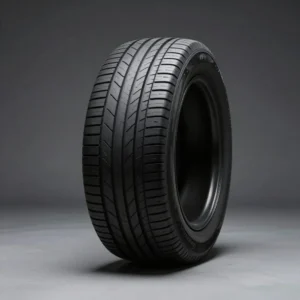
Different Tire Types: A Complete Guide for Cars, Motorcycles, and Bicycles
- There are five main car tire families: summer, winter, all-season, sport, and off-road, each suited to a specific use.
- Speed (S, T, H, V, W…) and load ratings are indicated on the sidewall and must be strictly followed.
- Motorcycle and bicycle tires follow a different logic, focusing on lean angle and pressure rather than temperature.
- In F1, Pirelli offers several compounds (from softest to hardest) and wet weather tires, which are changed multiple times during a race.
- Fitting different tires on the same axle or between the front and rear can lead to failed vehicle inspections or even fines.
Choosing a tire is about more than just brand or price: each type is designed for a specific use, climate, and mechanical requirement. A winter tire does not use the same rubber compound as a summer tire, a motorcycle tire behaves differently than a car tire in a corner, and a Formula 1 tire isn’t even designed to last more than a single race. This guide covers the different categories of tires—car, motorcycle, bicycle, and racing—to help you understand their technical differences and choose the right one for your vehicle and riding style.
The Main Car Tire Families
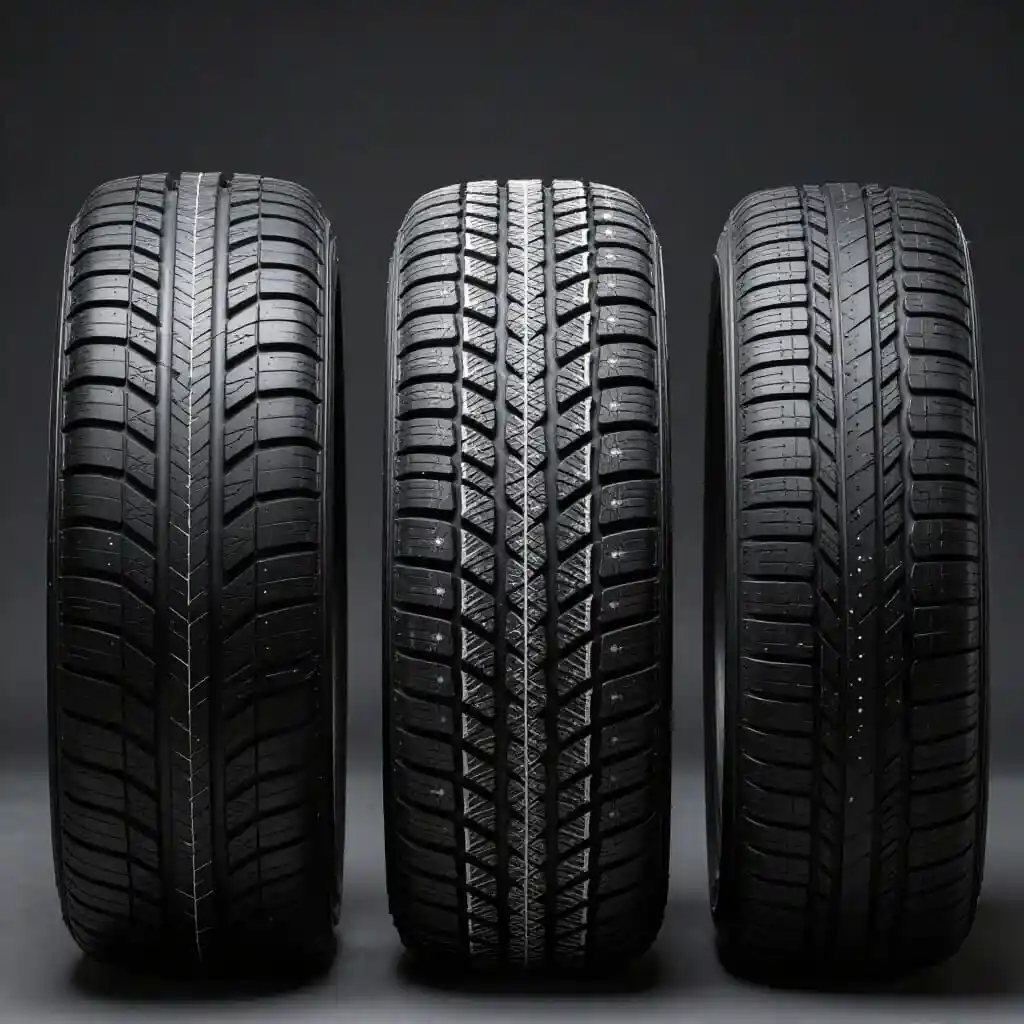
For passenger cars, classification is primarily based on seasonality and usage. Summer tires use a rigid rubber compound optimized for temperatures above 7°C (45°F): they offer precise handling and short braking distances on both dry and wet roads, but they become dangerously hard as soon as the temperature drops.
Winter tires, conversely, maintain their flexibility in cold weather thanks to a silica-enriched compound and more numerous sipes (small slits) that grip snow and ice. Their lifespan is generally shorter on hot, dry roads, meaning they shouldn’t be used year-round.
Between the two, all-season tires represent a technical compromise: an intermediate compound and a hybrid tread pattern allow them to perform adequately in both summer and winter, though they don’t excel in either extreme. They are best suited for drivers with low mileage or those living in regions with mild winters, but they remain less effective than dedicated tires in extreme conditions (intense heat or heavy snow).
Then come more specialized categories: sport or high-performance tires, designed for powerful cars to provide maximum cornering grip at the expense of longevity, and all-terrain or off-road tires (M+S), intended for SUVs and 4x4s that also need to drive on dirt tracks or rugged terrain.
Winter vs. Summer vs. All-Season: What You Really Need to Know
The difference between winter and all-season tires isn’t just about snow. Below 7°C (45°F), summer tire rubber loses its elasticity and grip drops significantly, even on dry but cold roads—this is where winter or all-season tires gain the advantage due to their softer composition.
On the other hand, the difference between summer and all-season tires is most noticeable in high heat and on highways: summer tires maintain a more rigid structure that limits heat buildup and improves steering precision, whereas all-season tires wear out faster in these conditions and may have slightly longer braking distances.
Finally, it is important to distinguish between snow tires and all-season tires: a true, certified winter tire carries the 3PMSF marking (a snowflake symbol on a mountain with three peaks), which certifies its performance in snow. Many all-season tires carry this marking today, but not all do—a crucial point to check before tackling a snowy mountain pass, as this pictogram is the only guarantee of sufficient traction in areas where winter equipment is mandatory.
Tire Speed and Load Ratings
Every tire displays a speed rating on its sidewall—a coded letter indicating the maximum speed it can safely support: Q (160 km/h), S (180 km/h), T (190 km/h), H (210 km/h), V (240 km/h), W (270 km/h), or Y (300 km/h). This classification is not decorative: fitting a tire with a lower rating than what the manufacturer recommends is a violation and can potentially void your warranty or insurance in the event of an accident.
Alongside the speed rating is the load index, a number (for example, 91 or 94) that corresponds to the maximum weight each tire can carry, based on standardized tables. Both indices must be read together: a tire might be rated for high speed but may not be able to support the weight of a heavy vehicle, and vice versa.
This technical classification also explains why front and rear tires can legitimately differ on certain vehicles, particularly 4x4s and sports cars: dimensions, load indices, and speed ratings can vary from one axle to the other depending on weight distribution and power delivery. However, what is not tolerated is a discrepancy in type or marking between the two tires on the same axle.
Different Front/Rear or Same-Axle Tires: Inspection Rules
Regulations regarding different tire setups are strict. On the same axle, the two tires must be identical in dimension, structure (radial or bias-ply), and usage category (summer, winter, etc.). Mixing them will result in a failed vehicle inspection and a mandatory re-test.
Between the front and rear, however, the law allows for different dimensions provided they are specified by the vehicle manufacturer, as is common with 4x4s and rear-wheel-drive sports cars. The only requirement is that the structure (radial/bias-ply) remains identical across all four wheels.
Regarding penalties, driving with non-compliant tires or mixing structures can result in significant fines and even vehicle impoundment if the defect is deemed dangerous. It is always best to ensure your tire setup is consistent before any vehicle inspection, especially after a partial replacement following a puncture.
Motorcycle Tires: A Different Logic
Unlike cars, motorcycle tires must manage lean angle in corners, a factor that completely redefines their design. We distinguish between road tires, with a versatile compound for daily use; sport-touring tires, which have more flexible sidewalls to handle high lean angles without sacrificing mileage; and slick or semi-slick tires reserved for the track, which have no tread pattern to maximize the contact patch.
Added to these are trail and enduro tires, with more or less pronounced knobs depending on the ratio of road to off-road riding, as well as custom tires, which are often much wider at the rear for the aesthetic look typical of cruiser-style motorcycles. The choice also depends on the structure: radial tires, which are laterally stiffer, are used on sportbikes, while bias-ply tires remain common on classic touring and custom bikes for their comfort and lower cost.
Bicycle Tire Types
On a bicycle, classification depends mostly on the terrain and the width of the section. Road tires, thin and inflated to high pressure, prioritize efficiency and speed over grip on loose surfaces. MTB (Mountain Bike) tires, much wider and knobby, seek the opposite: maximum grip on rough terrain, even if it means losing efficiency on asphalt.
Between the two, gravel and hybrid tires combine an intermediate width and a light tread, designed to alternate between roads and paths without changing bikes. Finally, tubeless technology, which is becoming standard on both road and MTB bikes, allows for riding at lower pressures without the risk of pinch flats, as a sealant automatically plugs small punctures.
Formula 1 Tires
In Formula 1, tire classification follows a logic radically different from road use. The sole supplier, Pirelli, offers several dry compounds identified by color—ranging from the softest (highest performance but lowest durability) to the hardest (slower but more resistant). Each team must select three consecutive compounds for a race weekend.
In addition to these dry tires, there are two types of wet-weather tires: the intermediate, for a damp but drivable track, and the extreme wet tire, reserved for the worst conditions with a high capacity for water displacement. F1 tires do not use inner tubes and are heated to over 70°C before every stint using tire blankets, ensuring they reach their optimal operating temperature the moment they leave the pits.
This variety of compounds necessitates a true tire management strategy during the race: a soft compound offers more grip for a fast lap but degrades in just a few laps, forcing teams to choose between immediate performance and the number of pit stops.
What is the difference between an all-season tire and a winter tire?
A winter tire offers better grip on snow and ice thanks to a softer rubber compound and more sipes, whereas an all-season tire is a compromise that is less effective in extreme conditions, whether in summer or winter.
Can I use different tires on the front and rear?
Yes, provided it is specified by the vehicle manufacturer (common on 4x4s and sports cars) and the structure (radial or bias-ply) remains identical on all four wheels.
What are the penalties for having different tires on the same axle?
Fitting different tires on the same axle can lead to significant fines and a mandatory failed vehicle inspection.
How many types of tires are used in Formula 1?
Pirelli offers several dry compounds (from soft to hard) as well as two wet-weather tires (intermediate and extreme), providing a wide range of choices for teams to select their race tires.
How do I read a tire’s speed rating?
It appears as a letter on the tire sidewall (S, T, H, V, W, Y…), with each letter corresponding to a maximum permitted speed, which must be respected according to the manufacturer’s recommendations.
What are the main types of motorcycle tires?
The main types are road, sport-touring, slick/semi-slick for the track, trail/enduro for off-road, and custom tires, with two possible structures: radial or bias-ply.
Sources
- Different types of car tires – ALLOPNEUS
- Tire types: summer, winter, all-season, and specific uses
- The beginner’s guide to F1 tyres – Formula 1
- Formula One tyres – Wikipedia

À découvrir
205/55 R16 Meaning: Tire Size and Markings Explained
Learn what 205/55 R16 means on your tires. We explain width, aspect ratio, load index, and speed ratings in simple terms.
How are Tires Made? Industrial Process Explained
October 22, 2026
Understanding Tire Dimensions: A Complete Guide
October 22, 2026