
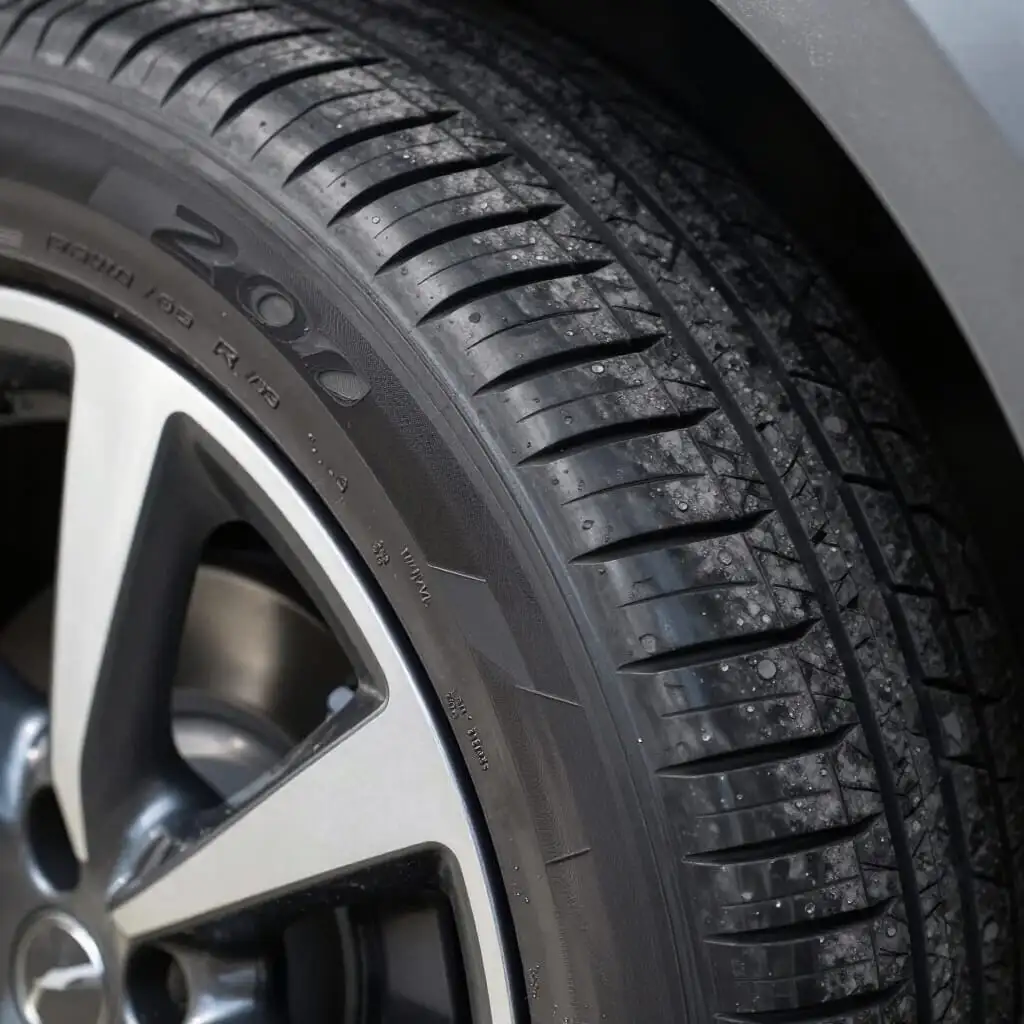
What does 205/55 R16 mean on a tire? Complete breakdown
- 205 = tire width in millimeters, 55 = aspect ratio (sidewall height as a % of width), R16 = radial tire for a 16-inch rim
- The following letters and numbers (91V, 94V, 91H, 91W…) indicate the load index and speed rating; these are not interchangeable
- A 205/55 R16 91V supports approximately 615 kg per tire and is rated for speeds up to 240 km/h
- The price of a 205/55 R16 generally ranges between $75 and $165 depending on the brand and technology
- Compared to a 205/60 R16, the 205/55 has a lower profile, meaning a shorter sidewall, which provides firmer handling
205/55 R16 is one of the most common tire markings found on compact sedans and family hatchbacks. Every part of this code carries a specific meaning: 205 corresponds to the tire width in millimeters, 55 is the aspect ratio (the “series”), and R16 means the tire has a radial construction and is designed for a 16-inch diameter rim. Immediately following this, a two-digit number and a letter—such as 91V or 94V—specify the tire’s load index and speed rating. Understanding these markings allows you to ensure your tires match your vehicle manufacturer’s specifications before purchasing, helping you avoid installation errors that could void your insurance in the event of a claim.
Breaking down the 205/55 R16 code digit by digit
Full tire markings always follow the same standardized structure, whether for a small city car or an SUV. On a 205/55 R16, here is what each segment represents.
205 indicates the tire width in millimeters, measured from sidewall to sidewall when the tire is mounted and inflated to the recommended pressure. The higher this number, the wider the contact patch with the road.
The 55 following the slash is the aspect ratio, also known as the series or profile: the sidewall height represents 55% of the tire’s width, which is approximately 113 mm in this specific case. A low-profile tire (series 40 or 45) offers a stiffer sidewall and sportier handling but less comfort; a high-profile tire (series 60 or 65) provides better cushioning against road irregularities.
The letter R stands for “radial,” the near-universal construction technology since the 1980s, where the carcass plies are arranged perpendicularly to the direction of travel. This is distinct from the “ZR” occasionally seen on high-performance tires, which historically indicated a maximum speed exceeding 240 km/h.
Finally, 16 corresponds to the diameter of the rim (in inches) that the tire must be mounted on—not the total diameter of the entire wheel assembly. A 205/55 R16 tire can only be mounted on a 16-inch rim; it can never be mounted on 15 or 17-inch rims unless there is a complete size change approved by the manufacturer.
Load index and speed rating: 91V, 94V, 91H, 91W
After the dimensions comes a second code, equally essential but often overlooked by drivers: the load index followed by the speed rating. On a 205/55 R16 91V tire, 91 is the load index and V is the speed rating.
The load index uses a standardized table to express the maximum weight the tire can support at the recommended pressure. An index of 91 corresponds to a maximum load of approximately 615 kg per tire, while an index of 94 (as in 205/55 R16 94V) increases this to approximately 670 kg. This difference is significant: a heavier vehicle, one that is heavily loaded, or one equipped with heavy options (like a tow hitch or gas kit) may require a higher index to stay within manufacturer tolerances.
The speed rating indicates the maximum speed the tire can safely maintain continuously. An H rating allows up to 210 km/h, V up to 240 km/h, and W up to 270 km/h. A 205/55 R16 91H is perfectly suitable for standard urban or highway use, whereas a 205/55 R16 91W is aimed at more dynamic vehicles or high-end versions of the same sedan.
The safety rule is simple: you can install a tire with a speed or load index higher than the original, but never lower, unless explicitly permitted by the manufacturer. Downgrading your index can lead to a loss of warranty and, in the event of an accident caused by tire failure, a refusal of coverage by your insurance provider.
Price of a 205/55 R16 tire: what influences the cost
The price of a 205/55 R16 tire depends primarily on the brand and the specific range chosen, rather than the dimension itself, as this is one of the most widely produced and industrialized sizes. For this size, individual unit prices typically range from around $75 for a budget brand to over $165 for a premium brand (such as Michelin, Continental, Bridgestone, or Pirelli), with a mid-range segment (Goodyear, Hankook, Falken) often falling between $85 and $115.
The price gap doesn’t just reflect the logo on the sidewall: premium tires invest more in research regarding rubber compounds, resulting in better wet grip and slower wear. Conversely, an entry-level tire remains a sensible choice for a vehicle with low mileage or for those on a tight budget, provided the original load and speed indices are strictly respected.
You should also factor in mounting and balancing, which are generally charged between $10 and $20 per tire at most service centers, as well as the valve and recycling fees that are often included in the displayed price. While comparing multiple retailers is worthwhile, technical compliance must always remain your decisive criterion over price.
205/55 R16 vs 205/60 R16: what is the practical difference?
These two sizes share the same width (205 mm) and the same rim diameter (16 inches), but they differ in their series, meaning their sidewall height is different. A 205/55 R16 has a sidewall of about 113 mm, compared to about 123 mm for a 205/60 R16—a 10 mm difference that, when doubled (for both sides of the tire), changes the total wheel diameter by nearly 20 mm.
This difference has very practical consequences. A taller sidewall, like on the 205/60, absorbs potholes and road irregularities better, offering superior comfort, which is particularly appreciated in family vehicles or for regular highway commuting. The 205/55, with its lower profile, offers better cornering stiffness and a more precise driving feel, though at the cost of slightly reduced comfort on poor roads.
Replacing a 205/55 R16 with a 205/60 R16 (or vice versa) is never a minor change: it alters the rolling circumference, which can potentially affect speedometer readings and the calibration of ABS/ESP systems on newer vehicles. This is why the original dimension—indicated on your vehicle registration document and on the sticker located in the fuel filler flap or the door pillar—must always be your reference, unless explicitly validated by a professional or the manufacturer.
Where to find your vehicle’s original tire size
Before making any purchase, it is essential to verify the exact size recommended for your vehicle rather than relying solely on the tires currently mounted, which may have been replaced by a previous owner with incorrect sizes. Three reliable sources can confirm the correct tire meaning for your vehicle.
Your vehicle registration document (logbook) mentions the approved dimension in field D.3, sometimes with several possible variants depending on the vehicle version. The sticker located on the driver’s door frame or inside the fuel filler flap usually indicates the original front/rear dimensions as well as the recommended inflation pressures—information that the tire sidewall markings alone will never provide. Finally, the owner’s manual lists the dimensions approved by the manufacturer, including authorized alternatives based on optional rim sizes.
If in doubt, a tire professional can confirm in minutes whether a 205/55 R16 91V is suitable for a specific vehicle, or if a higher load index should be prioritized due to specific usage (towing, frequent heavy loads, or mountain driving).
What does 205/55 R16 mean on a tire?
205 is the width in millimeters, 55 is the aspect ratio as a percentage, R indicates radial construction, and 16 is the rim diameter in inches.
What is the difference between 205/55 R16 91V and 91H?
Both have the same load index (91, approximately 615 kg), but the speed rating differs: H is rated up to 210 km/h, while V is rated up to 240 km/h.
Can I install a 205/55 R16 94V instead of a 91V?
Yes, installing a higher load index (94 instead of 91) is permitted and even recommended for heavily loaded vehicles, whereas the reverse is not advised.
How much does a 205/55 R16 tire cost?
Generally, expect to pay between $75 for a budget brand and over $165 for a premium tire, excluding mounting.
Can I replace a 205/55 R16 with a 205/60 R16?
It is technically possible in some cases, but it changes the wheel diameter and can cause errors in your speedometer and electronic driver aids; always consult a professional first.
What is the W speed rating on a 205/55 R16 tire?
The W rating allows a continuous maximum speed of 270 km/h, which is a step above the V rating (240 km/h), typically found on sportier vehicle versions.
Sources

À découvrir
Understanding Tire Dimensions: A Complete Guide
Learn how to decode car, motorcycle, and bike tire dimensions. Understand markings like 195/65 R15, load indices, and speed ratings.
Tire Load Index and Speed Rating: How to Read Them
October 24, 2026
Different Tire Types: Complete Car, Moto & Bike Guide
October 24, 2026