Why Are Tires Made of Multiple Layers?
- A tire typically consists of between 15 and 20 components spread across several distinct layers
- The textile carcass ensures resistance to internal pressure, while the steel belt stabilizes the tread
- Each tire layer has a specific function: sealing, rigidity, grip, or shock protection
- This multi-layer architecture explains why car tire composition differs from motorcycle or bicycle tires
- Understanding tire layers helps you choose the right new tire and spot abnormal wear
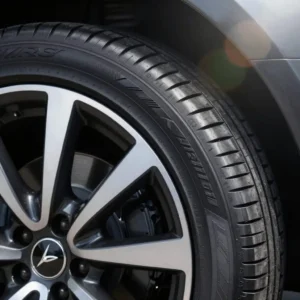
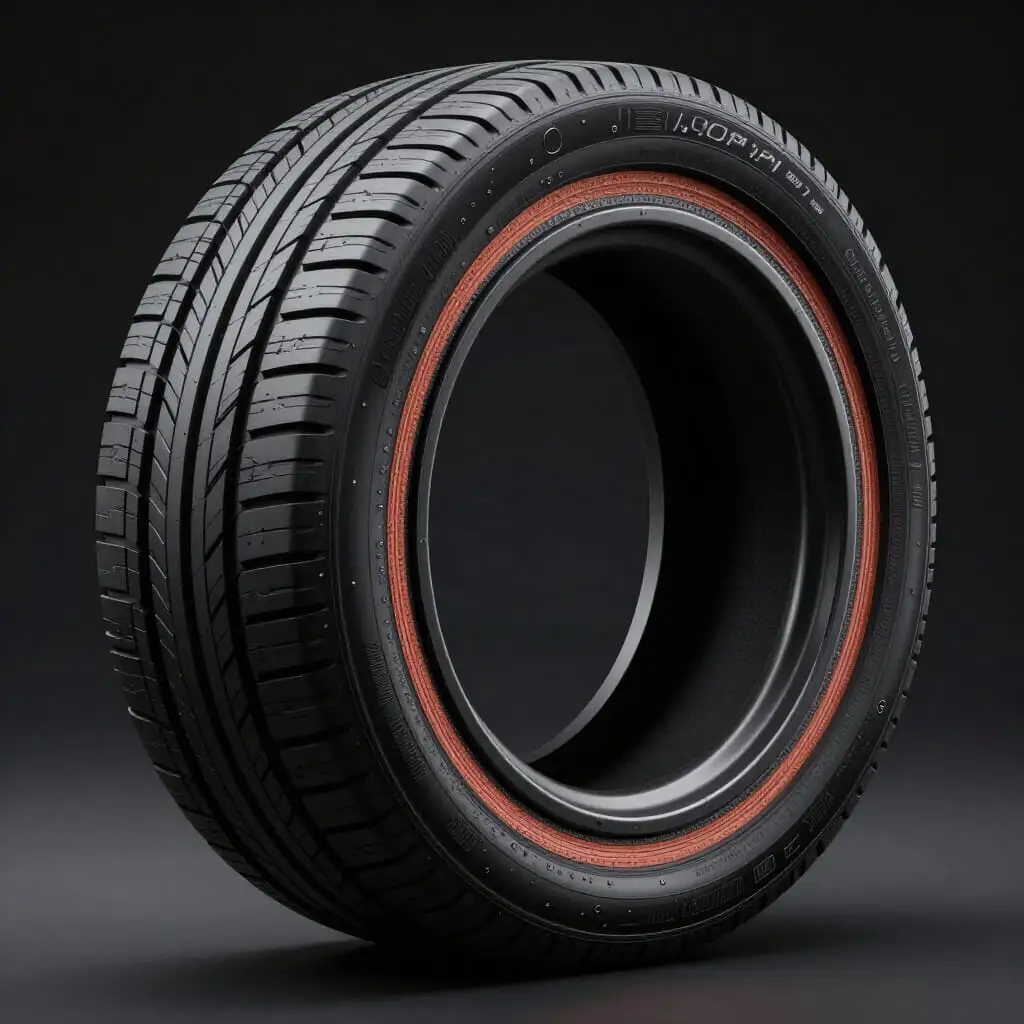
A tire is never just a single molded block of rubber. Its composition relies on a stack of layers with different materials and functions: rubbers, textiles, steel cables, and sealing elements work together to transform wheel rotation into grip, braking, and comfort. This multi-layer structure exists because no single material could meet all the mechanical constraints imposed on a tire: supporting the vehicle’s weight, absorbing road shocks, remaining flexible at low temperatures, and maintaining its shape at high speeds. It is this juxtaposition of specialized layers that makes the balance between safety, longevity, and driving comfort possible.
The tread: the most visible layer, but not the only one
The tread is the part of the tire that touches the ground—the part we observe first to judge its wear level. However, it is only one layer among many, placed atop a much more complex internal structure. Its composition blends several types of rubber, sometimes layered in two or three strata: a harder compound deeper down to limit heat buildup and rolling resistance, and a softer compound on the surface to maximize road grip.
This dual composition explains why a new tire often offers different levels of grip depending on its wear: the first few millimeters of rubber, which are softer, gradually give way to a more rigid layer underneath. The patterns cut into this tread (grooves, sipes) serve to evacuate water and prevent aquaplaning, but they could not exist without the underlying reinforcement layer that prevents the tread from deforming under load. This is the logic of a multi-layer tire: the surface manages road contact, while the internal layers manage structural integrity.
The belt: a metal framework beneath the rubber
Beneath the tread lies a layer that is often overlooked but crucial for stability: the belt. In standard car tire construction, this consists of two to four overlapping plies of fine steel cables, arranged diagonally and crossed relative to one another, then embedded in a specific rubber that ensures adhesion between the metal and the surrounding rubber. This crossover angle, generally between 15 and 25 degrees depending on the manufacturer, is critical: it determines the tire’s transverse rigidity—its ability to resist deformation and twisting when the wheel handles lateral forces in a corner or load transfer during heavy braking.
Without this framework, the tread would deform under pressure, leading to irregular wear and the risk of losing control at high speeds. The belt acts as a kind of rigid skeleton that maintains the tire’s geometry, much like steel reinforcement in reinforced concrete: rubber alone is too flexible and would allow the contact patch to bulge and hollow out under load, while steel alone is too rigid and would transmit every road imperfection directly to the rim. It is precisely this combination of flexibility and rigidity that allows a car tire to drive straight on the highway while remaining capable of absorbing road irregularities.
This logic of reinforcing a new tire with cables is also found, with variations, on other types of vehicles. On a motorcycle tire, the belt is often supplemented by a high-strength textile fiber ply (nylon or aramid) wrapped in a spiral, a technique called “zero degree” that limits tire expansion caused by centrifugal force at high speeds. Conversely, bicycle tire composition generally avoids steel: lightness is the priority, and contact patch stability relies instead on the carcass itself and, for high-end models, on a thin Kevlar puncture-protection layer rather than a true metal belt. This diversity illustrates why tire composition is never static: each layer is sized according to the mechanical constraints specific to the vehicle it equips, whether it be speed, load, or total weight.
The carcass: the tire’s textile skeleton
Hidden beneath the belt is the carcass, a textile layer made of synthetic fibers (polyester, rayon, or nylon depending on the model) woven into plies. On a standard passenger car tire, this carcass generally consists of one to three textile layers about 1 to 1.5 cm thick. Its function is to maintain the tire’s general shape under internal air pressure—often exceeding 2 bar—and to transfer forces to the ground during acceleration, braking, and cornering.
It is this carcass that gives the tire its ability to stay inflated without deforming into a ball or a barrel shape. It also plays a damping role: by flexing slightly under load, it absorbs some of the road’s irregularities before they reach the vehicle’s chassis. Car tire composition differs significantly here from motorcycle tires, where the carcass must also support steep lean angles in corners, or bicycle tires, where it remains much thinner and lighter since the loads and speeds involved are much lower.
Sidewalls and beads: protection and rim mounting
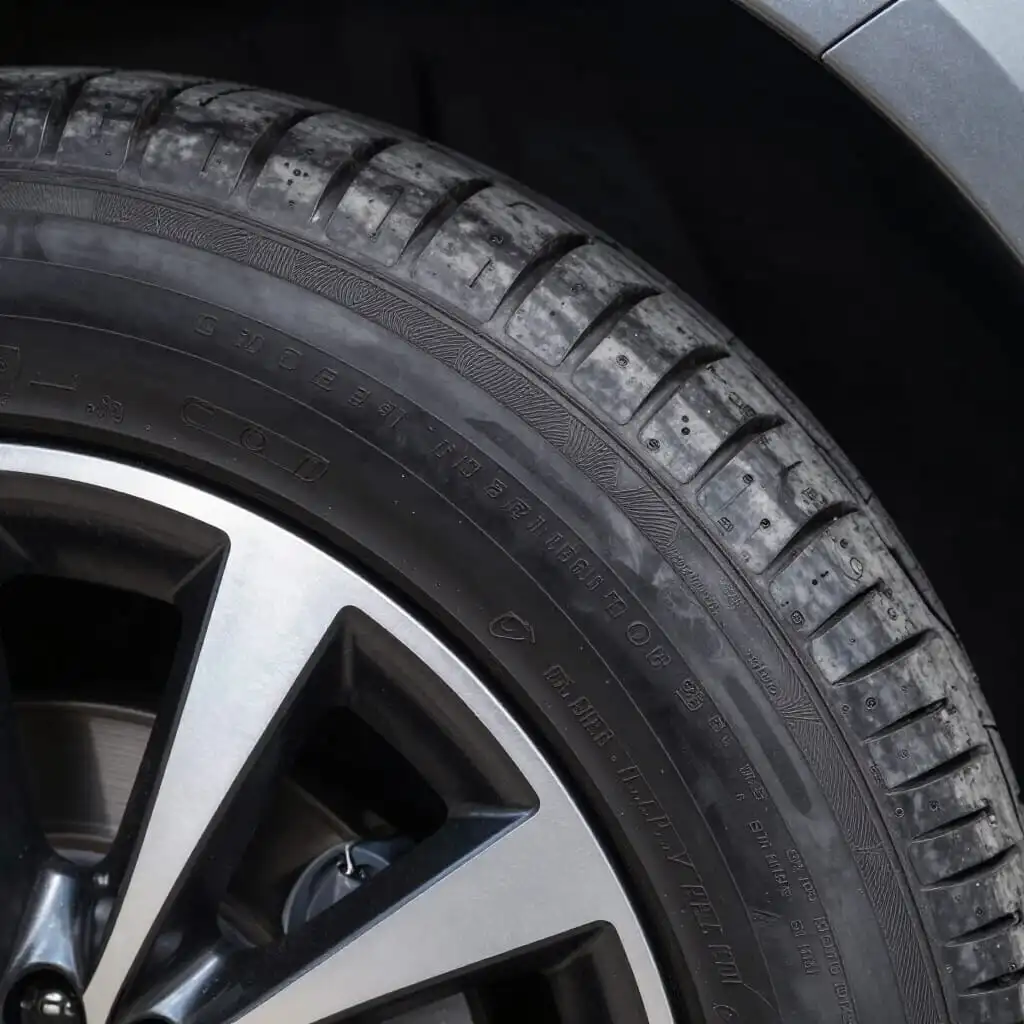
The sidewalls form the sides of the tire, between the tread and the rim. This new tire layer is directly exposed to curb impacts, scratches, and friction against edges, which is why a specific rubber is used—one that is more resistant to abrasion but also flexible enough to handle the lateral flexing of the tire during cornering. It is also on the sidewalls that marking information is printed: dimensions, load index, and speed index.
At the base of the tire, the beads ensure a mechanical connection with the rim. They incorporate braided steel beads that are rigid and virtually inextensible, preventing the tire from unseating from the rim under pressure or during violent braking. This zone concentrates enormous stress: it is what holds the entire tire structure against the rim despite the internal air pressure constantly pushing outward. Without this layer of metal beads, no tire would stay in place reliably.
The inner liner: invisible sealing
The innermost layer, invisible from the outside, is called the inner liner. It is composed of a specific rubber that is almost impermeable to air, serving to replace the inner tube that used to equip tires. This pneumatic layer explains why a modern tire can remain inflated for several weeks without significant pressure loss.
Its composition varies slightly depending on the tire type: a motorcycle or bicycle tire may still use a separate inner tube rather than an integrated liner, particularly on budget or off-road models where repairing a punctured tube is simpler in the field. On a tubeless car tire, however, this internal layer is indispensable: a micro-crack in the liner is enough to cause a slow pressure leak, which is often invisible at first glance but detectable through regular pressure checks.
How many layers does a car tire have?
A standard passenger car tire generally includes between 15 and 20 components distributed across several layers: the tread, the steel belt, the textile carcass, the sidewalls, the beads, and the inner liner.
What is the most important tire layer?
No single layer is truly more important than the others: the belt ensures stability, the carcass maintains shape, and the tread provides grip. They are complementary and interdependent.
Is motorcycle tire composition different from car tire composition?
Yes, motorcycle tire composition adapts the carcass and sidewalls to handle steep lean angles in corners, often using softer rubber compounds to prioritize grip over longevity.
Why do bicycle tires have fewer layers than car tires?
Bicycle tire composition remains simpler because the loads and speeds are much lower: the carcass is thinner, and many models still use a separate inner tube rather than an integrated liner.
Can you see the different tire layers with the naked eye?
No, most internal layers (belt, carcass, inner liner) are invisible once the tire is manufactured. Only the sidewalls and the tread are visible on the surface.
Why does a new tire seem harder than a worn one?
The surface layer of the tread, which is softer, gradually wears away to reveal a denser rubber underneath, which slightly changes the grip sensation over time.
Sources
- Tire structure: composition, markings, and selection – Pneus-Online
- What are the fundamental elements of a tire? – MyPneu
- Tire structure – functions of different elements – Oponeo.fr

À découvrir
Tire Markings: Explained Symbols, Logos & Inscriptions
Learn about all tire markings: dimensions, indices, 3PMSF logo, and winter symbols. Understand these inscriptions to make the right choice.
Tire Grooves: Purpose, Role, and Tread Depth
October 27, 2026
Tire History: From Early Wheels to Modern Tires
October 29, 2026