
How to Tell if Your Car Battery is Dying?
- A slow or hesitant start, especially in the morning or in cold weather, is often the first sign of a worn-out battery.
- A voltage below 12.4 volts at rest indicates a weak battery; anything below 12 volts means it is severely degraded.
- Glitchy electrical accessories (slow windows, dim lights, or a radio that resets) signal a lack of power.
- The average battery lifespan is between 3 and 5 years; you should be more vigilant once you pass this mark.
- A simple multimeter test or a professional inspection can confirm the diagnosis before you face a total breakdown.
A failing car battery is first noticed during startup: the engine struggles to turn over, coughs for a few seconds too long, or the dashboard flickers before the ignition catches. If this happens repeatedly, especially in the morning or after a cold night, your battery is likely nearing the end of its life. Other warning signs include flickering lights, sluggish electrical accessories, or a suspicious smell under the hood. The good news is that a worn-out battery usually sends signals weeks before it fails completely—provided you know how to spot them and confirm them with a simple DIY voltage test.
Slow Starts: The First Warning Sign
This is the most classic and easiest symptom to identify: when you turn the key or press the start button, the engine takes longer than usual to fire up. The starter motor turns slowly, producing a heavy, stuttering sound instead of a crisp hum, or you might have to try two or three times before the engine finally catches.
This phenomenon gets significantly worse in cold weather, which is why so many drivers discover their battery is failing on a freezing winter morning. The cold slows down the battery’s internal chemical reactions and reduces its ability to deliver the high burst of current required by the starter motor. A healthy battery handles these conditions without issue; a weak battery shows its limits as soon as the temperature drops below freezing.
Be careful not to confuse this symptom with an alternator or starter motor problem, which can produce similar signs. The difference often lies in consistency: a failing battery shows progressive degradation over several days or weeks, whereas a faulty starter is usually a more sudden failure accompanied by distinct mechanical noises (like grinding or a sharp clicking sound without any attempt to rotate).
Weak Car Battery: Electrical Symptoms to Watch For
Beyond the startup process, a battery losing its capacity affects the entire electrical system of the vehicle because it can no longer provide stable voltage to all components.
Several signs should put you on alert: – Headlights appear dimmer than usual, especially at idle, but return to normal brightness when engine RPMs increase. – Power windows move up and down more slowly than usual. – The radio or infotainment screen cuts out and restarts unexpectedly. – Dashboard warning lights flicker or turn on for no apparent reason during startup. – The horn sounds muffled or less assertive.
This generalized loss of power is simple to explain: the battery can no longer maintain sufficient voltage when multiple components draw power from the circuit at the same time—typically during a cold start when the heater, wipers, and lights are all running simultaneously. A healthy battery absorbs this demand without noticeable fluctuation; a dying battery shows visible drops in lighting or instrument stability.
Testing Voltage: The Most Reliable Method
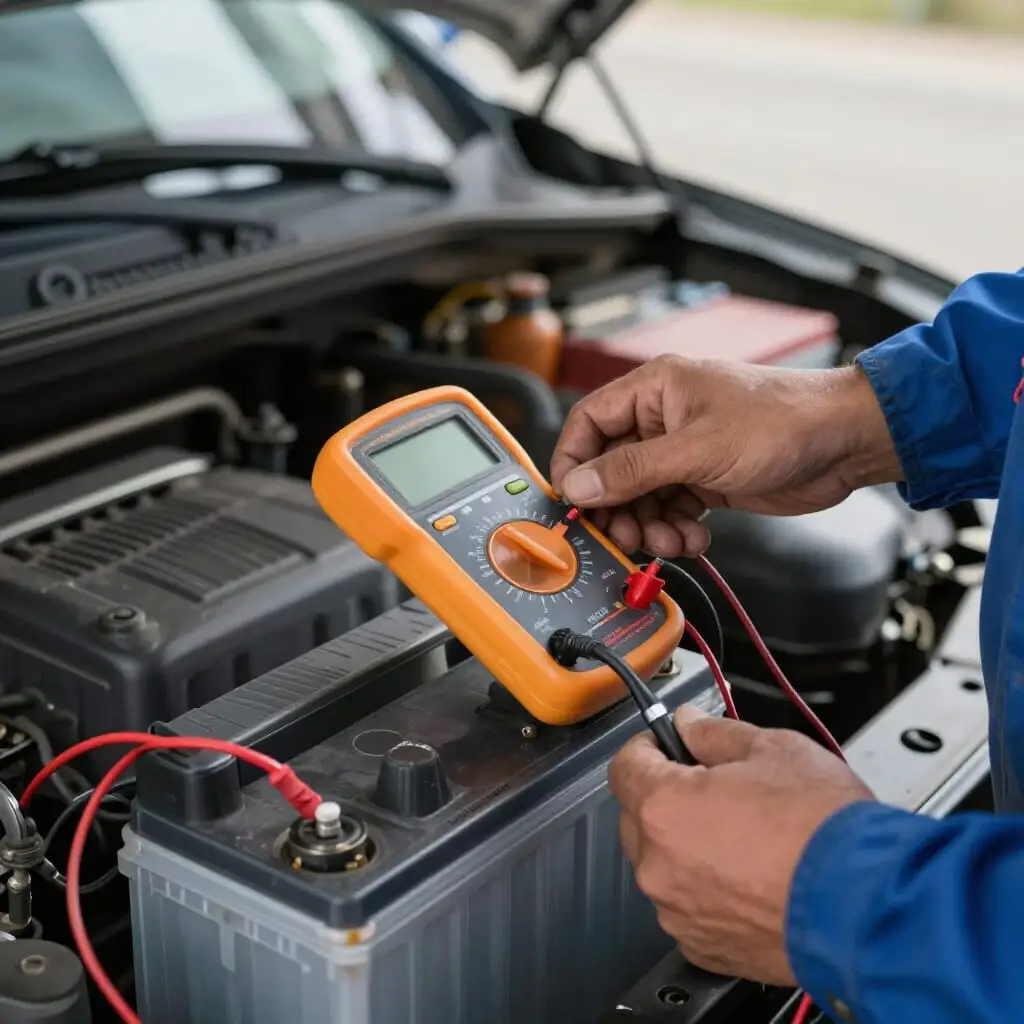
While visual symptoms provide a good indication, only a voltage measurement can objectively confirm the battery’s condition. The process is simple and only requires a multimeter, which can be purchased for about ten dollars.
Perform the test with the engine turned off, after the vehicle has been sitting for at least a few hours (ideally overnight) to allow the battery to stabilize. Set your multimeter to DC voltage mode, connect the red probe to the positive terminal and the black probe to the negative terminal, and read the displayed value.
Key benchmarks to know: – Above 12.6 volts: The battery is fully charged and in good condition. – Between 12.4 and 12.6 volts: The charge is adequate but starting to decline. – Below 12.4 volts: The battery is considered weak and should be recharged, or potentially replaced if the problem persists. – Below 12 volts: The battery is very low on charge and may be permanently damaged if left in this state.
A complementary test involves starting the engine and measuring the voltage again: it should climb between 13.7 and 14.7 volts, which is a sign that the alternator is correctly recharging the battery. If the voltage does not rise into this range, the problem might lie with the alternator rather than the battery itself—a crucial distinction to make before replacing parts unnecessarily.
Other Telltale Signs
Some signs are less obvious than a slow start but are just as important because they often signal an imminent failure.
A dashboard battery light that stays on constantly is a direct signal that should never be ignored; it indicates that the charging system is not functioning correctly, whether due to the battery or the alternator. Similarly, a “rotten egg” smell under the hood indicates a sulfuric acid leak caused by an overheating or internally degrading battery—a sign to take very seriously, as it can precede a swollen battery casing.
The physical appearance of the battery also provides clues: a swollen or deformed case, white or greenish corrosion around the terminals, or visible fluid leaks are all signs that you should consider a quick replacement, regardless of the battery’s age.
Finally, age remains a relevant indicator. The average lifespan of a worn-out battery is between 3 and 5 years, depending on usage conditions, climate, and the frequency of short trips (which prevent a full recharge). Once you pass this window, even without obvious symptoms, a preventative check by a professional can help you avoid being stranded on the side of the road.
When to Replace Your Battery and How to Extend Its Life
Once symptoms are confirmed via a voltage test, replacement becomes necessary if the battery regularly drops below 12.4 volts despite being recharged, or if it no longer holds a charge for more than a few days. Continuing to drive with a very weak battery increases the risk of a breakdown at the worst possible moment and can ultimately overstress the alternator as it tries to compensate for the battery’s weakness.
However, a few habits can help extend the life of a still-functional battery: – Avoid frequent, very short trips, which don’t allow the alternator enough time to fully recharge the battery. – Disconnect power-hungry accessories (like aftermarket stereos or USB chargers) when the engine is off. – Regularly check that the terminals are clean and tightly secured to ensure good contact. – Use a trickle charger during long periods when the vehicle is not being used.
If doubts persist after a DIY voltage test, most garages and auto centers offer a free battery diagnostic in just a few minutes using an electronic tester that simulates a load and measures the actual remaining capacity. This is often the most reliable way to decide between a simple recharge and a permanent replacement.
How can I tell if my car battery is dying?
The most reliable signs are slow or difficult starts, dim headlights or weak electrical accessories at idle, and a multimeter reading below 12.4 volts with the engine off.
What is the normal voltage of a car battery?
A fully charged battery should show between 12.6 and 12.8 volts at rest, and between 13.7 and 14.7 volts while the engine is running due to the alternator’s charging.
Why is my battery weak in the morning?
Cold temperatures slow down the battery’s internal chemical reactions and reduce its ability to deliver the high current needed for starting, making an already weakened battery particularly vulnerable at the start of the day.
How long does a car battery last?
The average lifespan is between 3 and 5 years, depending on your climate, driving habits, and the frequency of short trips that prevent a full charge.
Can a loss of power be caused by the battery?
Yes, a failing battery that can no longer maintain a stable voltage often causes a noticeable drop in the performance of electrical equipment, especially when multiple accessories are running at once.
How can I test a car battery myself?
Use a multimeter in DC voltage mode, connect the probes to the positive and negative terminals with the engine off after several hours of rest, and read the residual voltage.
Sources
- How to Detect a Car Battery That Needs Replacing
- Weak Car Battery: 5 Signs Before a Breakdown
- Weak Car Battery: 7 Alarming Signs and DIY Guide

À découvrir

Car Fluid Levels to Check: Essential 5-Liquid Guide
Discover the 5 essential fluid levels to check regularly in your car: oil, coolant, brake fluid, and more. A practical maintenance guide and tips.

How to Check Car Fluid Levels | Complete Guide
November 7, 2026
How to Reduce Tire Wear | Practical Tips & Expert Advice
November 7, 2026