
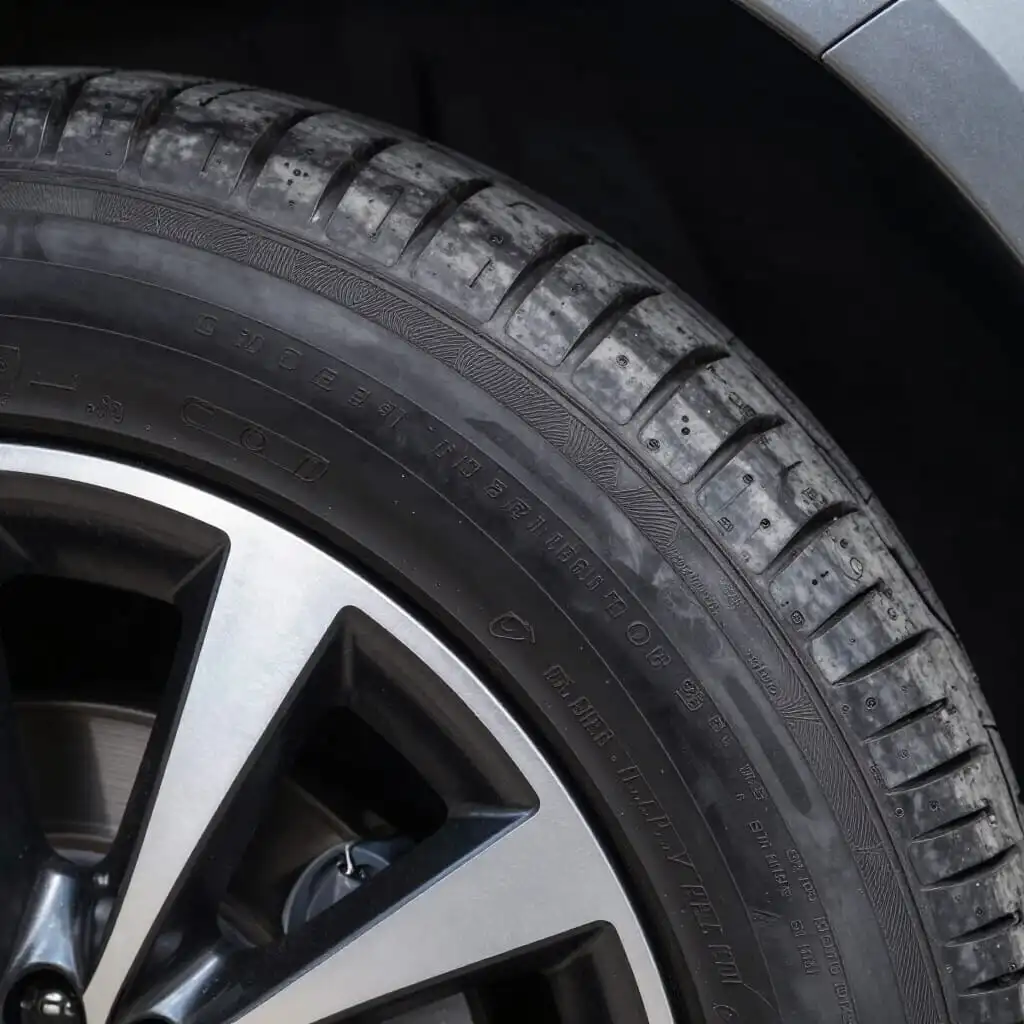
Tire Markings: Understanding All Symbols and Logos
- Tire markings include dimensions, load/speed indices, DOT codes, and regulatory logos printed on the sidewall.
- The winter tire logo (the Three-Peak Mountain Snowflake, or 3PMSF) is mandatory for driving in certain mountain zones during winter.
- All-season tire symbols often combine the M+S marking with the 3PMSF pictogram.
- The low tire pressure symbol on your dashboard signals a pressure loss detected by the TPMS, not a marking on the tire itself.
- Knowing how to read these inscriptions prevents compatibility errors and unexpected issues during vehicle inspections.
The sidewall of every tire contains a technical identity card: dimensions, load and speed indices, manufacture date, and regulatory logos like winter or all-season markings. While often ignored by drivers, these inscriptions allow you to verify that a tire is correctly matched to your vehicle and the current season, helping you avoid fines or failing a vehicle inspection. This guide decodes the most common tire symbols one by one—from dimension codes to winter and all-season logos—so you can read a tire like a professional.
The Dimension Code: The Foundation of Tire Reading
The first line of numbers and letters, such as 205/55 R16 91V, forms the core of tire markings. The first number (205) indicates the tire width in millimeters. The second (55) is the aspect ratio, expressed as a percentage: the lower this number, the thinner the sidewall. The letter R means the structure is radial, which is the universal standard for modern tires. The following number (16) indicates the rim diameter in inches, which must exactly match your vehicle’s original equipment.
Next come two essential regulatory data points: the load index and the speed rating. The first, a two- or three-digit number, refers to a standardized table indicating the maximum weight supported by the tire (for example, 91 corresponds to 615 kg). The second, a letter, sets the maximum permitted speed: V for 240 km/h, H for 210 km/h, T for 190 km/h. Installing a tire with an index lower than what the manufacturer recommends is an offense and could potentially void your insurance coverage in the event of an accident. These two values are mandatory on your vehicle registration documents and must be respected or exceeded, but never reduced.
Manufacture Date and DOT Marking
Every tire sold in Europe carries a DOT (Department of Transportation) marking—an alphanumeric code etched on the sidewall, often in an oval capsule, ending with four digits indicating the week and year of manufacture. A tire marked “2324” was produced during the 23rd week of 2024 (early June). Before the 2000s, this code only contained three digits (two for the week, one for the year), making it nearly impossible to accurately date a tire from that era with certainty—an extra hint, if needed, to rule out any tires of that generation still in circulation. This date marking is part of a broader DOT code that also includes the manufacturing plant and internal manufacturer references, but the last four digits are what matter most to drivers.
This information is crucial because tires age even when they aren’t being used: the oils and plasticizers in the rubber compound slowly evaporate, causing the rubber to harden and lose elasticity. This reduces grip, especially on wet or cold roads, and increases the risk of fine cracks on the sidewall that may be invisible at first glance. This chemical aging is independent of tread wear: a tire can have much more tread remaining than the legal 1.6 mm limit and still be dangerous simply due to its age.
Manufacturers generally recommend having a tire inspected by a professional after five years of age, then annually thereafter, and considering systematic replacement after ten years, regardless of the apparent condition of the tread. This is particularly important for low-use vehicles (classic cars, second vehicles), trailers and caravans that sit stationary most of the year, and spare tires, which are often forgotten in the trunk for years—until the day they become your only option on the roadside. Checking this DOT code before buying used tires also helps detect old tires being sold as new, a practice still unfortunately encountered in stock markets or when buying a used vehicle equipped with tires presented as recent, when their manufacture date actually predates the vehicle’s use by several years.
The Winter Tire Logo and 3PMSF Marking
The snow tire logo, officially called 3PMSF (Three-Peak Mountain Snowflake), depicts a snowflake inside a mountain with three peaks. This pictogram certifies that the tire meets minimum performance requirements on snow, validated by standardized testing for grip and braking at low temperatures. It is not just a marketing claim: under regulations like the “Loi Montagne II” in France, this winter tire logo is required—alongside snow chains or socks—in 34 French mountain massifs from November 1st to March 31st, under penalty of a fine.
Do not confuse this marking with the older M+S (Mud and Snow) symbol, which is simply applied by the manufacturer without independent official certification. An M+S tire alone does not guarantee the same winter performance as a tire bearing the 3PMSF symbol, even if many recent all-season models display both logos together to cover a wider range of uses.
All-Season Tire Symbols: What Sets Them Apart
All-season tire symbols aim to reconcile summer versatility with winter safety. On the sidewall, a certified all-season tire usually displays both the M+S marking and the 3PMSF pictogram, proving it satisfies snow grip tests while remaining usable year-round. This dual presence is the most reliable way to distinguish a true all-season tire from a standard summer tire that is merely tolerated in winter thanks to a non-certified M+S marking.
In practical terms, this category of tire is a compromise: its performance remains lower than a dedicated winter tire in extreme cold or deep snow, and slightly behind a pure summer tire on dry, hot roads. For urban driving with few miles driven in the mountains, this compromise is worthwhile and avoids the need for seasonal tire changes. However, drivers who regularly travel through mountain zones or face harsh winters should prioritize a specific winter tire.
Other Pictograms and the Low Pressure Symbol
Other inscriptions complete the picture: the “Tubeless” mention indicates a tire without an inner tube, while directional arrows indicate the mandatory mounting direction for asymmetrical or directional tires. The “Run Flat” or “RFT” marking designates a tire capable of driving for a limited distance after a puncture thanks to reinforced sidewalls. Some tires also feature a yellow dot indicating the lightest point, which should be aligned with the valve during mounting for proper balancing.
The low tire pressure symbol, on the other hand, does not appear on the tire itself but on the vehicle’s dashboard. This warning light, shaped like a horseshoe with an exclamation mark, illuminates when the Tire Pressure Monitoring System (TPMS) detects a significant deviation from the recommended pressure. Mandatory on all new vehicles sold in the European Union since 2014, this device does not replace regular manual checks, as it generally only detects pressure drops once they exceed a certain threshold.
How do I read a tire’s load and speed indices?
The load index is a number referring to a standardized table of the maximum weight supported by the tire, and the speed rating is a letter corresponding to the maximum permitted speed. Both values are listed on your vehicle registration and must never be lower than the manufacturer’s recommendations.
What is the difference between the M+S marking and the 3PMSF logo?
M+S is a declaration made by the manufacturer without independent certification, while the 3PMSF (three-peak mountain with snowflake) confirms snow grip tests have been validated according to an official standard.
Is the winter tire logo mandatory everywhere in France?
No, it is required in 34 mountain massifs between November 1st and March 31st as an alternative to snow chains or snow socks, under the “Loi Montagne II” regulation.
How can I tell if my tire is a true all-season tire?
Check for the simultaneous presence of both M+S and 3PMSF markings on the sidewall: this combination distinguishes a certified all-season tire from a simple summer tire tolerated in winter.
What does the DOT code on a tire mean?
The last four digits of the DOT marking indicate the week and year the tire was manufactured, which is useful information for checking its age before purchase.
What does the low tire pressure symbol on my dashboard mean?
This horseshoe-shaped light indicates that the TPMS has detected insufficient pressure in one or more tires; you should check your tire pressure as soon as possible.
Sources
- Tire markings: understanding codes and indices – Largus
- Explanation of tire markings – Michelin
- How to easily recognize all-season tires – Pieces et Pneus
- Tire markings: understanding acronyms and abbreviations – 1001Pneus

À découvrir
Winter Tires: How They Work & Key Features Explained
Learn how winter tires work, the role of sipes, and their performance in snow. A complete guide to choosing and using winter tires safely.
Different Tire Types: Complete Car, Moto & Bike Guide
October 24, 2026
How Does Tire Tread Work? Understanding Grip & Wear
October 26, 2026