How Does Tire Tread Work?
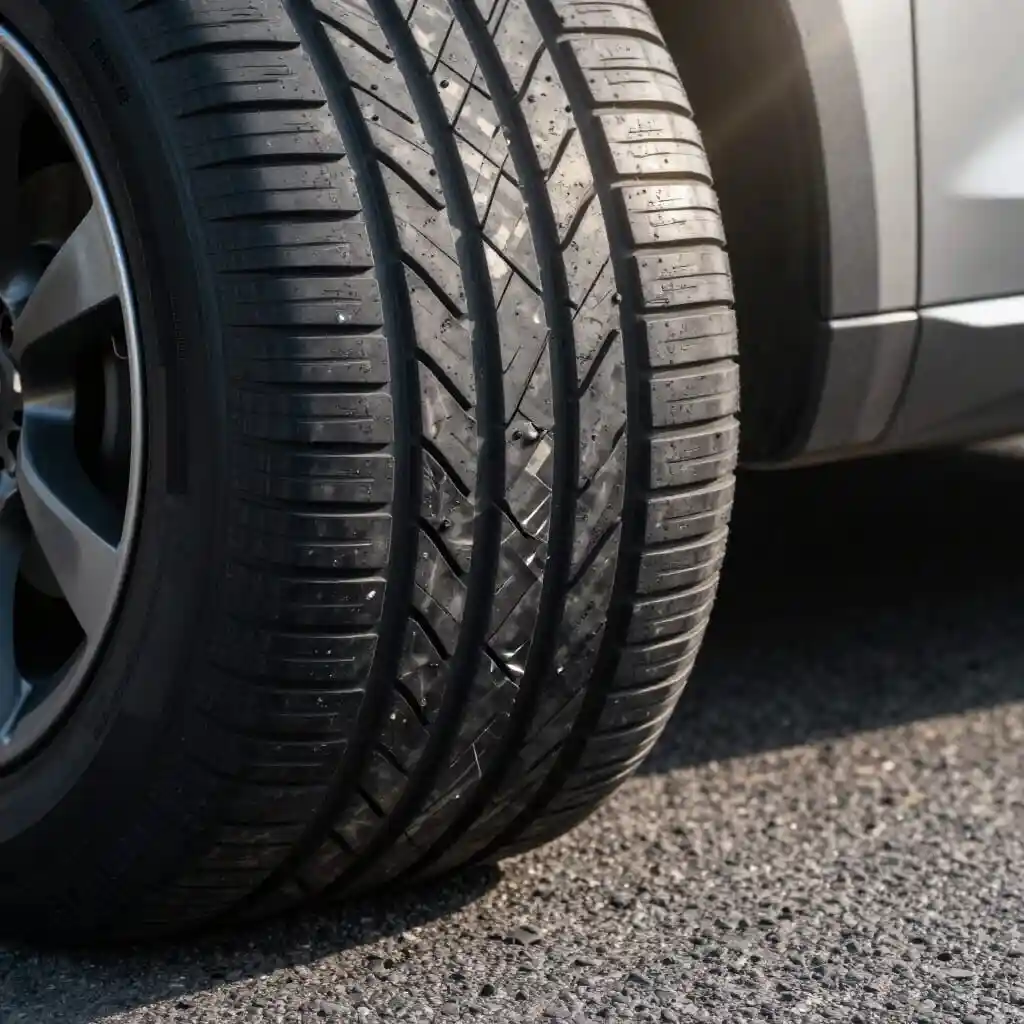
- Tread is the rubber layer in contact with the road, featuring grooves and blocks designed to evacuate water and transmit forces.
- The legal minimum tread depth is 1.6 mm in France for cars, compared to approximately 8 mm on a new tire.
- The pattern (grooves, sipes, blocks) varies by use: car, motorcycle, bicycle, and truck tires all follow different design logic.
- Worn tread drastically reduces grip on wet roads and increases braking distances.
- Integrated tread wear indicators allow you to visually check your tire condition without tools.
Tire tread is the part of the tire that physically touches the ground: a thick layer of rubber sculpted with grooves, blocks, and sipes that acts as the sole interface between the vehicle and the road. Its role is simple to state but complex to execute: it must transmit propulsion, braking, and steering forces while simultaneously evacuating water and resisting wear over thousands of kilometers. Whether it is a car, motorcycle, bicycle, or truck tire, the principle remains the same; only the geometry of the pattern changes to adapt to speed, weight, and terrain.
What is tire tread made of?
Tire tread is not just a simple piece of rubber glued onto the tire casing. It is the result of a complex mixture of synthetic and natural rubbers, enhanced with carbon black and/or silica—two additives that reinforce mechanical strength and modify grip properties depending on weather conditions. This mixture is spread into a long, smooth strip, cut to the required size, and then applied to the textile or metallic carcass that forms the internal structure.
The exact composition varies significantly based on the intended use. A tire designed for sports performance will prioritize a softer, stickier rubber compound that wears faster, while a long-life tire for urban commuting will focus on a harder, more durable formula that offers less pure grip. This is why two tires of the same size can behave very differently on the road: the visible pattern is only half the equation; the chemistry of the rubber is the other half.
Once the rubber is applied, it undergoes a curing process (vulcanization), which permanently hardens the mixture and imprints the specific tread pattern for that model. This is the stage where the grooves, blocks, and sipes—which define the tire’s behavior throughout its lifespan—are created.
The role of tread pattern in grip
The pattern visible on a tread is never decorative: every groove, block, and sipe serves a precise function. The main grooves, which are generally the widest and deepest, primarily serve to channel water away from the tire to prevent aquaplaning. On a wet road, a tire traveling at 90 km/h must displace several liters of water per second under each wheel; without these evacuation channels, the tire would eventually “float” on a film of water, losing all contact with the road.
The rubber blocks are responsible for transmitting longitudinal and lateral forces: acceleration, braking, and cornering. The larger and more compact the blocks, the greater the contact patch with the ground, which improves grip on dry roads but reduces water evacuation capacity. This is a constant compromise that manufacturers adjust based on the tire’s intended purpose.
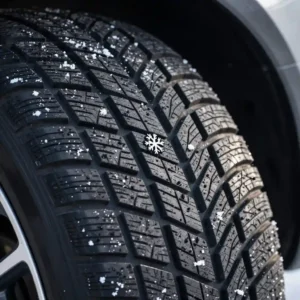
Finally, the sipes—fine slits cut into the blocks—play a decisive role on snow or ice: they multiply the contact edges that bite into slippery surfaces, much like the lugs on a hiking boot. This characteristic is what visually distinguishes a winter tire from a summer tire, the latter having a much cleaner pattern to maximize full-rubber contact.
New vs. worn tire tread
On a new tire, the tread depth is typically around 8 mm for a standard car tire, slightly less for a sport motorcycle tire, and more for off-road or truck tires. This depth represents a reservoir of rubber that will progressively erode over kilometers due to friction, vehicle load, driving style, and inflation pressure.
In France, the law mandates a minimum depth of 1.6 mm, below which a tire is considered illegal and must be replaced, regardless of its apparent condition. Below this threshold, water evacuation capacity becomes almost zero, and the risk of aquaplaning increases significantly, even at moderate speeds. This is why most tires include tread wear indicators (TWI)—small raised bumps located at the bottom of the main grooves that become flush with the surface when the legal limit is reached.
In practical terms, a car tire loses approximately 0.15 to 0.2 mm of rubber every 1,000 km depending on usage conditions. This results in a theoretical lifespan of 30,000 to 50,000 km, though this varies greatly based on driving style, tire pressure, and vehicle alignment.
Adapting tread to the vehicle
While the general principle of tire tread remains the same across vehicles, the geometry adapts radically to the application. On a bicycle tire, the tread is often minimalist or even nearly slick on road surfaces; the limited weight of the cyclist and lower speeds mean that water evacuation is less critical than rolling resistance, which is a key factor in muscular effort.
On a motorcycle tire, the tread must handle an additional constraint unique to that vehicle: leaning in corners. Motorcycle tires are designed with a rounded profile that varies the contact patch based on the bike’s angle—from the center of the tread (straight line) to the sidewalls (sharp turns). The tread must remain effective across this entire evolving contact zone, which explains why patterns are often asymmetrical between the center and the shoulders.
Conversely, for truck tires, the priority is wear resistance and load capacity. The patterns are more massive, the rubber is harder, and some models can be retreaded (recap) several times by applying a new tread layer over an existing carcass—a common practice in road transport to reduce costs.
Front vs. rear tread function
The function of front tread differs significantly from rear tread, particularly on front-wheel drive or rear-wheel drive vehicles. On a front-wheel-drive car, the front tires simultaneously manage steering, primary braking, and a portion of the traction, which generally causes them to wear faster than the rear tires. On a motorcycle, the distinction is even more pronounced: the front tire prioritizes steering precision and braking stability, often with a finer pattern, while the rear tire, which transmits engine power to the ground, uses a compound and pattern designed for acceleration traction.
This difference in stress explains why it is not recommended to swap front and rear tires without checking their compatibility, and why manufacturers sometimes offer front/rear pairs specifically sized for the same vehicle model, featuring different depths and rubber hardness between the two positions.
What is the minimum legal tread depth?
In France, the legal limit is set at 1.6 mm across the entire width of the tread for car tires. Below this, the tire must be replaced.
How can I check tread wear without tools?
Simply look for the tread wear indicators (TWI), which are small bumps located at the bottom of the main grooves. If they are flush with the tire surface, the tire has reached its legal limit.
Why is new tire tread deeper?
It acts as a reserve of rubber that erodes progressively over kilometers; the deeper it is at the start, the longer the tire lasts before needing replacement.
Is motorcycle tire tread different from car tire tread?
Yes, it must remain effective across the entire width of the tire, from the center to the sidewalls, to adapt to the leaning angles characteristic of motorcycles.
Why is bicycle tread often nearly smooth?
On the road, water evacuation is less critical than rolling resistance, leading to minimalist patterns that reduce the effort required by the cyclist.
Does the front tread wear out faster than the rear?
On a front-wheel-drive vehicle, generally yes, because the front tires handle steering, primary braking, and traction, which accelerates their wear compared to the rear.
Sources
- What is tire tread? – ALLOPNEUS
- Tread Patterns: Types, Wear, and Safety Maintenance – Micado
- Tire Tread: Role, Types, Wear, and Maintenance – Auto-Doc
- Motorcycle Tire Construction – Allopneus

À découvrir
Tire Grooves: Purpose, Role, and Tread Depth
Discover the essential role of tire grooves: water drainage, grip, and safety. Learn about legal depth, wear patterns, and practical maintenance tips.

Who invented the tire? History of the real inventors
October 28, 2026
205/55 R16 Meaning: Tire Size and Markings Explained
October 23, 2026