All-Season Tires: How They Work and Technical Features
- All-season tires combine a flexible compound for low temperatures with a tread pattern that sits between summer and winter tires.
- The 3PMSF marking (mountain/snowflake symbol) means certain models are winter-rated and compliant with mountain driving regulations.
- They eliminate the need to swap tires twice a year, but they are a compromise—offering less performance than specialized tires in their ideal conditions.
- Prices generally fall between budget summer tires and premium winter tires, with accessible ranges available at major retailers.
- Recommended for areas with moderate winters and urban/suburban driving; less suitable for regions with frequent snow or for sporty driving.
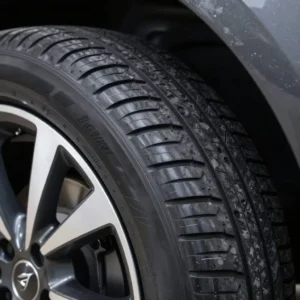
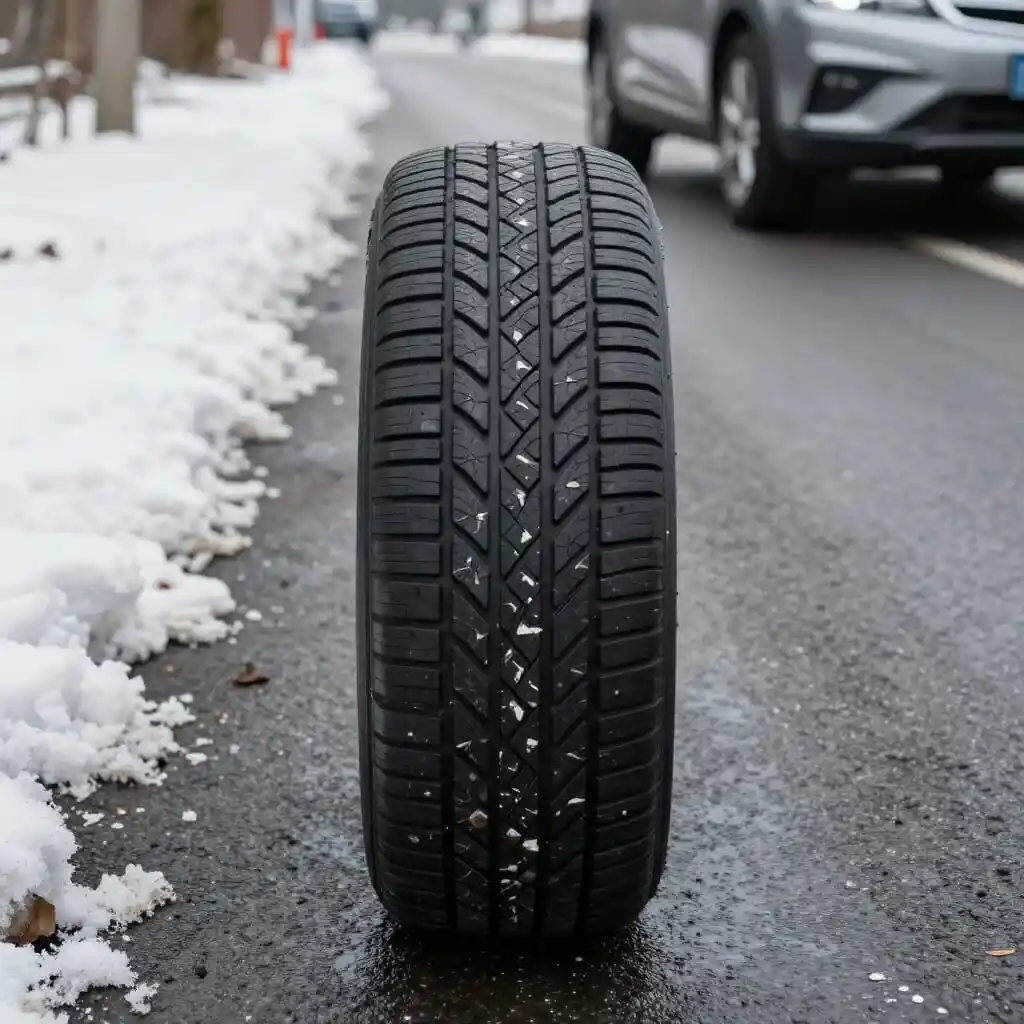
An all-season tire is designed for year-round driving without the need for seasonal swaps, combining a rubber compound and tread pattern that sit between those of a summer tire and a winter tire. In practical terms, the rubber remains supple in cold weather while resisting wear and heat during the summer, and the tread pattern blends wide grooves for water evacuation with fine sipes (slits) for grip on cold or slightly snowy roads. This technical compromise is why they are also called “all-weather” tires. However, a central question remains for many drivers: is this compromise legally compliant for mountain regions, and how does it stack up against dedicated summer or winter tires in terms of safety and budget? This article breaks it all down.
How an All-Season Tire Works
The performance of an all-season tire relies on a compromise between chemical formulation and mechanical design. The rubber uses a blend of silica and other components that remain malleable even when temperatures drop below 7°C (45°F)—the threshold below which standard summer tires harden and lose grip. Conversely, this same blend maintains enough rigidity in the summer to prevent premature wear from heat, unlike a 100% winter rubber that would degrade quickly at temperatures above 20°C (68°F).
The tread pattern plays the second crucial role. The grooves combine deep, wide channels—useful for evacuating water on wet roads—with sipes (small zigzag incisions) that multiply the contact edges on cold, damp, or slightly snowy surfaces. The tread depth generally sits between that of a summer tire (shallow, to maximize contact on dry ground) and a snow tire (very deep, to bite into the snow).
This dual compromise—compound and tread—allows all-season tires to provide decent versatility across most common driving conditions: rain, moderate cold, and dry summer roads. They don’t aim for “optimal” performance in any single terrain, but they avoid the extreme disadvantages a specialized tire would face when used out of its intended season.
Technical Characteristics and Differences from Seasonal Tires
On paper, an all-season tire distinguishes itself from summer or winter tires in three specific technical areas. First is the rubber composition: it contains more silica than a pure summer tire, but less than a specialized winter tire. This limits grip loss in freezing weather without completely sacrificing handling in high heat. Second is the tread: the blocks are firmer than a winter tire (resulting in less deformation and better steering precision) but less dense in sipes than a snow tire (meaning less “bite” on packed snow or ice).
Finally, the carcass structure and speed/load ratings are generally calibrated for year-round use, with wear resistance designed for a full annual cycle rather than just six months. This is also why the lifespan of an all-season tire is often comparable to, or even slightly lower than, a summer tire used only in the warm season, as it works twelve months a year.
In practice, this translates to braking distances on wet or dry roads that are slightly longer than those of a dedicated summer tire, and traction on snow that is lower than a specialized winter tire. General reviews of all-season tires usually converge on this point: the compromise works well for urban or suburban use with mild winters, but shows its limits during sporty driving or in heavy mountain snow.
Mountain Laws: Which All-Season Tires are Approved?
Mountain driving regulations require vehicles in certain designated areas (mountainous massifs defined by local authorities) to be equipped with winter tires or snow chains during the winter period, typically from November to March. An all-season tire is only considered winter-rated if it carries the 3PMSF marking (Three Peak Mountain Snow Flake symbol—a mountain with three peaks and a snowflake), which certifies that its performance has been tested and validated on snow according to specific standards.
Caution: Not all all-season tires carry this marking. Some entry-level models, often the cheapest ones, only feature the “M+S” (Mud and Snow) marking. This marking has not undergone certified snow performance testing and is not sufficient to comply with mountain driving laws following recent regulatory changes. Before purchasing tires for use in mountain zones, you must explicitly check for the 3PMSF symbol on the tire sidewall rather than relying solely on the commercial “all-season” label.
This technical distinction is essential because it affects both your legality when driving in protected zones and your insurance coverage in the event of an accident involving non-compliant equipment.
All-Season vs. Summer/Winter: Which Choice is Right for You?
The choice between all-season tires and dedicated seasonal tires depends primarily on your geographic location and annual mileage. In a region with a temperate climate, without frequent snow or prolonged freezing, all-season tires represent a sensible compromise: they avoid two tire changes per year, reduce mounting and storage costs, and offer adequate safety for most trips.
Conversely, in a mountainous region or an area with harsh winters, a dedicated set of winter tires remains more performant on snow and ice, thanks to rubber optimized for the cold and a more aggressive tread pattern. Similarly, for sporty driving or long-distance highway trips in the summer, a specialized summer tire will offer better high-speed handling and more controlled wear.
All-season tires are therefore particularly suited for urban or suburban use, lower annual mileage, and moderate climates. They also appeal to drivers who prioritize maintenance simplicity over maximum performance in every specific condition.
Price and Budget for All-Season Tires
The price of an all-season tire generally sits in the middle ground between budget summer tires and premium winter tires. Major retailers offer wide ranges from budget-friendly options to premium brands, often with regular promotions, making it possible to find affordable all-season tires without necessarily sacrificing basic quality.
Beyond the initial purchase price, the economic argument for all-season tires lies in the total cost of ownership: no need to buy a second set of tires, no recurring seasonal mounting/unmounting fees (which are typically charged at every swap), and no need for storage space. Over several years, these savings can offset a slightly higher upfront cost compared to a basic summer tire.
However, it remains important to compare the price of an all-season tire against its quality-to-durability ratio: a premium model with certified 3PMSF marking will cost more than a basic M+S model, but it will offer genuine versatility and the mountain law compliance that the latter cannot provide.
Are all-season tires automatically winter-rated?
No, only models bearing the 3PMSF marking (the three-peak mountain and snowflake symbol) are winter-rated and compliant with mountain driving laws. The simple M+S marking is not enough.
All-season or summer tires: which to choose in temperate regions?
In a temperate climate without frequent snow, all-season tires are a practical compromise: they provide adequate safety year-round without seasonal swaps, though they may experience slightly higher wear than a dedicated summer tire.
Why do all-season tires receive mixed reviews?
Reviews vary based on usage: they are very positive for urban use in mild winters, but more reserved when it comes to heavy snow or sporty driving, where the technical compromise reaches its limits.
How can I identify a reliable, affordable all-season tire?
Check for the 3PMSF marking on the sidewall, look at the brand reputation, and consult available independent tests rather than relying solely on the price shown in-store or online.
Are all-season tires allowed in all mountain zones?
They are only allowed if they carry the 3PMSF marking; without this symbol, they do not meet the requirements of mountain driving laws during the regulated winter period.
Do all-season tires wear out faster than summer tires?
They work year-round whereas a summer tire works for only six months, which can result in comparable or even slightly increased mileage-based wear depending on driving conditions.
Sources
- AD – Complete guide to all-season tires
- Culture Auto – All-season tires: compromise or solution?
- Automobiles Passion – Practical guide to all-season tires

À découvrir
3PMSF Tire Marking: Meaning and Importance
Learn what the 3PMSF marking means on your tires. Certified snowflake symbol for winter safety and legal compliance in mountain zones.
Different Tire Types: Complete Car, Moto & Bike Guide
October 24, 2026
Understanding Tire Dimensions: A Complete Guide
October 22, 2026