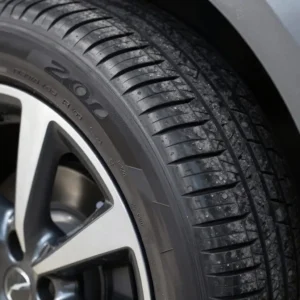

How Are Tires Tested? Methodology Explained
- Tire tests compare every model to a stable reference tire to ensure results are comparable across different sessions
- Three main categories are evaluated: safety (braking, grip), performance (handling, noise), and wear/longevity
- Winter tire tests and all-season tire tests include specific trials for snow, ice, and temperature transitions
- Professional drivers conduct subjective assessments, which are supplemented by objective instrumented measurements
- Results from independent organizations (Que Choisir, TyreReviews, ADAC) often differ from manufacturers’ internal tests
A tire test answers a simple question: does this tire brake quickly enough, grip well in the rain, and last long enough to justify its price? Tire testing, whether conducted by independent organizations or the manufacturers themselves, follows rigorous protocols combining track trials, instrumented measurements, and assessments from experienced drivers. Every tire is compared to an identical reference tire from one session to the next, allowing its relative performance to be precisely positioned rather than just providing isolated values. This method applies to both winter tire tests and all-season tire tests, using trials tailored to each specific use case.
The Reference Tire Principle
The biggest challenge in tire testing lies in external conditions: asphalt temperature, humidity, and track wear evolve throughout the day, distorting raw comparisons between tires tested at different times. Braking measured at 9 AM on cold bitumen is not comparable to a measurement at 3 PM, when the asphalt has absorbed several extra degrees and the tire rubber grips differently. During a winter tire testing session, the gap can be even more pronounced: an icy track sees its grip change hour by hour depending on sunlight, repeated vehicle passes, or a slight rise in temperature. To bypass this bias, independent laboratories like Que Choisir or TyreReviews use a reference tire, specifically selected for the consistency of its results during preliminary trials—usually a well-known market model whose behavior has been validated over several previous sessions.
In practice, this control tire is re-fitted regularly during the testing session, between every two models evaluated: braking, cornering, aquaplaning—each part of the protocol is replayed with it every few hours or every two or three test candidates. Its performance is measured at every pass, and the observed deviations serve as a benchmark to correct for variations caused by current conditions. If the reference tire brakes 5% less effectively in the late afternoon than it did in the morning, that delta is applied as a correction to all models tested in that timeframe. A candidate tire is therefore never graded in absolute terms, but always as a percentage of gain or loss compared to this stable reference—a method just as indispensable for an all-season tire test, where temperature gaps between simulated summer and winter sessions can be considerable, as it is for a gravel tire test, where the condition of the path (dust, displaced gravel, residual moisture) degrades with successive vehicle passes. It is this methodological rigor that distinguishes serious tire tests from marketing comparisons where testing conditions are never specified or controlled, and which allows for the objective comparison of all-season tire tests published several weeks apart by the same laboratory.
Safety Criteria: At the Heart of All Tire Tests
Safety accounts for the majority of instrumented measurements, as it determines stopping distance in emergency situations. Wet braking remains the ultimate test: organizations measure the distance required to drop from 80 to 20 km/h or from 100 to 0 km/h depending on the protocol, using GPS sensors and inertial measurement units. A difference of just a few meters between two tires often represents the difference between avoiding an obstacle and hitting it.
Next comes cornering grip, measured on closed circuits using lateral acceleration readings, and aquaplaning, tested by driving the vehicle over a calibrated film of water at increasing speeds until traction is lost. Drivers also evaluate subjective behavior: steering precision, stability during aggressive lane changes, and the feedback provided by the tire at the limit of adhesion. These qualitative assessments, while less quantified, are just as important in the final score because they reflect the experience of an average driver facing a real dangerous situation.
Performance, Comfort, and Wear: Complementary Criteria
Beyond pure safety, a tire test evaluates criteria that impact daily use. Rolling resistance is measured in a laboratory on a roller bench: it directly influences fuel consumption or the range of an electric vehicle. Road noise is recorded in decibels at a stabilized speed, a criterion increasingly scrutinized since the tightening of European labeling standards.
Wear and longevity remain the most complex to evaluate, as they require tens of thousands of kilometers of real-world driving or accelerated laboratory protocols that simulate mileage wear. Testers measure tread depth at regular intervals and project a theoretical lifespan. Finally, comfort combines measurements of vibrations transmitted to the cabin with subjective driver assessments on degraded roads. These secondary criteria explain why two tires with similar safety performance may have very different prices or recommended uses.
Specifics of Winter and All-Season Tire Testing
Winter tire tests add trials that do not exist in summer protocols: braking on ice, traction on packed snow, and cornering on hard-packed snow surfaces. These tests are often conducted on dedicated tracks at high altitudes or in Scandinavia, where climatic conditions guarantee consistent snow and ice throughout the session. The specialized compound, which remains softer at low temperatures, is directly compared to summer or all-season tires to illustrate the performance gap below 7°C (45°F).
All-season tire tests, on the other hand, must cover a wider spectrum of conditions: they are evaluated on summer criteria (heat, dry road, aquaplaning) as well as some winter criteria (light snow, moderate ice), without ever equaling a specialized tire in its preferred environment. It is precisely this versatility, measured by separate then weighted scores, that allows comparisons to position an all-season tire as a reasonable compromise rather than an absolute optimum in a given category.
Who Tests Tires, and Why Do Results Differ?
Three types of players conduct tire tests, with varying levels of objectives and independence. Manufacturers themselves conduct internal tests during development, but they rarely publish comparisons that are unfavorable to their own products. Independent organizations like Que Choisir, the German ADAC, or specialized media like TyreReviews fund their own trials and purchase the tires being tested from retail stores, guaranteeing a level of neutrality that manufacturer tests cannot offer.
Finally, aggregator sites compile results from multiple tire tests to establish consolidated rankings, which are useful for quickly comparing several sources without reading every protocol in detail. This diversity explains why the same tire can receive different rankings depending on the source consulted: the weighting between braking, wear, and comfort varies from one organization to another, as do the climatic conditions and the type of vehicle used during the trials. For an informed purchase, cross-referencing several independent comparisons remains more reliable than relying on a single score.
What is a reference tire in a tire test?
It is a control tire, chosen for the stability of its results, re-fitted regularly during the session to correct for variations in conditions (temperature, humidity) and to make the tested tires comparable to one another.
How are braking distances measured during a tire test?
Onboard GPS sensors and inertial measurement units measure the distance traveled during an emergency braking maneuver, generally from 80 to 20 km/h on wet ground, and compare it to that of the reference tire.
Do winter tire tests only take place on snow?
No, they also include braking on ice, traction on snowy hills, and cornering behavior on packed snow, in addition to trials conducted on cold, dry surfaces.
Is an all-season tire as good as a specialized tire in tests?
No, all-season tire tests show that they are a compromise: they perform well across a wide spectrum of conditions but always lag behind a dedicated summer or winter tire in its ideal environment.
Why do tire test results vary depending on the source?
Each organization weights criteria (braking, wear, comfort) differently and uses its own testing conditions, which can cause the ranking of the same tire to vary from one comparison to another.
Do gravel tire tests follow the same methodology?
Yes, in broad terms: braking, grip, and wear are still evaluated, but with trials adapted to mixed surfaces (gravel, compacted dirt) rather than pure asphalt.
Sources
- Que Choisir – Tire testing protocol
- TyreReviews – Independent testing methodology
- Testpneus.fr – Test database
- Meilleur-Pneu.com – Independent rankings

À découvrir
Tire Evolution: From Inner Tubes to Smart Tires
Discover the history of car tires, from their 1895 origins to today's smart tires. Explore innovations in materials and technology.
How Does Tire Tread Work? Understanding Grip & Wear
October 26, 2026
Tire History: From Early Wheels to Modern Tires
October 29, 2026