Radial tire: definition and how it works explained simply
- A radial tire has carcass plies arranged at 90° to the tread, unlike the crossed angle found in bias-ply tires.
- This structure makes the sidewalls more flexible, improving comfort, handling, and longevity.
- Radial tires are used in almost all modern cars, motorcycles, and MTBs.
- The tubeless version has become the standard thanks to the airtight nature of the radial carcass.
- Some radial tires have a required rotation direction that must be respected during mounting.
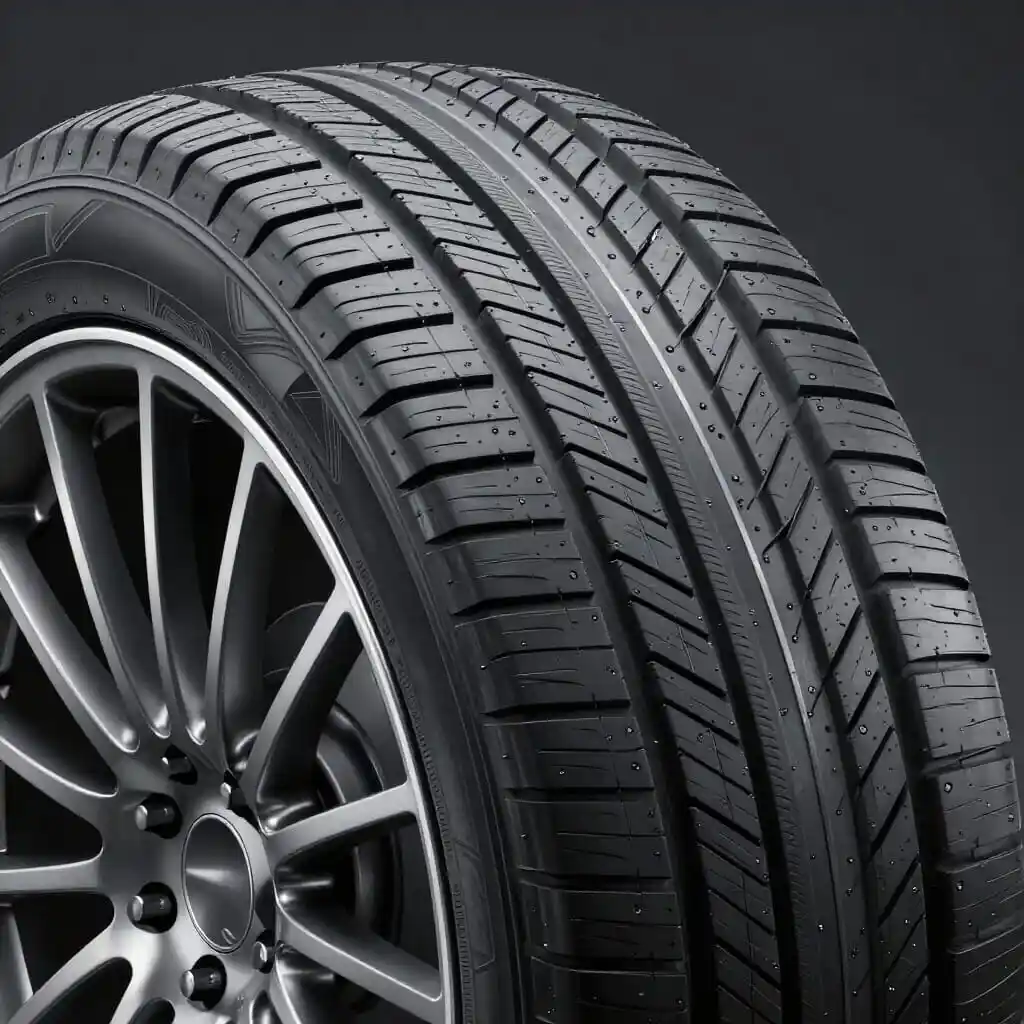
A radial tire is a tire whose carcass is composed of plies (textile or metal layers) oriented at 90 degrees to the direction of travel, meaning they run radially from the center of the wheel. This architecture is the opposite of a bias-ply tire, where the plies cross each other at an angle. In practical terms, the radial structure makes the tire sidewalls more flexible while the tread remains rigid thanks to a separate belt layer (often made of steel), which improves grip, comfort, and service life. This technology, which became widespread in the 1970s and 1980s, now equips the vast majority of cars, motorcycles, and even mountain bikes.
What is a radial tire: the structure in detail
To understand what a radial tire is, you need to look at a cross-section of its carcass. It consists of cords (textile fibers such as polyester or rayon) arranged perpendicularly to the tread, running from bead to bead through the crown. This radial arrangement gives the tire its name.
A belt layer, usually made of steel or aramid fibers, sits on top of this flexible carcass, positioned just beneath the tread. This belt only stiffens the contact patch with the ground without making the sidewalls rigid. It is this dissociation between flexible sidewalls and a rigid tread that defines the technical signature of the radial tire: each zone of the tire works independently, unlike a bias-ply tire where the entire carcass deforms as a single unit.
This design was introduced by Michelin in 1946 under the commercial name “X” tire, after the company realized that a more flexible carcass allowed for better absorption of road irregularities while maintaining a stable tread on the ground.
Radial vs. bias-ply: what are the practical differences?
The question “radial or bias-ply” often comes up for owners of vintage vehicles or agricultural equipment, as both technologies still coexist depending on the application.
On a bias-ply tire (also called a conventional tire), the carcass plies cross at an angle, generally between 30 and 40 degrees relative to the direction of travel, and overlap in multiple layers. This structure makes the entire tire stiffer and less capable of absorbing shocks independently of the contact patch.
In contrast, the radial tire offers several measurable advantages: better handling in corners because the tread remains flatter and more stable, more even wear, reduced rolling resistance (which limits fuel consumption), and better heat dissipation. On the other hand, bias-ply tires remain sought after for specific uses (trailers, old agricultural machinery, vintage motorcycles) where lateral rigidity and robustness against point loads or rough terrain are valued.
Radial vs. bias-ply tractor tires: a special case
The agricultural world perfectly illustrates why the choice between radial and bias-ply isn’t always clear-cut, unlike in the automotive industry where radials have long been the undisputed standard. On a tractor, radial tires provide a wider and more even footprint: the flexible carcass allows the tire to flatten naturally under load, distributing weight over a larger surface area. In practical terms, this results in reduced soil compaction on working plots—a major concern in soil conservation agriculture, where subsoil compaction permanently harms drainage and the rooting of future crops. The flexibility of the radial carcass also improves traction, as the tire conforms better to terrain irregularities and transmits engine power to the ground more effectively, which is crucial during plowing or seeding in wet conditions.
Bias-ply tires, which are cheaper to purchase and simpler to manufacture, remain common on older machinery or for uses where the load is less variable. Their stiffer carcass, with its crossed plies, better handles certain sudden lateral impacts, such as entering fields, ditches, or rocky paths, where a more flexible radial sidewall might deform excessively or even sustain damage. This is why they are still found on agricultural trailers, secondhand equipment, or tractors used mainly on roads and farmyards, where lateral stability takes precedence over the ground contact surface.
The choice depends mainly on the axle load and the type of soil being worked, rather than one technology being universally superior to the other: a powerful tractor working heavy, clay-based soils will benefit greatly from switching to radials to limit compaction, while a light-duty machine used for mixed purposes (field and road) may still be satisfied with a bias-ply, provided the pressure is adjusted according to usage.
Tubeless radial tires: why this combination became the standard
The vast majority of modern radial tires are also tubeless, meaning they do not use an inner tube. This is no coincidence: the radial carcass, combined with a reinforced sidewall and a perfectly calibrated bead, allows for a direct seal between the tire and the rim without the need for a separate tube.
This combination offers a significant safety advantage: in the event of a slow puncture, air escapes gradually instead of venting all at once like a punctured tube, giving the driver more time to react. Tubeless radial tires also dissipate heat better, which is important at sustained speeds, and allow for driving at slightly lower pressures without the risk of pinch flats.
On an appropriate rim (marked TL), tubeless mounting is now the norm for almost all passenger cars and an increasing number of motorcycles and MTBs.
Radial MTB tires: a technology that won over cycling
Radial technology is not limited to motorized vehicles. On mountain bikes (MTBs), radial carcasses (often noted in TPI, threads per inch, for cord density) have progressively replaced bias-ply structures on high-end models because they offer better shock absorption on rough terrain and smoother rolling.
A radial MTB tire is also distinguished by its tubeless compatibility, which is almost systematic in modern enduro and cross-country riding: the flexible sidewall allows the bead to seat firmly in the rim without a tube, using sealant to plug micro-perforations. This evolution, following the same logic applied to car tires decades earlier, illustrates how radial structures become dominant whenever an application requires both lateral flexibility and ground contact rigidity.
Radial tire rotation direction: a detail not to be overlooked
Some radial tires, especially those with a directional tread pattern (V-shaped or arrow motifs), must be mounted in a specific direction of rotation, indicated by an arrow or the word “rotation” engraved on the sidewall. This requirement has nothing to do with the radial structure itself, but rather with a tread design optimized for water evacuation and grip in a single direction of travel.
Mounting a directional tire backward won’t cause immediate damage, but it reduces braking performance on wet roads and accelerates irregular wear. On non-directional radial tires, however, the mounting direction does not have a significant impact; only the orientation of the outer sidewall (often marked “outside”) must be respected for aesthetic and sometimes structural reasons.
Radial or bias-ply: which one should I choose for a modern car?
On a modern car, the radial tire is almost the only available and recommended option: it offers better handling, superior comfort, and more even wear than a bias-ply tire, which is now reserved for specific uses like certain trailers or agricultural vehicles.
What exactly is a radial tire in one sentence?
It is a tire with a carcass composed of plies arranged at 90 degrees to the tread, which makes the sidewalls flexible while keeping a rigid contact patch thanks to a separate belt layer.
Are all radial tires tubeless?
No, but the vast majority of modern radial tires for cars and motorcycles are designed as tubeless versions, because the radial structure facilitates a direct seal between the tire and the rim.
Do radial MTB tires offer a real advantage over bias-ply?
Yes, they offer better shock absorption on rough terrain and smoother rolling, which explains their widespread use on high-end cross-country and enduro mountain bikes.
What happens if I mount a radial tire against the indicated rotation direction?
The tire will still work, but with reduced grip and water evacuation performance, especially on wet roads, and it will wear more irregularly.
Why are bias-ply tires still used on tractors?
Because their stiffer carcass handles certain sudden lateral impacts encountered on rocky paths or field entrances better, while also being less expensive to purchase than radial tires.
Sources
- Tire structure: radial vs bias-ply? Definition and explanation – Tiregom
- Radial or bias-ply tires: meanings, differences, and structure – Auto-Doc
- Radial tire – Wikipedia
- Radial or bias-ply tires: what are the differences? – Mister Auto

À découvrir
205/55 R16 Meaning: Tire Size and Markings Explained
Learn what 205/55 R16 means on your tires. We explain width, aspect ratio, load index, and speed ratings in simple terms.
All-Season Tires: How They Work & Key Features
October 26, 2026
Car Tire Evolution | History and Innovations
November 1, 2026