
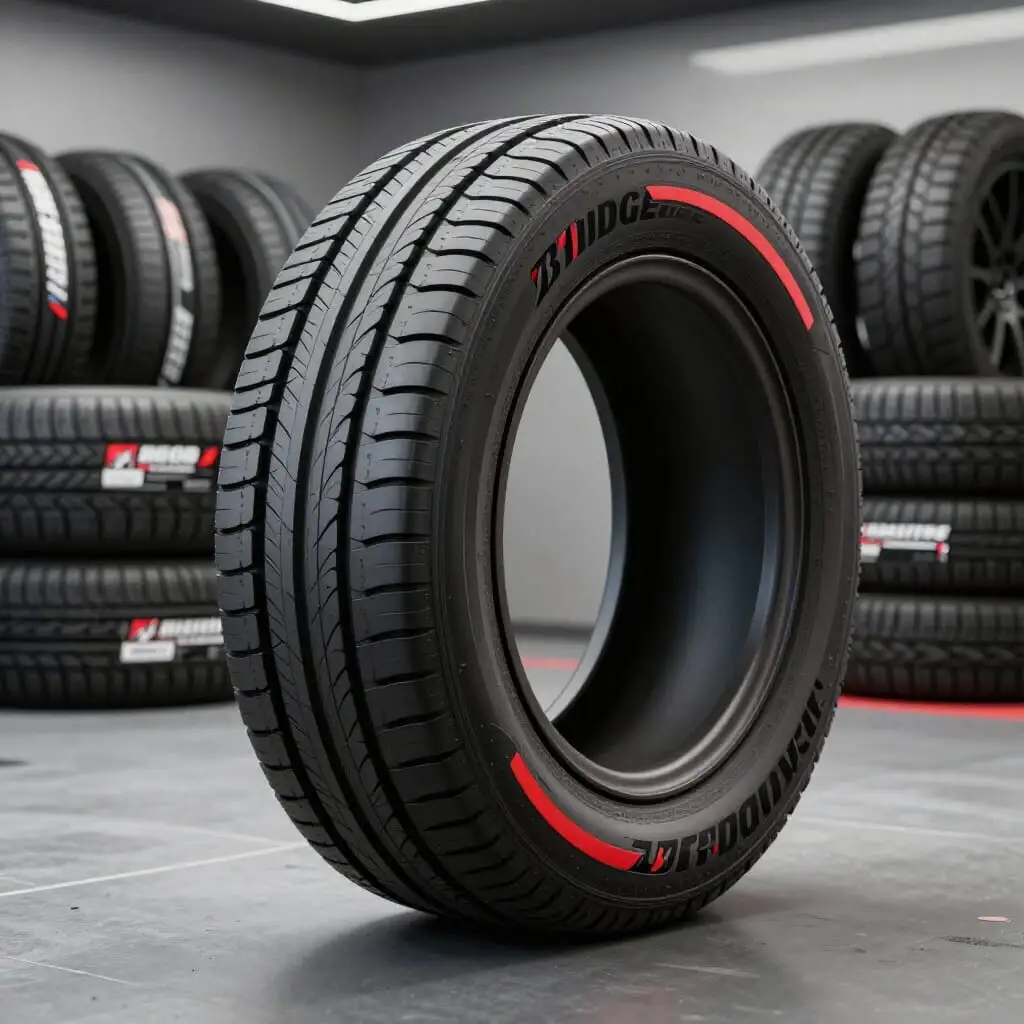
Bridgestone: History and Tire Ranges of the Japanese Giant
- Bridgestone is a Japanese brand founded in 1931 by Shōjirō Ishibashi; it is currently the world’s number one tire manufacturer by volume.
- The name comes from the English translation of “Ishibashi” (stone bridge), reflecting the group’s industrial identity.
- The range covers touring (Turanza), winter (Blizzak), all-season (Weather Control), and motorcycle (Battlax) tires.
- Firestone is the group’s main sub-brand, positioned in a more accessible market segment.
- Bridgestone focuses on radial technology and continuous innovation to justify its premium positioning.
Bridgestone is a Japanese tire brand, founded in 1931 in Kurume by Shōjirō Ishibashi. If you are wondering which country Bridgestone comes from, the answer is clear: it is a Japanese manufacturer, currently one of the three largest tire producers in the world alongside Michelin and Goodyear. Its name tells its story: “bridge” and “stone” are literal translations of “Ishibashi,” which means “stone bridge” in Japanese. Bridgestone equips everything from city cars to sport motorcycles, with dedicated ranges for touring, winter, all-season, and two-wheelers. This article traces the brand’s history and details its main product families to explain why it holds a premium position in the tire market.
The origins of the Bridgestone brand
The Bridgestone brand originated in the industrializing Japan of the 1930s. Shōjirō Ishibashi, coming from a family of tabi (traditional Japanese footwear) manufacturers, decided to diversify the family business into rubber, and specifically into tires. In 1931, he founded the company in Kurume, Fukuoka Prefecture, which would eventually become Bridgestone Corporation.
The choice of name was intentional: it is a reverse translation of the founder’s surname. “Ishibashi” is composed of “ishi” (stone) and “bashi” (bridge); by reversing the order to follow English syntax, we get “Bridgestone.” This play on words illustrates Ishibashi’s desire to project his company internationally from its inception, at a time when the tire industry was still largely dominated by Western and American players.
The company initially developed within the Japanese market, focusing on manufacturing quality rather than volume. Following World War II, Bridgestone leveraged Japan’s industrial reconstruction to accelerate its growth before launching a major international offensive in the 1950s and 1960s. The acquisition of Firestone in 1988—a deal that marked Japanese industrial history—permanently propelled Bridgestone to global leader status and made Firestone the group’s primary sub-brand, now positioned in price segments that are more accessible than the flagship brand.
Bridgestone: A premium position built on innovation
What sets Bridgestone apart in the market is its constant strategy of investing in research and development. The group was a pioneer of radial tire technology, a carcass architecture that improves handling, reduces rolling resistance, and ensures more even tread wear compared to older bias-ply tires.
This culture of continuous innovation is evident today in the brand’s proprietary internal technologies, whether in carcass rigidity management, rubber compound formulation, or tread design. Bridgestone regularly communicates its sustainability efforts, particularly regarding the integration of renewable materials into its tire compositions—an argument that carries increasing weight for drivers concerned about the environmental impact of their equipment.
Commercially, this positioning results in prices that are generally higher than the market average, justified by a reputation for reliability and longevity. User reviews and tire experts generally reach the same conclusion: Bridgestone offers excellent value for money in the high-end segment, providing grip and wear resistance that are among the best on the market, even if they aren’t always the cheapest option available.
The touring range and the Turanza benchmark
For passenger cars, Bridgestone structures its offering around several product families based on intended use. The Turanza range is the manufacturer’s benchmark for summer touring tires, designed for sedans, hatchbacks, and family vehicles. It prioritizes ride comfort, low noise at high speeds, and excellent handling on wet roads, with versions that are regularly updated (such as the T005 or 6 series) to keep up with the evolving requirements of automotive manufacturers regarding Original Equipment (OE) specifications.
Alongside Turanza, Bridgestone also offers performance-oriented ranges (Potenza, for sports vehicles) and all-terrain or SUV tires (Dueler), covering almost all common automotive uses. This clear segmentation by usage is a common trait among major premium manufacturers: it allows the buyer to choose a tire adapted to their specific driving profile rather than a generic product.
Turanza tires are frequently used as original equipment on European and Asian vehicle models, which reinforces the range’s legitimacy: a tire chosen by an automaker to equip its new vehicles has generally undergone very strict testing regarding noise, fuel consumption, and safety before ever reaching the replacement market.
Bridgestone winter and all-season tires
To address diverse climates, Bridgestone offers two distinct approaches depending on driver needs. Bridgestone winter tires, marketed notably under the Blizzak range, are designed for regions where temperatures regularly drop below 7°C (45°F). They feature specialized rubber compounds that remain flexible in extreme cold, multiple sipes for grip on snow and ice, and tread patterns optimized for evacuating slush.
For drivers who do not drive in the mountains often but want to avoid changing tires twice a year, Bridgestone has developed its all-season range, marketed under the name Weather Control. This type of tire represents a technical compromise between summer and winter performance: while it does not rival a dedicated 100% winter tire in extreme snow conditions, it is certified with the 3PMSF marking (Three Peak Mountain Snowflake), making it legally drivable in winter conditions in areas where such marking is required.
The choice between a dedicated winter tire and an all-season tire depends primarily on geographic location and the frequency of driving in poor conditions. A driver in a temperate region with mild winters will generally be satisfied with Bridgestone’s all-season range, whereas regular use in mountainous areas or northern regions justifies the investment in a dedicated set of Blizzaks.
Bridgestone motorcycle tires: The Battlax range
In the two-wheeler segment, Bridgestone relies on its Battlax range to cover all motorcycle uses, from urban roadsters to track-day sportbikes. This range benefits directly from technological developments made in racing; Bridgestone was long an official supplier for several motorcycle speed championships before refocusing its efforts on consumer product development.
Bridgestone motorcycle tires are divided into several categories: sport-touring tires for riders on long road trips, hypersport tires for track use or demanding sport riding, and adventure/trail tires for motorcycles like the GS or Tenere that travel on mixed terrain. As with automobiles, this usage-based segmentation allows riders to choose a tire truly suited to their riding style rather than a generic compromise.
The unique challenge of motorcycle tires compared to car tires lies in managing lean angles during cornering: the rubber and tread must offer consistent grip from the center to the sidewalls, where support is maximal in a curve. Bridgestone works on rubber compounds with variable density depending on the zone of the tire—a technology now found in several recent Battlax ranges—allowing for durability in the center and maximum grip on the shoulders.
Which country is Bridgestone from?
Bridgestone is a Japanese brand, founded in 1931 in Kurume by Shōjirō Ishibashi. The group’s headquarters remains based in Tokyo, Japan.
What is the origin of the name Bridgestone?
The name comes from the reverse English translation of the founder’s surname, Ishibashi, which literally means “stone bridge” in Japanese.
What is the main sub-brand of the Bridgestone group?
Firestone is the main sub-brand of the Bridgestone group, acquired in 1988, and is positioned in a more accessible price segment than the flagship brand.
What is the difference between a Bridgestone winter tire and an all-season tire?
The Blizzak winter tire offers maximum grip in extreme cold and snow, while the Weather Control all-season tire is a year-round compromise; it is 3PMSF certified but less performant than a dedicated winter tire in extreme conditions.
Which Bridgestone range should I choose for a family sedan?
The Turanza range is Bridgestone’s reference for touring, designed for comfort and silence on sedans and hatchbacks.
What motorcycle tire ranges does Bridgestone offer?
Bridgestone markets its Battlax range for two-wheelers, available in sport-touring, hypersport, and adventure versions depending on use.
Sources
- Bridgestone — Wikipedia
- Bridgestone: The art and science of tires, a global ambition
- Bridgestone reviews: opinions and buying recommendations — 1001PNEUS
- Tire technologies — Bridgestone France

À découvrir
Michelin Tires History & Range | Global Tire Leader
Discover Michelin's history since 1889, the radial tire innovation, and their complete range for cars, motorcycles, and bikes. A global tire leader.