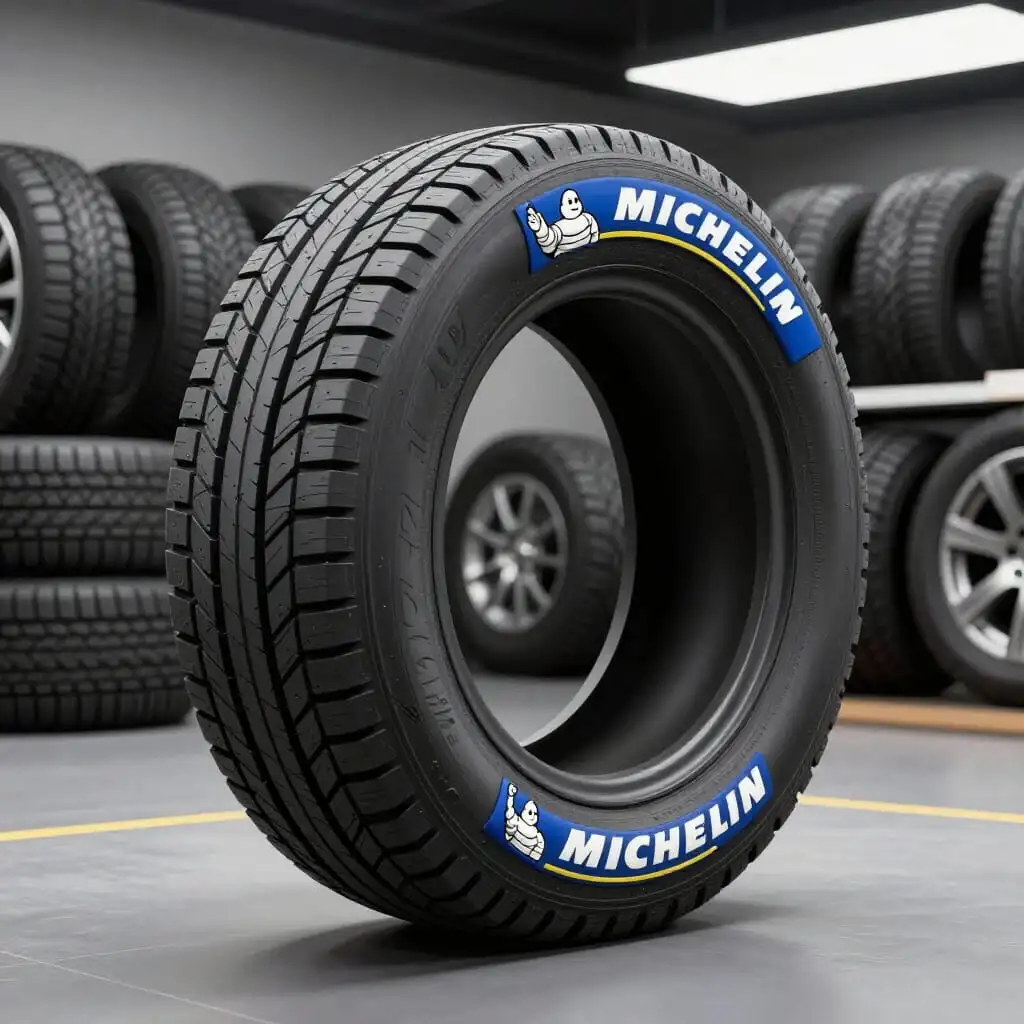
Michelin: History and Tire Range, from French Brand to Global Leader
- Michelin is a French brand founded in 1889 in Clermont-Ferrand, currently the global number one in tires.
- The radial tire, patented in 1946, revolutionized the industry and built the group’s technical reputation.
- The range covers automotive (all-season), motorcycle, bicycle (road and MTB), and agricultural sectors.
- Michelin supplies F1 and numerous other competitions, proving its expertise in extreme conditions.
- Regular promotions allow access to this premium technology at controlled prices.
Are you looking to understand why the Michelin tire brand remains an essential reference, whether for your car, motorcycle, or bike? Founded in Clermont-Ferrand in 1889, Michelin has established itself as a global leader through a succession of major technical innovations, starting with the invention of the radial tire in 1946. Far from being limited to cars, the company has built an extremely wide range: all-season tires for consumers, motorcycle tires for all uses, road and MTB bicycle tires, and even agricultural tires for farming. This diversity, combined with a historic presence in Formula 1, explains why the Michelin Man remains one of the most recognized industrial symbols in the world.
A French brand born in Clermont-Ferrand
Michelin’s history began in 1889, when brothers André and Édouard Michelin took over a small family rubber business in Clermont-Ferrand. The founding anecdote remains famous: a cyclist arrived at their workshop with an unpuncturable tire, but it was glued to the rim, requiring several hours of repair. The Michelin brothers then designed a detachable tire that was faster to repair, which they tested during cycling races to prove its effectiveness.
This approach—innovating and then demonstrating through competition—would become the company’s hallmark for over a century. The Michelin Man, or Bibendum, was born in 1898 from the brothers’ imagination after they observed a stack of tires that resembled a human silhouette. This character quickly became one of the most recognizable logos in the world, embodying both robustness and friendliness.
Beyond tires, Michelin diversified its activities very early on: road maps starting in 1900, followed by the famous Michelin Guide that same year, originally intended to encourage motorists to travel more—and therefore use more tires. This ecosystem strategy centered around mobility illustrates a corporate vision that extends far beyond a simple industrial product, firmly anchoring the Michelin brand within the national economic and cultural landscape.
The invention of the radial tire, a major technological turning point
Michelin’s true technical leap occurred in 1946 with the patenting of the radial tire. Marketed in 1949 under the name Michelin X, this new construction type replaced traditional cross-ply layers with a radial architecture, where the carcass cords are arranged perpendicular to the tread, reinforced by a rigid belt.
In practical terms, this innovation provides better grip, more even wear, and reduced rolling resistance, which leads to lower fuel consumption for the vehicle. The commercial success was such that the radial tire gradually became the global standard, leading to the group’s international expansion with the opening of factories across several continents.
This advancement placed Michelin at the forefront of the tire industry after decades of sustained investment in research and development. It also marked a shift in industrial philosophy: performance was no longer limited to mechanical strength; it now integrated safety, fuel economy, and longevity as core design criteria. This culture of continuous innovation explains why the brand still invests heavily today in composite materials and adaptive tread technologies.
The automotive range: All-season tires and versatility
For motorists, the Michelin all-season tire range meets a growing demand: having a single tire capable of handling both summer and winter without seasonal changes, which is particularly suited to temperate climates where snow is occasional. These tires combine an intermediate rubber compound with a hybrid tread pattern, balancing the necessary drainage in rainy weather with sufficient flexibility to maintain grip in cold temperatures.
The technical compromise is real: an all-season tire will never match the performance of a dedicated summer tire on dry, hot roads, nor those of a dedicated winter tire on packed snow or ice. Michelin therefore positions this range as a convenience solution for motorists with moderate mileage, rather than a universal alternative for all driving profiles.
Alongside this offering, the brand maintains specialized summer and winter lines, as well as references oriented toward performance or touring comfort, covering essentially all consumer driver needs, regardless of their vehicle or usage.
Motorcycle tires: From the road to the track
The Michelin motorcycle tire range also illustrates this ability to apply radial expertise to very different uses. For the urban or touring rider, all-weather tires prioritize stability and longevity. For sportbike enthusiasts, the hypersport ranges focus on maximum cornering grip, using different rubber compounds between the center and the sidewalls to balance straight-line durability with lean-angle grip.
Michelin also offers tires dedicated to adventure and trail riding, designed to alternate between asphalt and unpaved paths, as well as specific references for off-road and motocross. This fine segmentation responds to a simple reality: the mechanical and thermal stresses applied to a motorcycle tire are entirely different from those of a car tire, as the contact patch varies greatly with the lean angle in a turn.
The experience accumulated in motorcycle competition, particularly in endurance and speed, directly feeds the development of these consumer tires, following the same logic of technological transfer applied historically in Formula 1.
Road, MTB, and soft mobility
Less known to the general public, the Michelin bicycle tire range nonetheless occupies an important historical position, as it was precisely a cyclist’s tire that gave birth to the company in 1889. Today, this activity is structured around several distinct segments.
Michelin road bike tires target cyclists looking to minimize rolling resistance while maintaining sufficient puncture resistance—a delicate technical compromise on urban surfaces cluttered with debris. For MTB, the ranges differ by terrain type—mud, dry terrain, enduro—with specific knob patterns and reinforced carcasses adapted to impacts.
Urban soft mobility, including city bikes and electric bikes, also benefits from a dedicated offering, focusing on longevity and puncture resistance rather than pure lightness. This diversification confirms that Michelin has never limited itself to automobiles but has built cross-functional tire expertise applicable to any wheeled vehicle.
Agricultural tires: A less visible but strategic expertise
The Michelin agricultural tire branch often remains unknown to the general public, even though it represents a strategic segment for the group. The constraints here are radically different from those of road tires: the goal is to maximize traction on soft soil while limiting soil compaction, a major agronomic challenge to preserve the structure and fertility of cultivated land.
Michelin has developed specific technologies such as low-pressure tires, which are capable of spreading the weight of a tractor or harvester over a wider contact surface, thereby reducing soil compaction while improving driving comfort and field yield. This expertise, built over decades of collaboration with agricultural equipment manufacturers, positions the brand as a key player for operators seeking both performance and the economic durability of their equipment.
Michelin in Formula 1: Competition as a laboratory
Michelin’s presence in Formula 1 marked several periods in the history of the sport, with the brand directly facing competitors under extreme conditions of speed, temperature, and mechanical stress. This direct confrontation in competition has always served as a full-scale laboratory for the brand: the lessons learned from thermal management of rubber or the structural resistance of carcasses in F1 are then funneled into consumer ranges for both cars and motorcycles.
Beyond F1, Michelin has also excelled in other disciplines such as automobile endurance, with numerous victories at the 24 Hours of Le Mans, as well as in rally and motocross. This continuous presence in high-level competition constitutes a strong credibility argument: a tire capable of holding up to the extreme limits of performance offers reassuring safety guarantees for much more moderate daily use.
Finding Michelin tires on sale
Given the brand’s premium positioning, many motorists and riders look for Michelin tires on sale to access this technology at a lower cost. Several times of the year are particularly suitable: seasonal changes in spring and autumn concentrate most commercial operations at retailers and auto centers, which seek to clear stock before the seasonal peak in demand.
Comparing prices between several retailers remains the most effective approach, keeping in mind that the displayed price rarely includes mounting and balancing—services that should be integrated into the total budget. It is also useful to check the tire’s manufacturing date, indicated on the sidewall; a tire that has been in storage for several years loses flexibility even if it has never been driven on.
Finally, prioritizing a tire that precisely matches the actual use of the vehicle—rather than the cheapest available reference—remains the best way to make a sale purchase worthwhile; a poorly adapted tire generates premature wear that quickly cancels out any initial savings.
Is Michelin a French brand?
Yes, Michelin is a French brand founded in 1889 in Clermont-Ferrand by brothers André and Édouard Michelin, and the group’s headquarters are still located there today.
What is a Michelin all-season tire?
It is a tire designed for year-round driving without seasonal changes, combining an intermediate rubber compound and tread pattern adapted to temperate climates, at the cost of some performance compromise compared to dedicated summer or winter tires.
Does Michelin manufacture bicycle tires?
Yes, Michelin offers road and MTB bicycle tires, a historic segment since it was a cyclist’s tire that gave birth to the company in 1889.
Why does Michelin participate in Formula 1?
Competition serves as a technical laboratory: the innovations developed under extreme constraints in F1 are then adapted to consumer automotive and motorcycle tires.
When can you find the best promotions on Michelin tires?
Seasonal changes, in spring and autumn, generally concentrate the best offers at retailers and auto centers.
Does Michelin manufacture agricultural tires?
Yes, notably with low-pressure technologies designed to limit soil compaction while maximizing the traction of agricultural machinery.
Sources
- Michelin’s History | Michelin
- Michelin — Wikipedia
- Michelin History: Beyond tires and rubber
- Discover Michelin’s cutting-edge tire technology

À découvrir
Goodyear: History and Tire Range | Top 3 Global Manufacturer
Discover Goodyear's history since 1898 and its full range of summer, winter, and all-season tires. Explore tech innovations and customer reviews.