Difference between summer and winter tires: compound, tread, and safety
- Winter tire rubber stays soft below 7°C (45°F) due to its high silica content, unlike summer tires which harden in the cold
- Winter tires feature sipes that grip snow and ice, which are absent on summer tires
- Below 7°C (45°F), a winter tire brakes significantly shorter than a summer tire on wet or snowy roads
- All-season tires are a compromise, performing less effectively than dedicated tires in extreme seasonal conditions
- Inflation pressure must be adjusted seasonally, as cold causes the air pressure in the tire to drop
The difference between a summer and a winter tire isn’t just about whether there is snow on the road. It relies on three distinct technical elements: the rubber compound, the tread pattern, and the thermal behavior of the rubber. A summer tire becomes rigid and loses grip as soon as the thermometer drops below 7°C (45°F), whereas a winter tire is chemically engineered to remain flexible in the cold. This structural difference explains why driving with the wrong tire for the season increases braking distances and raises the risk of hydroplaning or losing control on slippery surfaces.
Rubber compound: the most fundamental difference
The difference between summer and winter tires starts with the rubber mixture itself. Summer tires use a compound rich in components that harden slowly, optimized to remain stable and wear-resistant in warm weather, generally above 7°C (45°F). This relative rigidity ensures good handling and limited wear on dry or hot roads, but it becomes a disadvantage as soon as temperatures drop: the rubber stiffens, loses its elasticity, and fails to grip the cold asphalt properly.
Winter tires, on the other hand, integrate a high proportion of silica into their formula, combined with specific oils that prevent the rubber from hardening in extreme cold. The result: the rubber remains supple even at negative temperatures, allowing it to continue contouring to road irregularities and generating grip even on cold, wet, or icy surfaces. This same mixture explains why winter tires wear out faster in summer: their flexibility becomes a drawback when it is hot, causing premature wear and less precise handling in corners.
This composition logic is the reason why there is no universally optimal tire: each compound is a compromise designed for a specific temperature range, and operating outside that range mechanically degrades performance, regardless of the tire brand or price.
Tread pattern and design
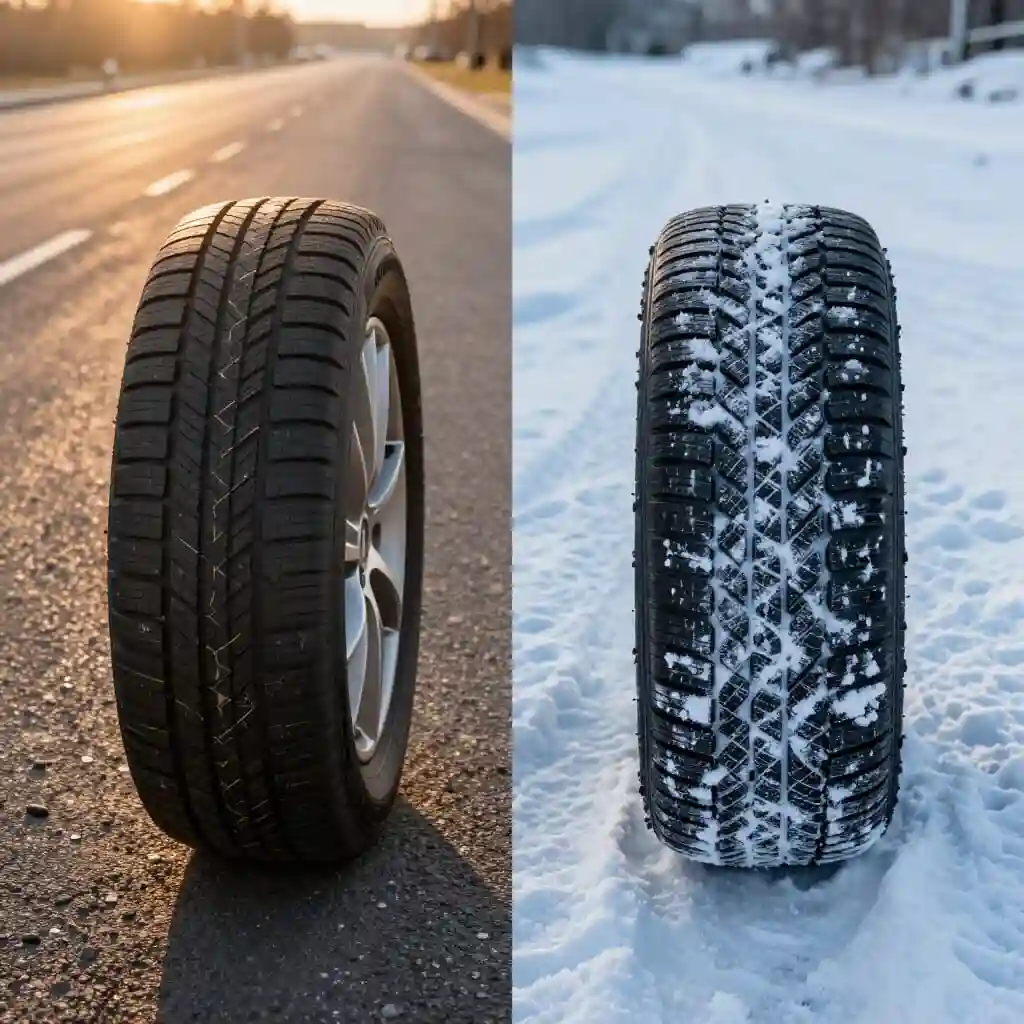
Beyond the rubber, the difference between summer and winter tires is visible to the naked eye on the tread. Summer tires feature large rubber blocks and deep grooves primarily designed to evacuate water quickly and minimize hydroplaning, with maximized ground contact for precision and high-speed stability.
Winter tires, however, are distinguished by the presence of sipes: fine zigzag cuts made into the rubber blocks. These sipes multiply the contact edges that grab into snow and ice, acting much like microscopic claws. The tread is also denser with more blocks, which improves traction on packed snow but slightly reduces steering precision on dry roads at high speeds.
All-season tires combine both approaches without pushing either to its limit: they feature fewer sipes than a winter tire and an intermediate compound—neither as rigid as a summer tire nor as soft as a winter tire. This explains the summer vs. all-season vs. winter tire debate: all-season tires are best suited for temperate climates where extremes are rare, but they fall behind dedicated tires as soon as conditions become extreme, such as prolonged heat or heavy snowfall.
Performance and braking distance: the real impact on safety
The difference between summer and winter tires translates very concretely into braking distances. On wet, cold roads, a winter tire stops much shorter than an out-of-season summer tire because its rubber remains grippy while the summer tire has already hardened. Conversely, on dry, hot roads in mid-summer, a winter tire reaches its limits: its overly soft rubber deforms more under stress, which increases braking distances and wears the tire down faster.
This performance shift justifies the commonly accepted 7°C (45°F) threshold as a benchmark for switching tires, rather than relying solely on the calendar. A mild winter with repeated cold mornings can be enough to penalize a summer tire, even in the absence of snow.
The choice between summer and winter tires affects both active safety and longevity: using the wrong tire for the season is not just less comfortable; it causes premature wear and reduces the safety margin during emergency braking or sharp turns on degraded surfaces.
Tire pressure: a frequently overlooked difference
The difference in summer vs. winter tire pressure is a technical point frequently overlooked by drivers. The air inside a tire contracts in the cold: a significant drop in ambient temperature leads to a drop in pressure, regardless of any tire defect. A tire correctly inflated in summer can end up under-inflated once winter arrives, without any leaks being present.
An under-inflated tire in winter presents a deformed contact patch, which reduces the effectiveness of the sipes designed to grip snow and increases rolling resistance, leading to uneven wear and higher fuel consumption. Therefore, it is recommended to check your pressure every time the season changes, not just when mounting winter tires, because temperature fluctuations continue to affect the tire throughout the cold season.
Some manufacturers even recommend a slightly higher pressure (by a fraction of a bar or PSI) in winter to compensate for this natural air contraction—a nuance rarely mentioned but one that has a direct impact on handling and safety, far more than just the choice of tire model.
How to choose based on your usage and region
The choice between summer, winter, and all-season tires depends primarily on the actual climate encountered rather than misconceptions about seasonality. In a region where temperatures regularly drop below 7°C (45°F) for several months a year, with or without snow, winter tires remain the safest choice: their cold-adapted compound works even on surfaces that are simply cold and wet, not just snowy.
For urban driving in a temperate climate without extreme variations, all-season tires can represent a reasonable compromise, avoiding two tire changes per year while offering decent safety in most situations. However, for a driver who does a lot of highway driving or seeks precise handling performance, summer tires remain superior as soon as conditions become hot and dry, thanks to their stiffer compound and better cornering stability at high speeds.
In all cases, mounting approved winter tires remains mandatory in certain mountainous areas or by local regulations during the winter period, making the question less theoretical than it might seem for many drivers.
What is the difference between summer and winter tires?
The main difference is the rubber compound: winter tires remain soft below 7°C (45°F) due to their silica content, whereas summer tires harden in the cold. The tread also differs, with sipes being present only on winter tires.
At what temperature should I switch to winter tires?
The commonly accepted threshold is 7°C (45°F). Below this, summer tire rubber loses grip, while winter tire rubber maintains its flexibility and traction.
What is the difference in pressure between summer and winter tires?
Cold temperatures naturally cause the air pressure in the tire to drop, even without leaks. You should therefore check and often adjust your pressure with every seasonal change to avoid unintentional under-inflation.
Can an all-season tire replace a winter tire?
It is an acceptable compromise in temperate climates, but it remains less effective than a dedicated winter tire in cases of snow or prolonged intense cold.
What is the difference between summer and snow tires on snowy roads?
Snow (winter) tires feature sipes that grip snow and ice, which are absent on summer tires. Summer tires offer almost no useful traction on packed snow.
Do winter tires wear out faster in summer?
Yes, their softer compound deforms more under heat and driving stresses, which accelerates wear and increases braking distances on dry roads.
Sources
- Michelin — Choosing between summer, winter, and all-season tires
- 1001Pneus — Differences between winter and summer tires
- Mister Auto — Summer vs. Winter Tires
- ProfilPlus — How to recognize summer, winter, and all-season tires
- Mister Pneus — Summer vs. Winter Tire Guide 2026

À découvrir
3PMSF Tire Marking: Meaning and Importance
Learn what the 3PMSF marking means on your tires. Certified snowflake symbol for winter safety and legal compliance in mountain zones.
Tire Load Index and Speed Rating: How to Read Them
October 24, 2026
Why Are Tires Made of Multiple Layers?
November 1, 2026