Yokohama Tires: History and Range Explained
- Yokohama is a Japanese manufacturer founded in 1917, now among the world’s largest tire producers.
- The brand offers a complete range: summer, winter, all-season, sport/semi-slick, and 4×4 tires.
- Yokohama provides original equipment (OE) for several car manufacturers, a mark of technical reliability.
- Positioned as a premium brand, it sits between budget tires and the top-tier legacy leaders.
- User reviews highlight a great performance/price balance, especially for the winter and all-season ranges.
Yokohama is a Japanese tire brand founded in 1917, now recognized as a premium player in the global tire market, alongside well-known names like Bridgestone or Michelin. If you want to know who is behind this brand, its origins, and most importantly, how its summer, winter, or all-season tires perform in daily driving, this article covers its history and current range. You will also find out why some manufacturers choose Yokohama as original equipment and what users actually say about its most popular tires.
The Origins of Yokohama: A Century of Japanese History
The brand takes its name from the Japanese port city where it was founded. The company was born in 1917 from the union between Yokohama Cable Manufacturing, an industrial cable maker, and BFGoodrich, the American manufacturer already renowned for its tires. This initial partnership partly explains why Yokohama quickly acquired solid technical expertise, inherited from one of the pioneers of the modern tire, while developing its own industrial identity in Japan.
Throughout the 20th century, Yokohama progressively established itself in its domestic market, where it remains the third-largest manufacturer behind Bridgestone and Sumitomo. Internationally, the brand built its reputation through motorsport—a field it still uses today as a technological showcase for its sport and semi-slick tires. This racing culture informs the entire design of its range, including tires intended for everyday use.
The company also expanded internationally with regional subsidiaries, including Yokohama Tyres Europe, which adapts the range to the continent’s standards and weather conditions. It is not a sub-brand or a mere distribution label: Yokohama designs and manufactures its own tires, with production plants located across Asia, the Americas, and Europe. Understanding this industrial heritage helps place the brand: it is neither a recent low-cost player nor a generalist giant like the European leaders, but a specialized historical manufacturer positioned in the premium segment at a slightly more accessible price.
Yokohama, a Premium Brand: How Do Their Tires Really Perform?
Yokohama’s positioning as a premium brand is based on concrete elements beyond simple marketing. The first is its Original Equipment (OE) status: Yokohama equips new vehicles from several manufacturers, which implies meeting demanding technical specifications for grip, rolling noise, and wear resistance. A tire that comes on a new vehicle from the factory has necessarily been validated by the manufacturer’s engineers, which provides reassurance to buyers.
In real-world conditions, user reviews and specialist press tests generally place Yokohama just behind the Michelin/Continental/Bridgestone trio, but ahead of most entry-level Asian brands. This explains its common reputation as an affordable premium brand: the company aims for a compromise between technical quality and a more controlled price than the historical leaders. In practice, this often translates to a price 10% to 20% lower than an equivalent tire from the top-tier brands, while maintaining a very similar performance level on dry and wet roads.
However, nuance is needed depending on the range: Yokohama’s entry-level tires, often intended for fleets or tight budgets, do not have the same level of finish as the brand’s premium references, such as its high-end sport or winter series. Before buying, it is useful to check the specific product line rather than relying solely on the brand name.
Yokohama Summer Tire Range
Summer tires are the historical core of the Yokohama range, with references designed for dry road grip and cornering stability. These tires rely on rubber optimized for high temperatures, with tread patterns designed to evacuate water effectively while maintaining good rigidity at high speeds. It is in this segment that the brand’s racing heritage is most apparent: the tread patterns and compounds used on road tires incorporate lessons learned directly from circuit tires.
Users driving primarily in temperate zones, with distinct summers and mild winters, generally favor this range for its good balance of comfort and handling. Wet braking—a criterion often scrutinized in reviews—is frequently cited as a strength compared to competitors at similar price points. Whether for urban driving or highway use, Yokohama summer tires remain one of the most frequent choices for sedan and city car owners looking for a reliable tire without paying the price of a major generalist brand.
Yokohama Winter Tires: Reviews and Performance on Snow and Ice
The winter range is one of the most searched for regarding “Yokohama winter tire reviews,” signaling strong interest from motorists in mountainous regions or areas with harsh winters. These tires use a specific rubber compound that remains flexible even in negative temperatures, an essential condition for maintaining grip on cold, snowy, or icy surfaces. The multi-directional sipes in the tread are designed to multiply biting edges on packed snow.
In user feedback, Yokohama winter tires are generally praised for their reassuring behavior on snow and cold, wet roads, with braking performance considered consistent with more expensive references. Acoustic comfort and rolling silence also appear frequently in positive reviews, a factor that matters for daily use throughout several months of the year. Some users note slightly faster wear on the cheaper models in the range, which confirms the importance of choosing the exact reference rather than relying solely on the brand name.
Yokohama All-Season Tires: A Compromise for Versatile Use
All-season tires meet a growing demand from drivers who want to avoid changing tires twice a year, especially in regions with moderate climates where winters are rarely extreme. At Yokohama, this range seeks a balance between summer grip on dry roads and a decent ability to handle rain, cold, and occasional light snow.
This compromise naturally has limits: an all-season tire will never replace a dedicated winter tire in heavy snow or prolonged ice, nor a pure summer tire on a blistering hot road in mid-summer. User reviews for Yokohama’s all-season range are generally positive for urban or suburban use with moderate mileage, where versatility takes precedence over extreme performance. It is a sensible choice for drivers who do not drive often, or whose vehicle remains parked for much of the winter, thereby reducing real exposure to the harshest conditions.
Yokohama Sport, Semi-Slick, and 4×4: Specialized Ranges
Beyond classic road use, Yokohama maintains specialized ranges inherited directly from its commitment to motorsport. The brand’s sport tires target performance vehicle drivers, featuring reinforced sidewalls and high-lateral-grip compounds designed to handle dynamic driving stresses without losing steering precision.
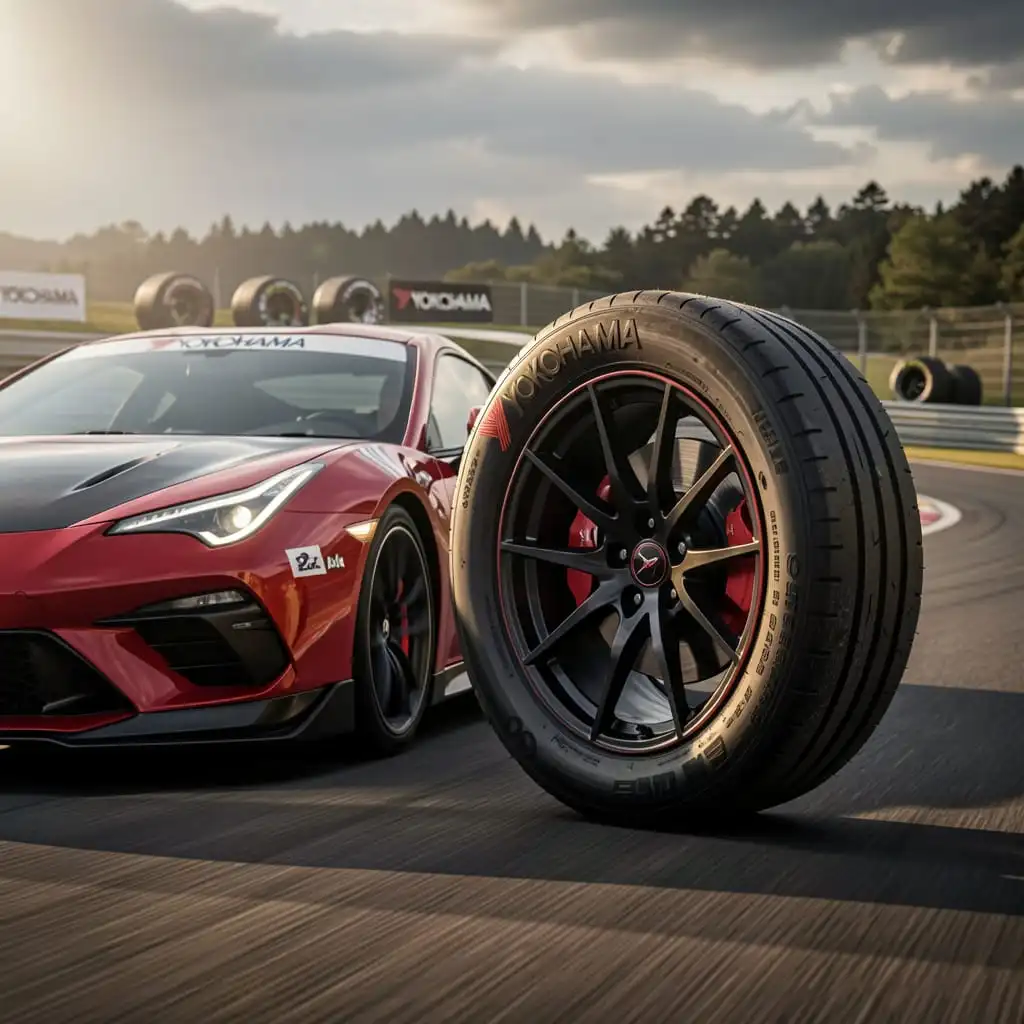
Semi-slick tires go even further: designed for mixed road/track use, they feature a very reduced tread pattern, close to a racing tire, while maintaining road legality. They are popular among track day enthusiasts and occasional sporty drivers looking for a level of grip close to a slick without completely sacrificing legality and comfort on open roads. This type of product perfectly illustrates how Yokohama capitalizes on its racing expertise to offer niche references that few generalist brands cover as well.
Finally, the 4×4 range meets the needs of SUV and off-road vehicle owners, with more aggressive tread patterns for light off-roading and reinforced carcasses capable of handling the heavier loads of these vehicle types. Depending on the model, these tires are oriented either toward primarily road use with some light trail capability, or toward more serious off-road use—a point to verify carefully based on the vehicle’s actual usage.
Is Yokohama a good tire brand?
Yes, Yokohama is considered a premium brand with a solid reputation in its Japanese domestic market and a presence as original equipment for several manufacturers, which is a guarantee of technical quality.
Is Yokohama a sub-brand of another manufacturer?
No, Yokohama is an independent manufacturer founded in 1917, with its own production plants. It started through a partnership with BFGoodrich but has been designing and manufacturing its own tires for a long time.
Are Yokohama winter tires reliable on snow and ice?
User reviews are generally positive regarding grip in winter conditions, with good performance on packed snow and cold roads, although entry-level models sometimes wear a bit faster.
Should I choose an all-season tire or a dedicated winter tire from Yokohama?
An all-season tire is suitable for urban use with moderate mileage and mild winters. For frequent snow or ice conditions, a dedicated winter tire remains more effective.
What is a Yokohama semi-slick tire and who is it for?
It is a low-tread tire that is road-legal but close to a racing tire, designed for sporty driving enthusiasts and track day users looking for high grip while remaining street-legal.
Does Yokohama provide original equipment (OE)?
Yes, Yokohama supplies tires as original equipment to several car manufacturers, which implies rigorous technical validation for grip, noise, and durability.
Sources
- Yokohama Tyres: About Us
- Yokohama (company) — Wikipedia
- Yokohama Tires: A Century of Success — Maison du Pneu
- Yokohama Tires: Expert Reviews — Mister Auto

À découvrir
Kumho Tires: History and Product Range Guide
Discover Kumho, a South Korean tire manufacturer since 1960. Explore their history, summer/winter ranges, and customer reviews on value for money.

Toyo Tires: History & Premium Japanese Tire Range
November 18, 2026
Pirelli Tires: History and Range | Italian Brand
November 17, 2026