
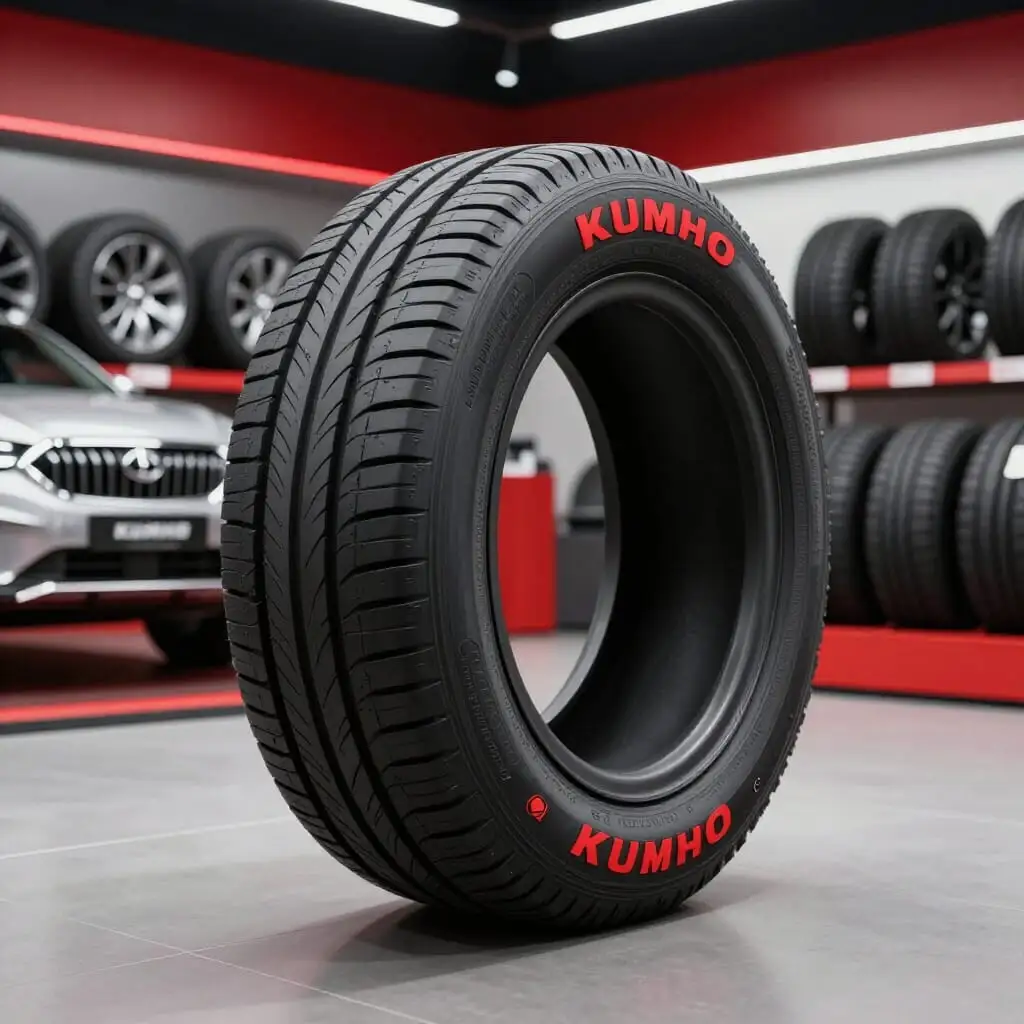
Kumho: History and Product Range of the South Korean Manufacturer
- Kumho is a South Korean tire manufacturer founded in 1960 in Gwangju, a subsidiary of the Kumho Asiana Group.
- The brand distributes tires in over 180 countries, selling more than 56 million units annually.
- The Kumho range covers summer, winter, all-season, and uses for SUVs/4x4s, vans, and racing.
- Positioned in the mid-range, it is often compared to Hankook, offering good value for money.
- Reviews highlight acoustic comfort and durability, with some notes regarding grip in extreme conditions.
If you want to know who is behind the Kumho brand and whether their tires are worth it, the answer is simple: they are a serious South Korean manufacturer, positioned in the mid-range, that has competed for decades with brands like Hankook or Nexen. Kumho is neither an anonymous budget brand nor a premium player like Michelin, but an established manufacturer with a complete range spanning from summer tires to snow tires, including all-season options. This article traces the history of the Kumho brand, its industrial evolution, and details its tire range according to weather conditions and vehicle types to help you precisely understand the value of Kumho tires before making a purchase.
The History of Kumho: From Textiles to Global Tire Manufacturer
The history of Kumho began in 1960 in Gwangju, South Korea, within an industrial context where the country was seeking to develop its manufacturing sectors following the Korean War. The company started modestly, but its position within the Kumho Asiana Group—a diversified South Korean conglomerate active in sectors such as aviation with Asiana Airlines—quickly provided the resources for its industrial ambitions. This connection to a multi-sector group partly explains Kumho’s ability to invest heavily in research and development, a point often underestimated when comparing the brand to single-product competitors.
The following decades saw Kumho Tire expand beyond the Korean market, first into Asia and then into Europe and North America. The brand built factories abroad, notably in the United States and Europe, to stay close to its target markets and reduce logistics costs. Today, Kumho is present in more than 180 countries and ranks among the sixteen largest tire manufacturers in the world—a ranking that places it ahead of many historic European brands in terms of production volume.
This international development was accompanied by an increasing commitment to motorsport and rallying, serving as a real-world testing ground for technologies later implemented in consumer tires. The brand has thus built its reputation on a balance of production volume, competition presence, and the progressive diversification of its range, rather than on a luxury positioning.
Kumho Today: A Global Player in the Tire Industry
In 2026, Kumho sells more than 56 million tires every year, a volume that covers passenger vehicles as well as SUVs, 4x4s, vans, light commercial vehicles, and heavy goods vehicles. This segment diversity distinguishes Kumho from more specialized brands: the manufacturer does not just produce car tires; it also addresses the utility and professional markets, providing a solid industrial foundation even when one segment slows down.
Technologically, Kumho has invested in reducing rolling noise and vibrations, a development focus that directly responds to strong driver expectations during long-distance trips. The developed compounds aim to limit driver fatigue—a recurring marketing argument that several independent tests confirm in terms of acoustic comfort.
Regarding price positioning, the Kumho brand sits clearly in the mid-range: it is neither at the price of a Chinese budget brand, nor at the level of premium Japanese or German tires. This intermediate position explains why Kumho is frequently compared to Hankook in buyer comparisons—both Korean brands target an audience looking for a compromise between a controlled budget and decent performance, without totally sacrificing safety or longevity.
Summer and All-Season Tire Ranges
Kumho’s summer range is organized around several lines depending on the vehicle type and intended use. For sedans and compacts, the models focus on a compromise between dry and wet road grip, wear resistance, and rolling comfort. For sportier drivers or high-performance vehicles, Kumho offers tires with softer rubber compounds, prioritizing cornering handling at the expense of slightly reduced longevity—a classic trade-off in the sports tire industry.
Kumho all-season tires meet the growing demand from motorists who rarely drive in the mountains but wish to avoid changing tires twice a year. Certified for year-round driving, including in moderate winter conditions thanks to the 3PMSF marking (identifiable by the snowflake symbol on a three-peak mountain), these Kumho all-season tires primarily target urban and suburban areas where snow is occasional. The technical compromise inherent to all-season tires—less effective than a pure summer tire in heat, and less effective than a pure winter tire in extreme cold—also applies to Kumho, but the brand limits this gap through advanced rubber compounds.
For SUVs and 4x4s, the range includes reinforced tires capable of supporting heavier loads, with sidewalls designed to resist road hazards (potholes, curbs), an important point for urban drivers equipped with high-riding vehicles.
Kumho Winter and Snow Tires: How Do They Really Perform?
The question of Kumho winter tire reviews often arises among motorists looking for a cheaper alternative to Michelin or Continental without sacrificing safety in cold conditions. Kumho winter tires use a specific rubber compound that remains flexible even at low temperatures, an essential condition for maintaining grip below 7°C (45°F), the threshold generally recommended for switching to winter tires.
Regarding the specific question of Kumho snow tires, the multi-directional sipes in the tread pattern ensure the evacuation of melted snow and improve traction during startup and braking on snowy roads. User feedback, particularly on automotive forums and specialized magazine tests, generally places Kumho winter tires in the upper-mid segment of the category: they do not systematically compete with premium leaders on pure ice, but they offer solid performance on packed snow and cold, wet roads, all for a significantly lower budget.
This positioning explains why Kumho particularly appeals to motorists in regions with moderate winters, where the main challenges are cold rain and occasional snow rather than extreme Alpine cold. For mountain ranges and recurring extreme conditions, some drivers still prefer to opt for more specialized ranges, even if it means paying more.
Kumho Tire Prices and Value for Money
The question of Kumho tire prices is central to the purchasing decision, and this is precisely where the brand stands out. Positioned in the mid-range, Kumho tires generally feature prices 15% to 30% lower than premium equivalents (Michelin, Bridgestone, Continental), while remaining above the cheapest Asian low-cost brands. This price gap is explained by the brand’s industrial compromise: modern factories and active R&D, but with lower licensing and marketing costs than the historic European leaders.
This positioning makes Kumho a rational choice for drivers with average annual mileage who do not require extreme performance and who prioritize a good budget-to-safety compromise over the tire’s lifespan. However, for intensive use or high performance requirements (sports vehicles, frequent mountain driving), the performance gap with high-end brands may justify a larger investment.
It should also be noted that prices vary significantly depending on the tire size, the chosen line (summer, winter, all-season, SUV), and the distribution channel—auto centers and online platforms often offer more competitive rates on Kumho references than traditional garages.
What Do Reviews Say About the Kumho Brand?
Reviews of the Kumho brand generally converge on several points. Rolling comfort and noise discretion are consistently mentioned in positive feedback, a direct result of the brand’s investments in vibration reduction. Durability is also praised: many users report even wear and a lifespan that meets, or even exceeds, expectations for this price segment.
Points of caution mostly concern grip in extreme conditions—such as very heavy rain or black ice—where Kumho tires, while not bad, do not always rival the best premium references. This is an expected gap given the brand’s pricing positioning and does not call its industrial reliability into question.
Overall, the Kumho brand reviews that dominate forums and specialized sites describe a reliable manufacturer, suited for standard daily use, with excellent value for money. It is a consistent choice for drivers who prioritize budget control without compromising on safety fundamentals, while remaining aware that the very top tier lies elsewhere.
Is Kumho a good tire brand?
Yes, Kumho is a serious manufacturer, positioned in the mid-range, recognized for its rolling comfort and durability, offering good value for money compared to premium brands.
Is Kumho a Korean or Chinese brand?
Kumho is a South Korean brand, founded in 1960 in Gwangju, a subsidiary of the Kumho Asiana Group; it should not be confused with Chinese manufacturers.
Are Kumho winter tires reliable in the snow?
Kumho winter and snow tires offer solid grip on packed snow and cold, wet roads, with performance slightly behind premium leaders on pure ice.
Are Kumho tires more or less expensive than Michelin?
Kumho tires are generally 15% to 30% cheaper than Michelin or Continental equivalents, while remaining above entry-level brands.
Does Kumho offer all-season tires?
Yes, Kumho offers a range of 3PMSF-certified all-season tires, suitable for urban and suburban drivers who encounter little snow.
Does Kumho manufacture tires for SUVs and 4x4s?
Yes, the Kumho range includes reinforced tires specifically designed for SUVs and 4x4s, adapted for heavier loads and resistant sidewalls.
Sources
- Kumho: history, origin, tire models, technologies and reviews – Liquipneus
- Kumho Tire – Wikipedia
- Kumho Tires – Brand origin and models to choose – Carter-Cash
- Kumho tire reviews: is this brand actually worth it? – Dimension Auto

À découvrir

Hankook Tires: History and Product Range
Discover the history of Hankook, a South Korean manufacturer founded in 1941, its tire range, and reviews. High-quality mid-to-high-end performance.

Yokohama Tires: History and Full Product Range
November 18, 2026
Continental Tires: History, Car, Moto & Bike Ranges
November 16, 2026