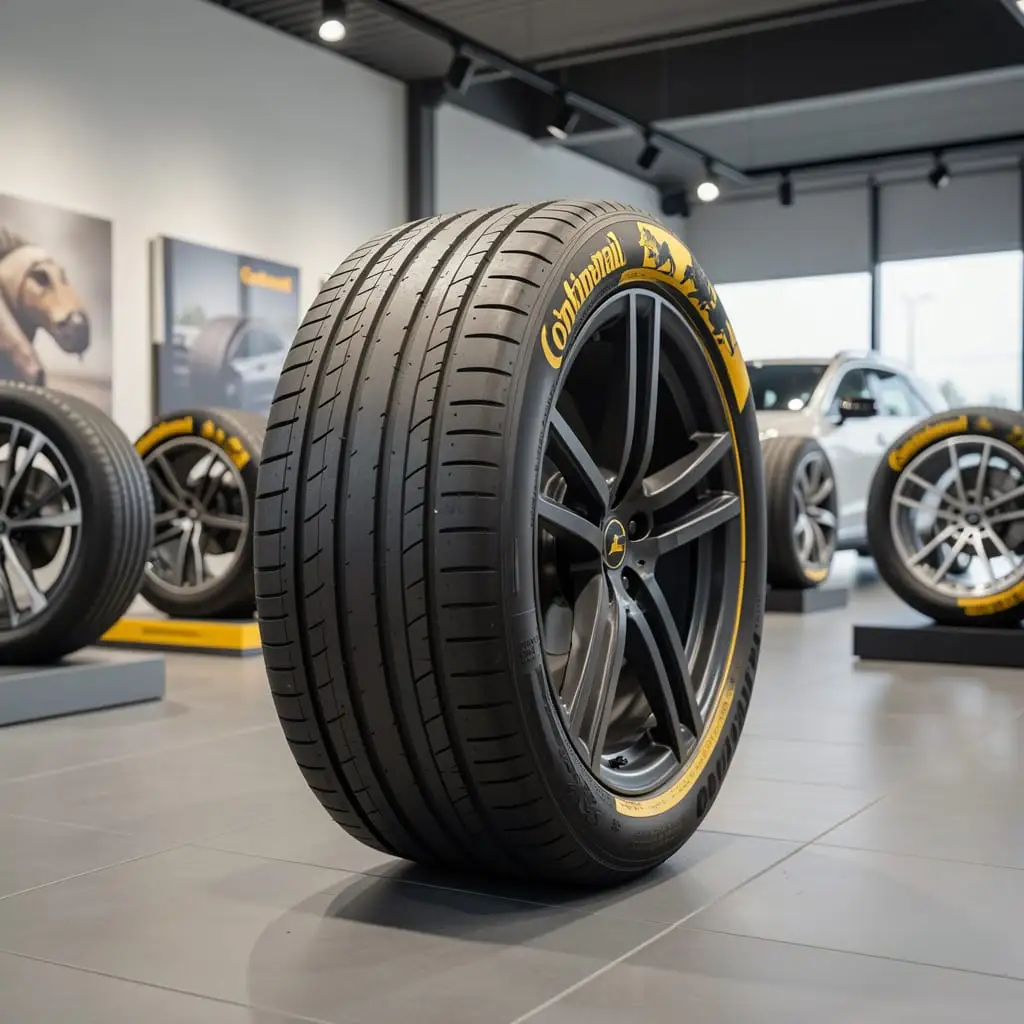
Continental: History and Tire Range (Car, Motorcycle, Bicycle)
- Continental is a German manufacturer founded in 1871, making it one of the oldest active companies in the tire industry.
- The brand covers three main sectors: car tires (summer, winter, all-season, SUV), motorcycle tires (road, adventure, sport), and bicycle tires (road, MTB, urban).
- Continental pioneered M+S (winter) tires in 1952 and tubeless tires in 1955.
- User reviews highlight a great balance between comfort and longevity, with a premium pricing strategy.
- Availability varies by market, including in Algeria, where the brand is distributed through authorized dealer networks.
Are you wondering why Continental is consistently among the most recommended tire brands, whether for a car, a motorcycle, or a bicycle? The answer lies partly in its history: founded in 1871 in Germany, the brand boasts over 150 years of tire development, introducing industry-shaping innovations like M+S winter tires and tubeless technology. Today, the Continental tire range is vast, spanning from city-friendly all-season tires to technical MTB tires and high-performance motorcycle models. This article explores that history and details the current product lineup to help you find the right fit for your vehicle.
A German Industrial History, from 1871 to Today
Continental was established in 1871 in Hannover, Germany, initially as a rubber manufacturer before progressively specializing in tires. This long-standing history places the brand among the oldest automotive equipment manufacturers still active today—alongside names like Michelin or Goodyear—but with a typically German industrial trajectory defined by a strong culture of engineering and applied research.
The most significant turning point came in 1952 when Continental launched its first M+S (Mud and Snow) tires, specifically designed for winter driving. This was a decisive breakthrough: at a time when universal tires still dominated the market, this segmentation between summer and winter use laid the groundwork for what would become, decades later, the all-season tire market.
Three years later, in 1955, Continental became the first German company to begin producing tubeless tires, a technology that would eventually become the global standard for automobiles. This double legacy—in both winter tires and tubeless technology—illustrates a constant theme in the brand’s history: anticipating needs that would become industry standards rather than simply following trends set by competitors.
Since then, Continental has expanded its activities well beyond automotive tires, with divisions dedicated to onboard electronics and mobility systems. However, tires remain the historical and symbolic heart of the brand, distributed worldwide today, including in markets like Algeria via local distributor networks.
Continental Car Tire Range
In the automotive segment, Continental structures its range around several distinct use cases. Summer tires are engineered for performance on both dry and wet roads, offering the balance of grip and wear resistance sought by drivers who spend significant time in cities or on highways. Winter tires, the direct descendants of the 1952 M+S range, remain a benchmark in countries where regulations mandate winter equipment for part of the year.
Between the two, the all-season tire segment has grown significantly in recent years, driven by a demand for simplicity: a single set of tires for the entire year without the need for seasonal changes. Continental positions its ranges here to offer a reliable compromise in all conditions, without attempting to match the specialized performance of a dedicated summer or winter tire—a point frequently noted in user reviews: Continental all-season tires are particularly convincing for moderate-mileage drivers in areas with mild winters.
The brand also offers specific lines for SUVs and electric vehicles (EVs), the latter requiring optimized rolling resistance and the ability to handle higher motor torque during startup. Technologically, Continental highlights solutions such as ContiSeal (self-sealing in case of a puncture) and Runflat/SSR tires, which allow continued driving for a limited distance after a loss of pressure without needing an immediate tire change.
Continental Motorcycle Tires: From Road to Adventure
While perhaps less known to the general public than its automotive branch, Continental’s motorcycle range is firmly established, particularly in Europe. It covers several usage families: sport-touring tires for versatile road use, adventure/trail tires for motorcycles capable of leaving the pavement, and more performance-oriented ranges for dynamic road riding.
The expertise gained from automotive tires—specifically regarding rubber compounds and carcass structure—is reflected in the technical choices made for motorcycle tires: a search for the perfect balance between cornering grip and longevity. This is often cited in user reviews as one of the brand’s key advantages over competitors that might offer slightly better initial performance but wear out faster. For a rider who commutes daily rather than riding exclusively for sport, this compromise often carries more weight in the purchasing decision than pure track performance.
Continental Bicycle Tires: A Dedicated and Recognized Range
Continental holds a unique position in the bicycle tire market, where the brand enjoys a solid reputation independent of its automotive image. The range covers road cycling, with thin tires focused on low weight and low rolling resistance; mountain biking (MTB), with tread profiles adapted to different terrains (mud, dry ground, mixed use); and urban or trekking cycling, where puncture resistance often takes precedence over lightness.
This diversity of uses explains why “continental bicycle tires” is a frequent search query: unlike the automotive segment, where choices are generally limited to a few families (summer/winter/all-season), the bicycle market requires much finer segmentation by discipline and riding style, from the daily urban cyclist to the dedicated mountain biker.
On this segment, Continental also benefits from its industrial heritage: the mastery of rubber compounds developed over nearly a century and a half for automobiles is transposed—with specific adaptations—to the unique requirements of cycling: lightness, carcass flexibility, and puncture resistance without excessive weight.
Origin, Manufacturing, and Market Availability
Questions regarding the origin of Continental tires frequently arise among buyers. Historically manufactured in Germany, Continental tires are now produced in several factories located across Europe and around the world. This is a standard industrial setup for a group of this size, allowing production to be adapted to regional markets while maintaining a common quality standard across the entire group.
This international dimension also explains the variations in availability seen in different countries. In markets like Algeria, the brand is present through authorized distributor and importer networks rather than through a direct subsidiary equivalent to those in certain European countries. This may result in a more restricted availability of certain ranges or sizes compared to the Western European market. For a buyer in Algeria, it is best to check with a local retailer for the exact availability of a specific model rather than relying solely on the brand’s international catalog.
What Do Reviews Say About Continental Tires?
Beyond history and product structure, the most frequent question remains very practical: are Continental tires worth the price? Feedback from users—whether motorists, motorcyclists, or cyclists—generally converges on a similar finding: a premium price point that is justified by the majority of reviews through consistent performance over time, rather than just exceptional performance when brand new.
This consistency—a tire that degrades gradually and predictably rather than abruptly at the end of its life—is often cited as an important safety criterion, especially for drivers who keep their tires until the legal wear limit. Conversely, some reviews point to a higher purchase price compared to competing brands in equivalent ranges, which leads some buyers to look for promotional periods, particularly during seasonal changes (the switch from summer to winter), when specialized retailers regularly offer discounts on major Continental references.
Since what year has the Continental brand existed?
Continental was founded in 1871 in Hannover, Germany, making it one of the oldest tire manufacturers still in operation today.
Where are Continental tires manufactured?
Continental tires are produced in several factories across Europe and worldwide, as the brand has gradually internationalized its production beyond its historical German roots.
Does Continental offer all-season tires?
Yes, Continental offers a range of all-season tires designed for year-round use, providing a compromise between summer performance and winter safety, suitable for moderate-mileage drivers.
Are Continental tires available in Algeria?
Continental is distributed in Algeria through authorized distributor and importer networks; the availability of certain ranges or sizes may vary depending on the local retailer.
Does Continental also manufacture tires for bicycles and motorcycles?
Yes, the brand offers dedicated ranges for bicycles (road, MTB, urban) and motorcycles (sport-touring, adventure, sport), in addition to its primary automotive range.
Are Continental tires expensive compared to the competition?
Continental generally positions itself in the premium segment, with prices often higher than equivalent competing brands; seasonal promotions can help mitigate this price gap.
Sources
- Discover the History of Continental: Over 150 Years of Innovation
- Continental AG — Wikipedia
- Tire Technologies – Continental Tires
- Tire Types – Continental Tires

À découvrir
Firestone Tires: History & Range | Reliable Performance
Discover Firestone's history and tire range. Learn about their summer, winter, and all-season models and why they offer excellent value for your vehicle.
Falken Tires: History, Range & Reviews 2026
November 19, 2026
Ford Cars: Complete Model and Engine Guide
November 22, 2026