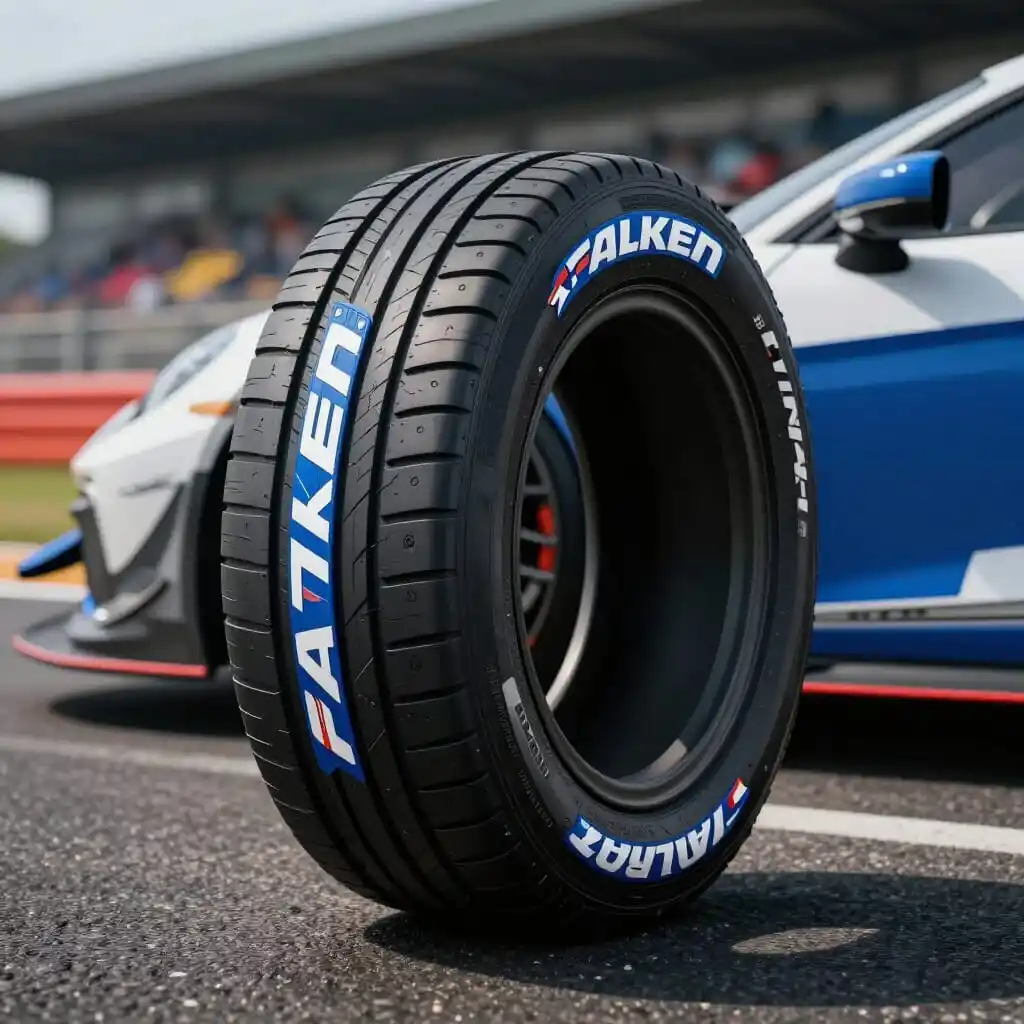
Falken Tires: History, Origins, and Full Range (2026 Reviews)
- Falken is a Japanese brand founded in 1983, a subsidiary of Sumitomo Rubber Industries (the world’s 6th largest tire manufacturer).
- The range covers summer, winter (Eurowinter), all-season (Euroall Season), and 4×4/SUV tires, including the famous Wildpeak line.
- Mid-range positioning: excellent value compared to Michelin or Continental, with outstanding wet grip performance.
- Falken is not a low-cost “sub-brand” but a historic premium brand within the Sumitomo group, distinct from Dunlop, which it also owns.
- Recommended for drivers seeking a perfect performance-to-price compromise without sacrificing safety.
Falken is not an improvised low-cost brand; it is a Japanese tire brand founded in 1983, currently owned by Sumitomo Rubber Industries, the world’s sixth-largest tire manufacturer. Many drivers ask, “Which group does Falken belong to?” when they discover the brand on a new or original equipment tire: the answer is simple. It is a standalone entity within the Sumitomo group, much like Dunlop is in certain regions, but with its own product identity and distribution network. Falken equips everything from city cars to SUVs and 4x4s, with a range structured into summer, winter, all-season, and off-road tires (the famous Wildpeak line). This positioning makes it a credible alternative to legacy premium brands, often at a more accessible price point.
The History of Falken, from its Creation to Today
Falken’s history began in 1983 when The Ohtsu Tire & Rubber Co. Ltd, a Japanese manufacturer, launched the brand for export to Europe and the United States. The name “Falken” (falcon in German) is no accident: from its inception, the brand targeted the European market, which is renowned for its high standards regarding handling and safety, particularly on wet roads.
The major turning point occurred when Ohtsu Tire became a subsidiary of Sumitomo Rubber Industries, one of Japan’s largest industrial conglomerates in the tire sector. Sumitomo also owns Dunlop in several geographic areas, which explains why some motorists sometimes confuse the two brands or wonder if Falken is a low-cost version of Dunlop. That is not the case: the two brands have distinct specifications, R&D laboratories, and production lines, even if they share certain industrial synergies within the group.
Since joining the Sumitomo group, Falken has invested heavily in wet road performance and rolling noise—two criteria upon which the brand has built a solid reputation in Europe, particularly in Germany and Austria. In fact, the brand has been awarded the VRÖ prize (the Austrian tire specialists federation) several consecutive times in the passenger car tire category, proving technical recognition from industry professionals, not just marketing.
Today, Falken has production plants in Asia and development centers in Europe, an organization that allows it to adapt its ranges to the specific climatic and regulatory requirements of the European market, rather than simply exporting products designed for other markets.
Which Group Does Falken Belong To? Understanding the Brand’s Positioning
The question “Which group does Falken tires belong to?” comes up very often in driver searches, and the answer deserves clarification to dispel any confusion. Falken belongs to Sumitomo Rubber Industries, a listed Japanese group that ranks among the world’s largest tire manufacturers, alongside giants like Michelin, Bridgestone, Goodyear, or Continental.
Contrary to what some might think, Falken is not a “sub-brand” in the sense of budget brands manufactured on assembly lines without real R&D investment. Falken has its own European technical center, notably in Germany, where tires for the European market are developed and tested—considering that climate, roads, regulations, and driver expectations differ significantly from the Japanese or American markets.
This “premium mid-range” status within a large group is actually quite common in the tire industry: Michelin owns BFGoodrich and Uniroyal, Continental owns Uniroyal Europe and Semperit, and Bridgestone owns Firestone. Falken follows a similar logic at Sumitomo, with Dunlop as the historic premium brand and Falken positioned just below, but with real technical legitimacy, particularly recognized in the sport and off-road segments.
This organization explains why you find Falken tires as original equipment on certain vehicles—a sign of confidence from automakers who validate original equipment tires after rigorous testing campaigns.
The Falken Tire Range for Cars
The Falken range for passenger vehicles is structured around several families adapted to every use and season.
For summer, the Ziex line targets drivers looking for a compromise between sporty grip and comfort, with particular attention paid to wet road handling, a historical strength of the brand in Europe. These tires aim at a clientele driving dynamic sedans or compacts without necessarily seeking ultra-high-performance racing tires.
For winter, the Eurowinter range is specifically developed for European weather conditions: snow, ice, and low temperatures. Falken incorporates rubber compounds optimized to remain flexible below 7°C, a crucial criterion for braking on cold surfaces, even without snow.
The all-season segment, which has seen strong growth in recent years among drivers with lower annual mileage or those living in temperate urban areas, is covered by the Euroall Season range. Reviews of Falken all-season tires generally highlight a good year-round compromise, though they have the inherent limits of any all-season tire compared to a dedicated winter tire in heavy snow or extreme conditions.
Finally, for SUVs and 4x4s, the Wildpeak line is arguably the most internationally recognized, with a particularly solid reputation in the United States in the off-road and pickup segment, before being progressively introduced to the European market to meet the growing demand for SUVs.
Falken Wildpeak: The Off-Road and 4×4 Benchmark
The Wildpeak range deserves special attention because it is one of Falken’s most recognized products, especially among off-road, pickup, and rugged SUV enthusiasts. Initially developed for the American market where off-road use is very common, this line was then exported to Europe to meet the increasing demand for SUVs capable of going off the beaten track.
The Wildpeak comes in several versions depending on usage: a road-oriented version for urban SUVs that still want a rugged look and good traction on wet or slightly degraded terrain, and a more aggressive version for 4x4s engaged in true off-roading, featuring more pronounced treads and a reinforced carcass to resist rocks and lateral impacts.
Reviews of Falken Wildpeak tires regularly highlight their puncture resistance and self-cleaning tread capability, an important factor in mud or sandy terrain where a clogged tire quickly loses all grip. In exchange, like most off-road tires, comfort and road noise on the highway are slightly lower than a classic road-oriented SUV tire—a logical and accepted compromise given the sought-after versatility.
Falken Tires: Price and Positioning Against the Competition
In terms of pricing, Falken clearly positions itself in the “mid-range” category, below historic leaders like Michelin, Continental, Bridgestone, or Pirelli, but well above budget entry-level brands manufactured at low cost without real European R&D investment.
Specifically, for a common size such as 205/55 R16, a Falken tire is generally priced 20 to 30% lower than the equivalent from a premium brand, for performance that remains very close on essential criteria—wet braking, high-speed handling—sometimes with a slight gap in total longevity or road noise at very high speeds.
This positioning explains why Falken is often recommended to motorists with moderate annual mileage, or those who prioritize excellent value for money over a premium brand whose extra cost might not be justified for their usage. User reviews, found on specialized forums and online retail sites, regularly describe it as a reliable and serious brand, not the absolute reference for every single technical criterion, but very consistent across the expected specifications of a modern tire.
Which group owns Falken tires?
Falken belongs to the Japanese group Sumitomo Rubber Industries, the world’s sixth-largest tire manufacturer, which also owns Dunlop in several regions of the world.
Is Falken a good tire brand?
Yes, Falken is recognized for its good value, particularly regarding wet grip, and has received several professional awards in Europe while remaining more affordable than legacy premium brands.
Is Falken a low-cost sub-brand?
No, Falken is not a low-cost brand but a full-fledged mid-range brand within the Sumitomo group, with its own European R&D center.
What are the best Falken tires for winter?
The Eurowinter range is specifically developed for European winter conditions, with rubber optimized to remain flexible below 7°C.
Are Falken all-season tires reliable year-round?
The Euroall Season range offers a good compromise for urban or low-mileage use, but remains less effective than a dedicated winter tire in heavy snow.
Is the Falken Wildpeak suitable for serious off-road use?
Yes, the Wildpeak is specifically designed for off-roading with reinforced puncture resistance, though it offers slightly less road comfort than a standard SUV tire.
Sources
- Falken — Wikipedia
- Falken Tyres — Official History
- Falken: history, origins, tire models, technologies, and reviews

À découvrir
Nokian Tyres: History, Range & Reviews | Finnish Brand
Discover Nokian Tyres, a premium Finnish brand founded in 1988. Explore their history, winter, summer, and all-season ranges, plus expert customer reviews.

Continental Tires: History, Car, Moto & Bike Ranges
November 16, 2026
Vredestein: History, Tire Range, and Key Features
November 20, 2026