Hankook Tires: History, Range, and Brand Reviews
- Hankook Tire is a South Korean manufacturer founded in 1941, renamed Hankook Tire Manufacturing in 1968.
- The range covers summer, winter, and all-season tires, from city cars to premium SUVs.
- The Ventus Prime 4 is regularly highly rated by independent testing organizations.
- Hankook also produces batteries, wheels, and brake pads under its own brand.
- Mid-to-high-end positioning, situated between European premium manufacturers and budget brands.
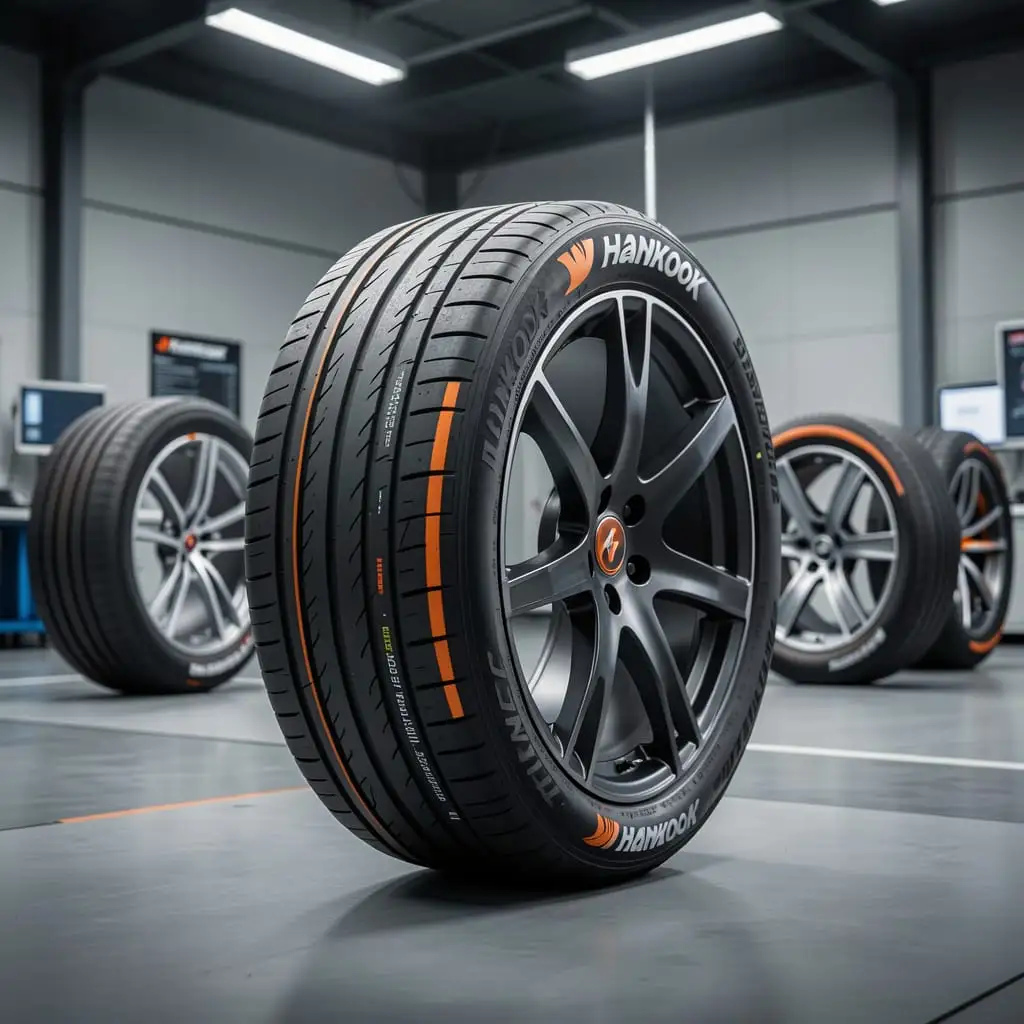
Hankook is a South Korean tire manufacturer founded in 1941, and is currently one of the world’s largest tire producers. If you want to understand the brand’s origins, its actual positioning compared to Michelin or Continental, and which range to choose for your vehicle (city car, sedan, SUV), this article covers it all: the group’s history, summer/winter/all-season ranges, the most in-demand sizes, and reviews on Hankook tire reliability.
Origins and history of the Hankook brand
The story of Hankook began in 1941 in South Korea, during a period when the country’s industrial sector was still in its infancy. The company changed its name in 1968 to become Hankook Tire Manufacturing, a structure that would later become the foundation of the current Hankook Tire group. Contrary to popular belief, the brand is not a recent newcomer emerging from the shadow of Japanese or Chinese giants; it boasts nearly eight decades of existence, placing it among Asia’s historic manufacturers alongside brands like Kumho or Yokohama.
Hankook’s international development accelerated during the 1990s and 2000s with the opening of factories in Europe (notably in Hungary) and the United States. This allowed the brand to produce closer to its target markets rather than exporting everything from South Korea. This industrial strategy played a key role in the brand’s perceived upgrade in Europe: local production makes it easier to comply with European standards and shortens delivery times for automotive equipment manufacturers.
Today, Hankook serves as an Original Equipment (OE) supplier for both mainstream and premium vehicle manufacturers—a strong signal of the technical trust placed in them by automotive engineers. The brand consistently ranks in the global top 10 tire manufacturers by volume, alongside Michelin, Bridgestone, Goodyear, and Continental, even if its image in some markets is more closely associated with value-for-money than ultra-premium luxury.
Hankook: A premium brand or a budget brand?
A question often asked is: is Hankook a premium brand, a mid-range brand, or a budget sub-brand? The answer is nuanced. Hankook is not a sub-brand; it is a fully independent manufacturer, unlike labels such as Riken (Michelin) or Fulda (Goodyear), which are secondary brands owned by large groups. Instead, Hankook maintains its own commercial variations depending on the market but remains positioned as a primary manufacturer rather than a private-label distributor.
In terms of positioning, Hankook falls into a category often described as “mid-to-high end”: it is less expensive than Michelin, Continental, or Pirelli, but sits clearly above budget brands like Nankang or Sailun in terms of quality consistency and R&D. Independent tests conducted by organizations such as ADAC in Germany regularly award certain Hankook models, including the Ventus Prime 4, “good” to “very good” ratings on dry roads, confirming this intermediate positioning.
This ranking is also reflected in the price: for an equivalent size, a Hankook tire generally costs 15% to 30% less than a European premium equivalent, while maintaining performance levels deemed satisfactory by most users, particularly for daily driving in city cars or family sedans.
Hankook summer, winter, and all-season tire ranges
The Hankook range is traditionally structured into three families based on seasonality. Regarding summer tires, the brand offers performance-oriented references (Ventus) as well as comfort/economy ranges suitable for everything from city cars to sedans. These tires aim for a good compromise between dry road grip, cornering stability, and longevity, with durability often cited by users as a strong point compared to more expensive competitors.
Hankook winter tires (notably the Winter i*cept range) target regions with harsh climates: they feature specific rubber compounds that remain flexible below 7°C (45°F) and multiple sipes for grip on snow and ice. They are a credible alternative to premium references for drivers in mountainous regions or northern climates who want reliability without the budget required for the most expensive brands.
Finally, Hankook all-season tires (notably the Kinergy 4S range) are seeing growing popularity, driven by the general market trend toward all-season tires in temperate climates, where switching between two sets of tires may no longer make economic sense. These models aim for year-round compromise: the ability to drive legally in winter (3PMSF marking on certain models) while remaining high-performing in summer. This has become one of the most sought-after product families for urban drivers who rarely drive in the mountains but want a simple solution without seasonal tire changes.
Most in-demand sizes and references
Driver searches for Hankook all-season tires focus heavily on a few standard sizes that correspond to the most common vehicles on the market. The 185/65 R15 size typically fits city cars and small hatchbacks (such as the Clio, 208, or Polo). The 195/55 R16 and 205/55 R16 91V cover the most common compacts and family sedans. The 215/55 R17 often corresponds to crossovers or compact SUVs, while the 225/45 R19 96W targets premium sedans or SUVs with larger rims, where the load index (96) and speed rating (W, up to 174 mph / 270 km/h) must strictly match the manufacturer’s recommendations.
A key technical point to remember: load and speed indices are not freely interchangeable. A 91V tire cannot replace a 96W tire without prior verification, otherwise, you risk non-compliance and potential insurance claim denials in the event of an accident. Therefore, it is essential to check your vehicle’s registration documents or the sticker located on the driver’s side door before any purchase, regardless of the brand chosen.
Beyond tires: Hankook batteries and other products
Less known to the general public, Hankook is not limited to tire manufacturing. The group also produces automotive batteries, wheels, and brake pads, a multi-product positioning similar to some large Korean equipment manufacturers. In the battery segment, user reviews are more mixed than for tires: some report cases of slow discharge after a vehicle has been stationary for an extended period, a phenomenon that is not unique to the brand but affects all standard lead-acid batteries that are poorly maintained or underutilized.
This diversification illustrates a common industrial strategy among major Asian tire manufacturers: pooling material R&D and distribution logistics across several families of automotive parts rather than remaining a single-product company. For the driver, this means you may sometimes find the Hankook brand at your mechanic for items other than tires, though there is no direct link in quality between the two product lines.
Overall review of Hankook tire reliability
Overall, consumer reviews and professional tests converge on the same conclusion: Hankook offers solid value for money without claiming to rival the ultra-premium segment in the most demanding criteria (such as emergency braking on wet roads or extreme rolling silence). Users regularly highlight the good longevity of the summer compounds and the reliable performance in winter conditions for the dedicated range—two criteria that are often decisive for daily use.
Points of caution noted in some feedback mainly concern rolling noise, which is sometimes judged to be a notch higher than premium references, and wet road grip that can be slightly behind the market leaders, though this does not compromise the overall safety of the approved products. For standard urban or highway use, without a search for extreme performance, Hankook remains a relevant choice, particularly for owners of city cars and compacts who wish to limit their tire budget without sacrificing safety.
Is Hankook a good tire brand?
Yes, Hankook is a recognized manufacturer offering good value for money, with “good” to “very good” performance according to independent tests, though it may not reach the level of the most expensive European premium brands.
What country is Hankook from?
Hankook Tire is a South Korean brand, founded in 1941 and renamed Hankook Tire Manufacturing in 1968.
Is Hankook a sub-brand of another manufacturer?
No, Hankook is a fully independent manufacturer, not a distribution sub-brand like Riken or Fulda.
Are Hankook all-season tires reliable year-round?
Yes, for temperate climates: they offer a good compromise between summer performance and winter capability, provided you check for the 3PMSF marking according to local driving conditions.
Why is my Hankook battery discharging slowly?
This phenomenon generally affects batteries that are rarely used or left stationary for long periods; it is a common occurrence for all lead-acid batteries and is not specific to the brand.
Which Hankook tire size should I choose for my car?
The size must exactly match the indications in your vehicle’s manual or the sticker on the driver’s door, especially the load and speed indices, without making approximate substitutions.
Sources
- Hankook Tire Origins – Passion Voiture
- Hankook Tire – Wikipedia
- The Hankook Tire: evolution and history of the brand – Maison du Pneu
- Hankook Tire – tests and reviews – MyPneu
- Hankook Tire: quality, performance, and technical reviews

À découvrir
Uniroyal Tires: History and Product Range Explained
Discover Uniroyal, the American tire brand founded in 1892. Explore its history, full range (RainSport, RainExpert), and value-for-money reviews.
Michelin Tires History & Range | Global Tire Leader
November 14, 2026
Yokohama Tires: History and Full Product Range
November 18, 2026