
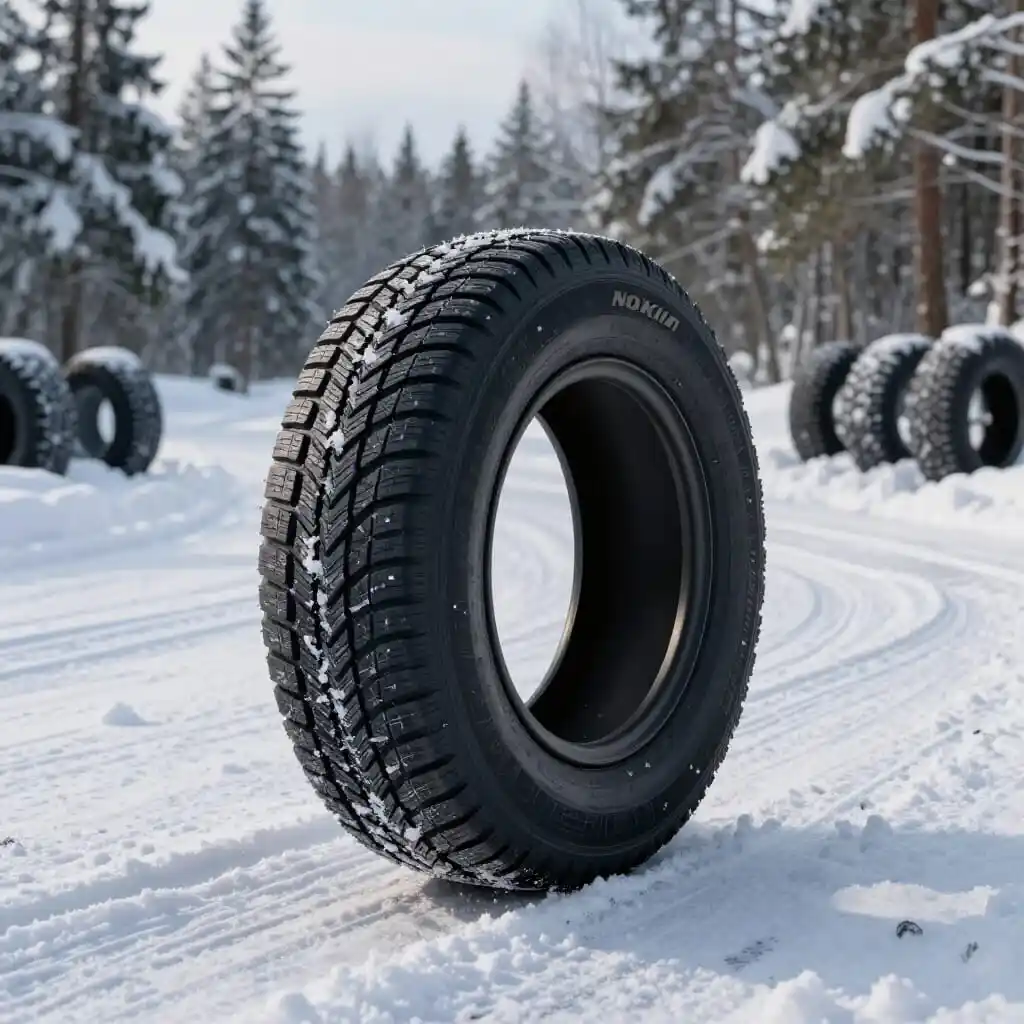
Nokian Tyres: History and Product Range — A Deep Dive into the Finnish Brand
- Nokian Tyres is a Finnish brand founded in 1988, inheriting a rubber company established in 1898.
- It invented the world’s first winter tire in 1934, the Kelirengas, the predecessor to the Hakkapeliitta range.
- The brand offers winter, summer, and all-season tires for cars, SUVs, and commercial vehicles.
- Nokian should not be confused with the phone manufacturer Nokia, nor with similarly named brands like Wokin or Oking.
- User and professional reviews rank Nokian among the premium references for winter conditions.
Are you wondering who is behind the Nokian tire brand before equipping your car or motorcycle? Nokian Tyres is a Finnish tire manufacturer, established in 1988, but with roots dating back to 1898 with the creation of the Suomen Gummitehdas Oy rubber factory. Unlike a common misconception, the brand has no capital links with Nokia, the phone manufacturer: both companies simply share a common geographical origin, the Finnish town of Nokia. Today, Nokian Tyres is primarily known for inventing the world’s first winter tire in 1934, and it now offers a full range of winter, summer, and all-season tires, highly acclaimed in Nordic countries and throughout Europe for its performance in extreme cold.
The Origin of Nokian: A Century of Finnish History
The story of Nokian Tyres begins long before the company was officially established under this name. It all started with Suomen Gummitehdas Osakeyhtiö, literally “Finland Rubber Works,” founded in 1898 in the small town of Nokia, on the banks of a river that would give its name to the company. At the time, this factory did not yet manufacture tires; it produced rubber boots, industrial belts, and various technical items for the local forestry and textile industries.
It was only over the following decades that the company gradually specialized in tires, driven by the rise of the automobile in Northern Europe. In 1988, the group’s tire division was spun off to become an independent entity called Nokian Tyres plc, a publicly traded company focused exclusively on tire design. This date, 1988, marks the official birth of the brand as we know it today, even though its technical expertise is built on nearly a century of working with rubber in extreme conditions.
This origin explains why Nokian has established itself as a benchmark for winter tires: based in a country where winters are long, harsh, and snowy, the company had to innovate early to meet local needs before exporting this expertise globally.
Nokian Tyres and Nokia: Why the Confusion Persists
Many drivers search for “Nokia brand” or “Nokiang brand” thinking they are looking for the same company as the mobile phone manufacturer, or they misspell the name as “Wokin,” “Oking,” or “Okin.” This confusion needs to be cleared up: Nokian Tyres and Nokia Corporation (phones, telecoms) are two completely distinct and financially independent companies, even though they share a common root.
Historically, Nokia Corporation also originated in the same Finnish region, initially around paper pulp before diversifying into rubber, electronics, and eventually telecommunications. At one point in their shared history, during the first half of the 20th century, the two activities (rubber and what would become Nokia Corporation) may have belonged to related industrial structures. However, since the 1988 split, Nokian Tyres has been an independent, publicly traded company, with no ownership link to the telecom giant.
As for approximate spellings like “Wokin,” “Oking,” or “Okin,” these are not sub-brands or variations of Nokian: they are entirely different brands, often positioned in the budget segment, with no connection to the Finnish manufacturer. It is therefore useful to check the exact spelling, “Nokian,” on the tire sidewall before making a purchase to ensure you are acquiring a product truly manufactured by the Nordic brand.
The Invention of the Winter Tire: The 1934 Turning Point
If Nokian Tyres enjoys a solid reputation in the world of snow tires today, it is largely thanks to a historic innovation: the Kelirengas, literally the “weather tire,” launched in 1934. This model is considered the world’s very first commercial winter tire, designed specifically to provide better grip on snow and ice at a time when most tires were designed for a single purpose, whether summer or winter.
This invention laid the groundwork for what would become, decades later, the iconic Hakkapeliitta range, which is now one of the most recognized names in the premium winter tire market. The term itself refers to 17th-century Finnish cavalrymen renowned for their agility in difficult conditions—a symbolic nod to the tire’s ability to maintain control where others lose grip.
This technological head start explains why Nokian Tyres continues to direct a significant portion of its research and development toward rubber compounds adapted for extreme cold, multi-directional sipes, and optimized studs for black ice. In Scandinavian countries, where winters require strict homologation tests, the brand benefits from a natural testing ground that reinforces its credibility among European consumers seeking reliable tires for mountainous regions or harsh winters.
The Current Range: Winter, Summer, and All-Season Tires
The Nokian Tyres range is currently structured around three major product families, each meeting a distinct seasonal need.
Nokian winter tires remain the brand’s historical core, offering both studded and non-studded models depending on local regulations. They are designed to provide short braking distances on packed snow and ice, using rubber compounds that maintain their flexibility even at very low temperatures—unlike summer tires, which harden and lose grip below 7°C.
Nokian summer tires focus more on performance on dry and wet roads, with an emphasis on longevity and fuel efficiency, two criteria increasingly scrutinized by cost-conscious buyers.
Finally, the all-season tire range is aimed at drivers in regions with moderate winters, where conditions do not justify changing tires twice a year. This technical compromise seeks to offer decent grip on light snow while maintaining satisfactory summer handling, though it will not match the performance of a specialized seasonal tire.
In addition to these, there are variations for SUVs, commercial vehicles, and vans, as well as a dedicated offering for two-wheelers—a segment less known to the general public but present in certain Nordic markets where motorcycles are used for a good portion of the year.
Nokian Tire Reviews: What Tests and Users Say
On specialized platforms, Nokian tire reviews are generally positive, with average ratings regularly exceeding 4.3 out of 5 according to professional comparators. The most frequently cited strengths include handling on snow and ice, the sense of security during emergency braking in winter conditions, and the durability of the winter tires—an important factor for drivers who keep them for several seasons.
Independent tests conducted by automotive magazines and consumer organizations regularly place the Hakkapeliitta models among the top-rated in their category, alongside long-standing premium brands like Michelin or Continental. This position is due to Nokian’s pricing strategy, which sits in the premium segment, with prices generally close to the market’s established benchmarks rather than in the budget category.
Some users looking for Nokian tires at a discount prioritize end-of-season clearance periods or older generation models still available through retailers—a strategy that allows them to benefit from the brand’s expertise at a more accessible price without sacrificing safety fundamentals. Points of caution noted in some reviews mainly concern road noise on certain studded models and a price point that remains above entry-level brands, which is consistent with their deliberate premium positioning.
What is the origin of Nokian tires?
Nokian Tyres is a Finnish brand founded in 1988, with roots tracing back to a rubber factory created in 1898 in the town of Nokia, Finland.
Are Nokian and Nokia the same company?
No. Nokian Tyres (tires) and Nokia Corporation (phones, telecoms) are two independent companies that only share a common geographical origin in Finland.
What are the best Nokian winter tires?
The Hakkapeliitta range is the brand’s winter benchmark, the direct successor to the Kelirengas, the world’s first winter tire launched in 1934.
Are Nokian all-season tires reliable?
They are well-suited for regions with moderate winters, offering a good year-round compromise, but they are less performant than a dedicated winter tire in heavy snow.
Are Wokin, Oking, or Okin related to Nokian?
No, these names refer to distinct brands with no connection to Nokian Tyres; you should always check the exact spelling on the tire before purchasing.
Where can I find Nokian tires at a discount?
Seasonal clearance periods and previous-generation models at retailers often allow you to access the brand at a more advantageous price.
Sources
- History – Nokian Tyres France
- History of Nokian Tyres
- History by Theme – Nokian Tyres Canada
- Nokian tire reviews – 1001Pneus
- Nokian Tyres Guide – Mister Auto

À découvrir
Continental Tires: History, Car, Moto & Bike Ranges
Discover Continental, a German manufacturer since 1871. Explore car, motorcycle, and bike tires featuring M+S and tubeless technology. Reviews and more.
Uniroyal Tires: History and Product Range Explained
November 21, 2026
Ford Cars: Complete Model and Engine Guide
November 22, 2026