

Used car buying guide: How to choose the right vehicle
- Precisely define your needs (city car, SUV, sedan) and your total budget, including maintenance
- Always check the technical inspection (less than 6 months old) and the lien certificate
- Opt for a professional dealer to benefit from a warranty (often at least 12 months)
- Respect the legal 15-day deadline to declare the transfer of ownership after purchase
Buying a used car is an economical and eco-friendly alternative to buying new, but it requires careful preparation to avoid common pitfalls. First and foremost, precisely define your needs (city car, SUV, or utility vehicle) based on your daily usage, as this choice will dictate your overall budget, including insurance, maintenance, and fuel.
A step that is often overlooked: systematically check the technical inspection (dated within the last 6 months) and the lien certificate (proving no outstanding debts on the vehicle)—two documents that are mandatory to secure the transaction. Prioritize a professional seller to benefit from a minimum 12-month warranty, and ensure you respect the legal 15-day deadline to declare the transfer of ownership after the purchase. Without these precautions, hidden costs (repairs, undeclared accidents) can quickly drain your wallet.
The used market is attractive due to its value for money, but its environmental impact varies depending on the engine type. According to ADEME data, a gasoline car emits an average of 0.357 kgCO₂/km, compared to 0.19 kgCO₂/km for a diesel. However, these figures can be misleading: a poorly maintained or previously crashed vehicle may consume more fuel and pollute more, even with an efficient engine.
This is why it is vital to cross-reference several factors before signing: the vehicle history, its mileage, and the condition of the tires or critical mechanical parts. A thorough inspection, ideally performed by a professional, remains your best defense against unpleasant surprises.
Preparing your used vehicle purchase project
Buying a used vehicle requires rigorous preparation to avoid hidden costs and poor choices. Without prior analysis, the buyer risks ending up with a model unsuitable for their needs or one requiring expensive repairs within the first few months. The first step is to define your needs and budget based on daily usage, as this framework will guide all subsequent decisions.

For example, a city car will be more suitable for daily commuting in town, while an SUV may be better for families or long-distance highway driving. Neglecting this phase exposes you to unforeseen expenses, such as higher insurance premiums for a high-performance model or frequent maintenance for a poorly kept vehicle.
Defining your needs and budget
| Vehicle Type | Recommended Use | Advantages |
|---|---|---|
| City Car | Urban/City | Easy parking, low fuel consumption |
| Sedan | Highway/Long distance | Comfort, interior space |
| SUV | Off-road, Family | Versatility, cargo capacity |
| Utility Vehicle | Professional | Cargo volume, durability |
The first step is to define your needs and budget based on your daily usage. The type of vehicle you choose must match your driving habits: a city car offers ease of parking and reduced consumption, while a sedan is better suited for long trips on the highway. SUVs, meanwhile, are popular for their versatility and cargo capacity, making them ideal for families or professionals.
Finally, utility vehicles meet the needs for volume and durability required for professional use. Anticipate additional costs as well: the purchase price is only one part of the total cost. Insurance can vary significantly depending on the model and your profile, as can maintenance, with some vehicles requiring more upkeep than others. Lastly, the choice of engine (gasoline, diesel, or hybrid) directly impacts your daily fuel consumption.
Why buy a used car instead of a new one?
Many drivers ask: why buy a used car instead of a new one? The answer lies primarily in immediate savings: a well-chosen used vehicle allows you to enjoy a recent model at a 30% to 50% discount compared to new. However, this decision also requires thinking about the environmental impact.
According to ADEME data, a gasoline car emits an average of 0.357 kgCO₂/km, compared to 0.19 kgCO₂/km for a diesel, which might seem like an advantage for the latter. However, these figures do not account for the vehicle’s condition: a poorly maintained or accident-damaged diesel can consume more and pollute more than a newer gasoline engine. Buying used therefore offers a balance between economy and ecology, provided you select a reliable and well-maintained model.
Where to find reliable and well-inspected used cars?
The used market offers several channels to purchase a reliable vehicle, each with its own advantages regarding transparency and security.
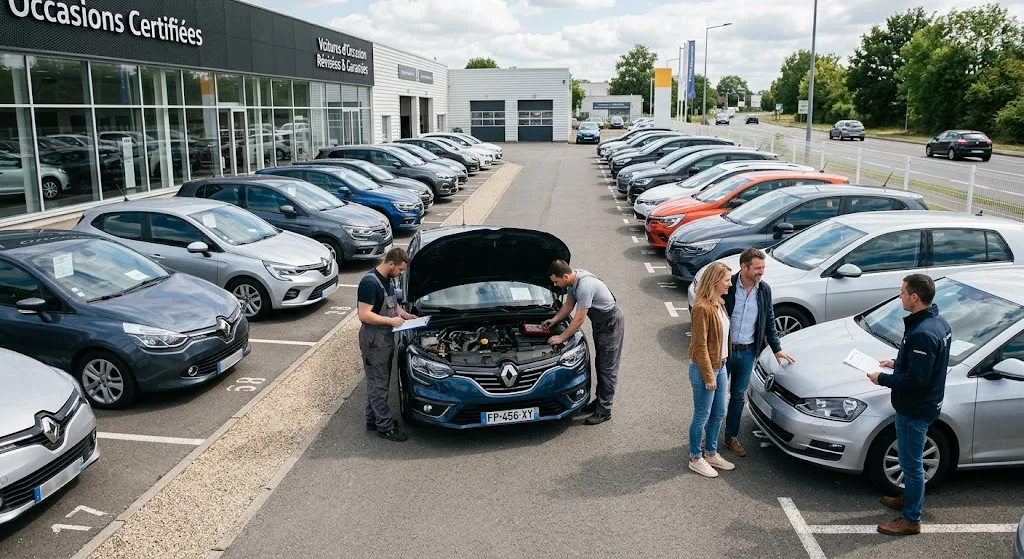
Buyers can opt for online platforms, dealerships, or private sales, depending on their budget and priorities. Prior inspection and document verification remain essential to avoid surprises, whether you are looking at a recent model or an older vehicle. Prices vary greatly depending on the condition of the vehicle, its mileage, and its service history, making it important to compare offers before committing.
Buying from private sellers and online classifieds
Searching for cheap used car deals often requires checking the vehicle history more scrupulously, especially for low-price models. Vehicles with high mileage or a critical technical inspection report may hide major mechanical defects. The lien certificate (proving no outstanding claims) and the maintenance report must be provided by the owner; their absence should be a red flag for the buyer. Platforms like La Centrale or HistoVec allow you to cross-reference this information with the official vehicle history, reducing the risk of fraud or concealed wear.
The professional option and zero down payment purchases
Going through a professional for a used car purchase provides contractual guarantees and enhanced traceability. Dealerships often apply a professional discount of at least €500 on certain models, while also offering vehicles with a minimum 12-month warranty, depending on the network. A money-back guarantee (valid within 30 days of delivery and 1,000 km driven) protects the buyer against major defects not detected during the initial inspection.
These advantages sometimes justify a slightly higher price than a private sale, but they reduce the financial risks associated with unexpected repairs. Some professionals even offer zero down payment used car purchases through financing solutions tailored to tight budgets, subject to a solid credit application.
- Minimum 12-month mechanical warranty
- Potential professional discount (sometimes over €500)
- Money-back guarantee option (within 30 days and 1,000 km)
Used cars: procedures to know before buying
To finalize the deal, here are the used car procedures to know before buying, which are essential to secure your transaction. Once the vehicle is identified, the administrative and legal steps become crucial: they protect both the buyer and the seller against the risk of disputes or fraud.
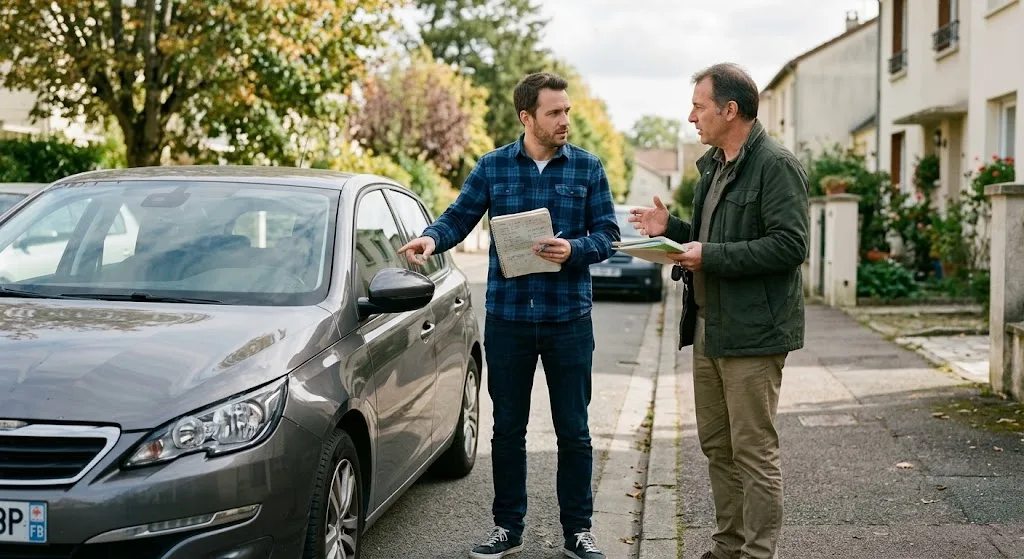
Without these formalities, you could end up with a vehicle that is non-compliant, has a lien against it, or was even involved in undeclared accidents. These steps, though sometimes perceived as tedious, are the guarantee of a smooth and legal purchase. Forgetting even a single document can void the sale, which is why it is important to prepare them in advance.
Technical inspection and mandatory documents
Before signing, verifying official documents is an essential step. Among them, the certificate of administrative status (lien check) must be less than 15 days old to certify that no lien or opposition is placed on the vehicle. This document is mandatory to avoid unpleasant surprises.
Another key element: the vehicle registration document, which must match the seller’s identity and contain accurate information regarding the mileage and any recent repairs. The technical inspection, if it is more than six months old, must be redone before the sale, especially if the vehicle is more than four years old. Finally, maintenance invoices allow you to reconstruct the vehicle history, which is a guarantee of reliability.
- Registration certificate (Title/Logbook) in the seller’s name
- Certificate of administrative status (lien check) less than 15 days old
- Technical inspection dated within the last 6 months (for vehicles over 4 years old)
- Maintenance invoices to justify the service history
Finalizing the transaction and registration
Finalizing the transaction relies on two major acts: the transfer of ownership declaration and respect for the cooling-off period. As soon as an agreement is reached, the seller has 15 days to declare the transfer online via the official government site, a step that is indispensable for transferring ownership. Upon receipt of the vehicle, the buyer benefits from a 14-day cooling-off period from the date of delivery, allowing them to cancel the sale without justification.
During this period, the price remains locked, and the documents are not yet definitively transferred. Once this period has passed, the vehicle registration is updated in the buyer’s name, and the technical inspection (if recent) is attached to the file. Neglecting these steps exposes you to sanctions, such as irregular registration or fraud charges.
Buying used cars on marketplaces like Le Bon Coin
Buying a used car on marketplaces like Le Bon Coin remains one of the most popular methods for finding a vehicle at a reduced price, but it requires increased vigilance. While there are many listings, there is also a higher risk of encountering a non-compliant vehicle or an unscrupulous seller. To limit these dangers, prioritize listings accompanied by complete documents (lien certificate, service history, detailed photos of the tires and bodywork).
Beware of prices that seem too good to be true or vehicles offered without a recent technical inspection, which can be signs of hidden repairs or accidents. An inspection by a professional before purchase is highly recommended, especially for older models or those with high mileage. Le Bon Coin does not offer a legal warranty on vehicles sold between private individuals, which is why it is important to cross-reference sources and verify the seller’s identity via platforms like HistoVec or CarVertical.
Buying a used car on a budget
Buying a used car on a budget often involves using specialized sectors or online markets dedicated to certified used vehicles. These channels offer an alternative to classic classified ads, with vehicles that are sometimes inspected by experts before being put up for sale. The prices there are often more stable, and warranties (even limited ones) can cover certain mechanical defects.
However, be careful with vehicles presented as “bargain prices” without justification: a vague history or underestimated mileage can hide significant costs. To secure your purchase, systematically demand the transfer certificate, the technical inspection, and an independent inspection report. Recent repairs or worn tires must be clearly mentioned in the listing. A good value for money should not come at the expense of transparency: a vehicle that is too cheap without justification is rarely a good deal.
What is the best site to buy a used car?
The choice depends on your priorities: marketplaces like Le Bon Coin are ideal for low prices between private individuals, while professional sites like Autosphere offer 12-month warranties.
What are the steps when buying a used car?
You must verify the lien certificate (CSA) is less than 15 days old, check that the technical inspection is less than 6 months old, and complete the transfer of ownership certificate.
What is a reasonable mileage for a used car?
The mileage should be consistent with the vehicle’s age. Regular maintenance through service invoices is more important than the raw number.
What is the best place to buy a used car?
For safety and a warranty, a professional dealership is recommended. For a tighter budget, a private seller via classified ads is preferable.
Sources
- Economie.gouv.fr – Advice for buying a used vehicle
- Service-Public.fr – Seller obligations for vehicles
- Autosphere – Used car warranties
- Auto-Actu – Used car budget guide
See also

À découvrir
How to Reduce Tire Wear | Practical Tips & Expert Advice
Learn how to reduce tire wear with our expert tips on tire pressure, smooth driving, mechanical maintenance, and regular tire rotation to save money.
Car Battery Maintenance: The Complete Guide
November 9, 2026
Check Engine Light On: What to Do? Complete Guide
November 10, 2026